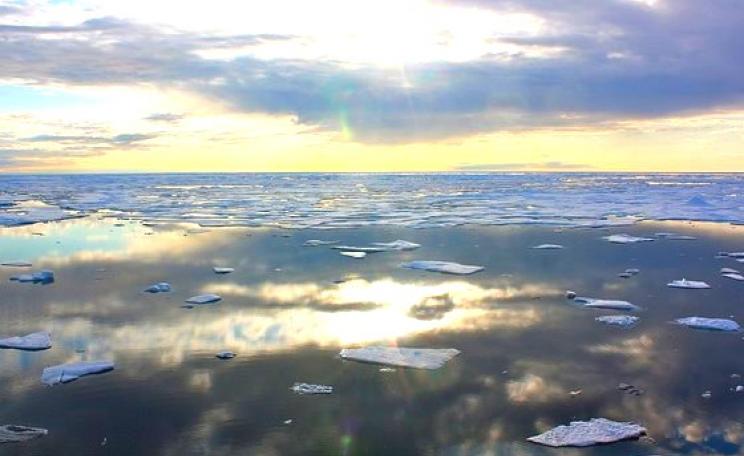
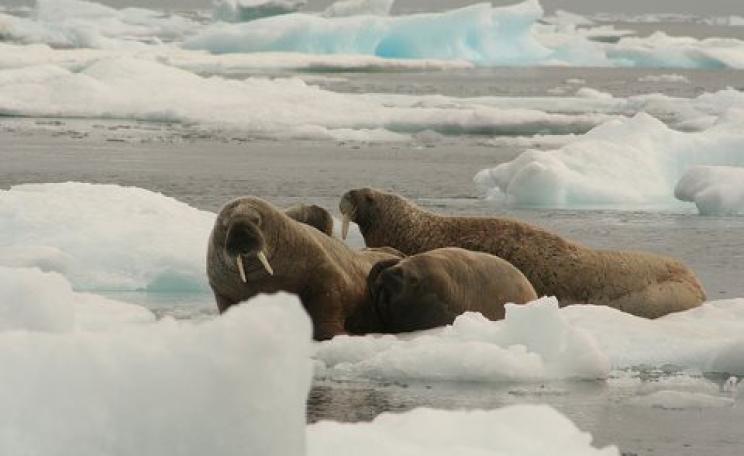
A survey of threatened Arctic mammals highlights melting sea ice as a prime threat to eleven keystone species, writes Tim Radford - meaning that efforts to conserve them may be doomed to failure unless we also tackle the causes of climate change.
The Arctic Ocean is coming close to complete summer meltdown, writes John Nissen - indeed it could happen as soon as September, triggering a severe deterioration in climate across the northern hemisphere. With fast-rising temperatures predicted in the coming decade, we must act now to save the Arctic, before it's too late.
Global warming has been on vacation for a few years, writes Nafeez Ahmed. But that's only because the excess heat - two Hiroshima bombs-worth every second - has been buried in the deep ocean. But within a few years that's set to change, producing a huge decade-long warming surge, focused on the Arctic, that could overwhelm us all.
Rising temperatures in the Arctic are reaching further south to the lakes and forests of Finland, writes Alex Kirby. But the warming is not affecting summer temperatures - it's concentrated into the colder months, causing a shorter, less severe winter.
The expected melting of sea ice in Canada's Arctic Archipelago will progressively render huge areas unable to support viable polar bears populations, writes Tim Radford. By 2100 the polar bears could be pushed out altogether.
As the Arctic ice retreats, a fragile but resource-rich landscape replete with oil, minerals, fish and islands is opening up, writes Conn Hallinan. A new land-rush is on, and it could all lead to war. But it can be avoided provided states respect the rule of law and build on existing regimes of cooperation to protect the precious Arctic environment.
The very least 'global warming' could do for us is to give us warmer winters, right? Wrong, writes Nick Breeze, who met climate scientist and meteorologist Jennifer Francis in his attempt to understand the complex interactions of jet stream, polar vortex, the melting Arctic, and the extreme snowfall that's hitting the northeast US right now.
Scientists analysing more than three decades of weather data for the northern Alaska outpost of Barrow have recorded an astonishing 7°C temperature rise, writes Alex Kirby - and the likely cause is the decline in Arctic sea ice.
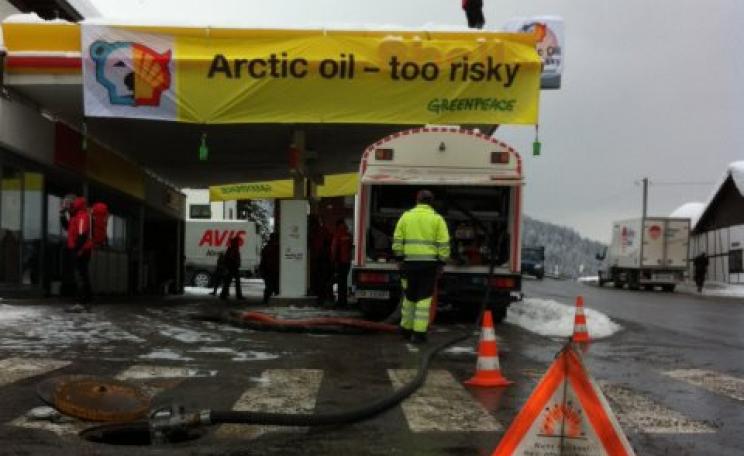
Following a 1 million signature Greenpeace petition, LEGO has pledged not to renew a 50-year link with the oil company Shell. The move comes as Shell bids to renew its Arctic drilling in 2015, and following revelations that it is trying to dilute environmental regulation in Arctic waters.
Oil majors are gearing up to exploit Arctic oil, writes Mike G. But they don't want to carry the costs of all the safety equipment the US Government is demanding to protect the fragile Arctic environment from spills. And they're reluctant to give up the use of toxic chemical dispersants.
Why so few Russian representatives at the UN's World Conference on Indigenous Peoples? Officials prevented activists - some opposing Arctic oil development - from leaving the country, damaging passports and detaining them so they missed their planes.
International polling today revealed strong public support for a formally protected area in the High Arctic for mammals and other marine life. The weakest support came from Japan, where opinion was evenly split over the industrialization of the Arctic.
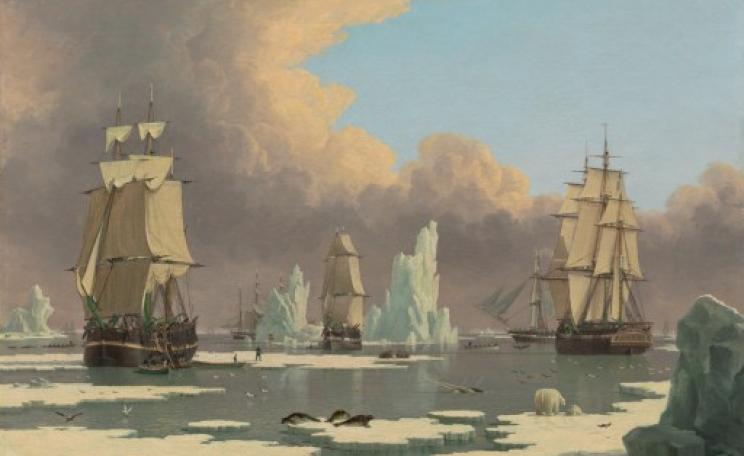
Log books from British whaling ships more than 200 years ago have given new insights into the history of the Arctic sea ice, reports Tim Radford. A new study reveals that the scale of ice melt in the Arctic over the last few decades is new and unprecedented.
As composer Jonathan Dove prepares for the premiere of his 'Gaia Theory' at the BBC Proms this month, he explains to Laurence Rose how his recent work has been inspired by a wake-up call - right from the very top of the world.
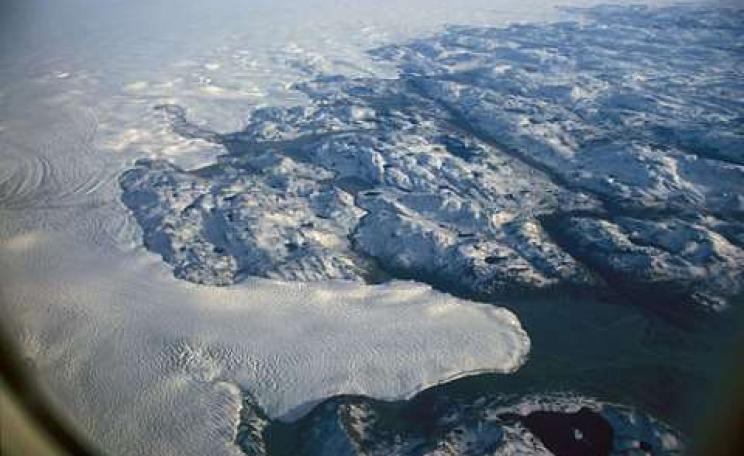
Greenland's glaciers are more vulnerable to global warming than had previously been feared, reports Tim Radford, as ice bodies are undercut by seawater. The threat of rapidly rising sea levels just went up yet another notch.
The decline of Arctic sea ice demands a response, writes Matthew Worsdale. As Arctic temperatures rise, so does the danger of huge eruptions of methane - a powerful greenhouse gas - that will tip the climate into 'hot'. The only solution is geo-engineering.
It's long been established that Arctic Ocean sea ice is on the retreat, writes Tim Radford. But it's the pace of change that's surprising scientists: latest studies show that the ice-free period is increasing by 5 days / decade.
Weird weather from serious flooding in the UK to acute cold and drought in the USA follows from the warming Arctic and disruptions to the jet stream, writes John Nissen. We must act now to prevent sudden changes in global climate.
Royal Dutch Shell CEO Ben van Beurden has announced that the company will not attempt to drill in the Alaskan Arctic in 2014. Greenpeace responds: 'Get out for good!'
A landmark court ruling has set back Shell's plans to drill for Arctic oil. It represents a great victory for indigenous peoples and environmental groups - and a serious setback for the oil giant's Arctic expansion.
The Arctic 30 are leaving Russia. 14 have received exit stamps and all are due back home in time to celebrate the New Year. But their fight for the Arctic is only just beginning ...
The Russian Parliament has today granted amnesty to the Arctic 30. The Duma voted 446-0 in favour of the Kremlin-backed amendment that extends an Amnesty Act to those charged with hooliganism.
As the Arctic ice melts, new shipping routes are opening up for tourism, mining and other commercial purposes, cutting journey times and fuel costs. And as Christopher Ware reports, a new danger arises - invasive alien species disrupting fragile Arctic ecosystems ...
As the detention of Greenpeace's 'Arctic 30' by Russian security services approaches its second month, a shift of campaign tactics is taking place. Now Shell, Gazprom's partner in developing oil and gas on the Arctic Shelf, is in the firing line.