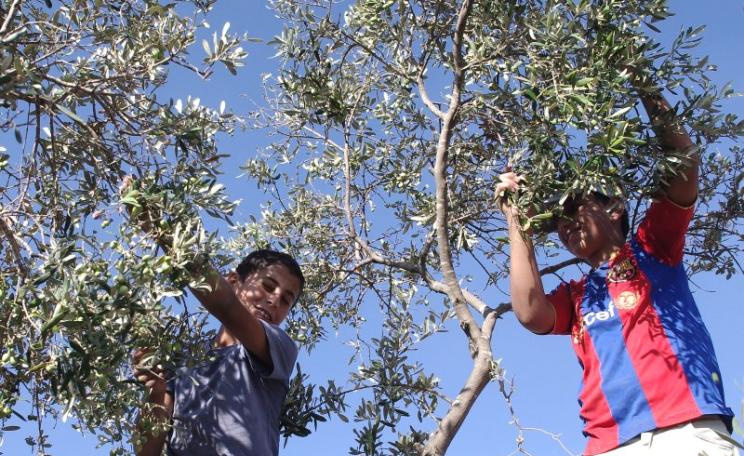
For decades Israel has been driving Palestinian farmers off their land by imposing restrictions on agriculture, writes JONATHAN COOK. But one company, Canaan Fair Trade, has found an innovative way to resist peacefully, increasing resilience and prosperity in rural West Bank communities, and forging international alliances in the global movement for good food and farming.
Rice-eating peoples are very particular about the rice their diets are based on, writes Ted Greiner. And they have a strong aversion to yellow grains, the tell-tale sign of the deadly mould that causes beri-beri disease. That alone makes GMO 'Golden Rice' a non starter; 107 Nobel Laureates had better start eating their words.
Plastic is ubiquitous around the world's oceans, writes Lesley Henderson, but although it's visible from space, it can be surprisingly elusive in the water - as she heard from Jo Ruxton, producer of the investigative documentary 'A Plastic Ocean'. Solutions to this growing hazard have also proved elusive to date, hence the film's strong focus on action: educational, cultural and legal.
The IUCN has mysteriously placed Homo sapiens outside its systems of thinking when defining the criteria for Critically Endangered, Endangered and Vulnerable Species, writes Willemijn Heideman: our collective inability to tackle our existential crises makes our survival on this planet a highly uncertain prospect.
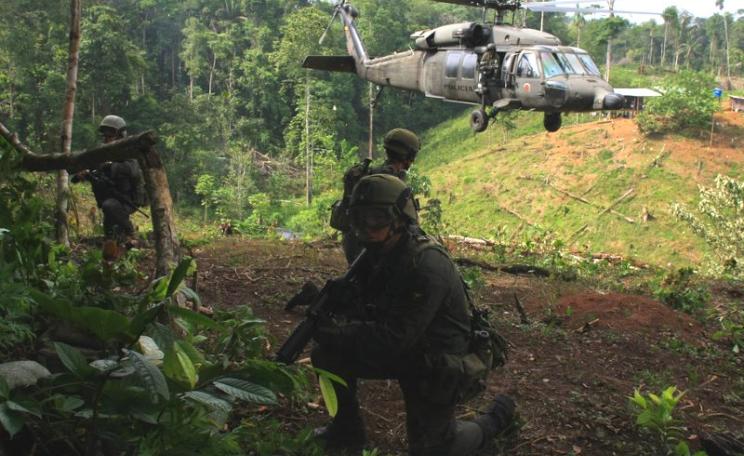
The 'war on drugs' is presented as a necessary battle against social evils, writes Benjamin Ramm. But from the Andes to the Caribbean, prohibition has criminalised both religious and cultural expression. And it's a war that is strictly for the global poor: people in Colorado can grow pot - so why not Colombians?
Faced with multiple converging crises humanity is challenged to redesign the human presence on Earth within the lifetime of present generations, writes Daniel Christian Wahl, and so transform our impact from degeneration to regeneration. We are capable of creating diverse creative cultures elegantly adapted to the uniqueness of place.
The craze for selfie photographs has reached an all-time low, after a recent spate of animal deaths have been linked to achieving the perfect picture, writes Laura Bridgeman. But why do people exhibit such a careless attitude to animal welfare when we normally show such apathy? Cultural conditioning may have the answer.
Britain's 20th century architecture is in danger of obliteration, writes Sebastian Messer, with a 'new brutalism' that holds that socially deprived council estates are fit only for demolition. But these buildings are an important part of our cultural heritage, and more than that, they provide affordable housing to millions of people.
Global oilseed, agribusiness and biotech corporations are engaged in a long term attack on India's local cooking oil producers, writes Colin Todhunter. In just 20 years they have reduced India from self-sufficiency in cooking oil to importing half its needs. Now the government's unlawful attempts to impose GM mustard seed threaten to wipe out a crop at the root of Indian food and farming traditions.
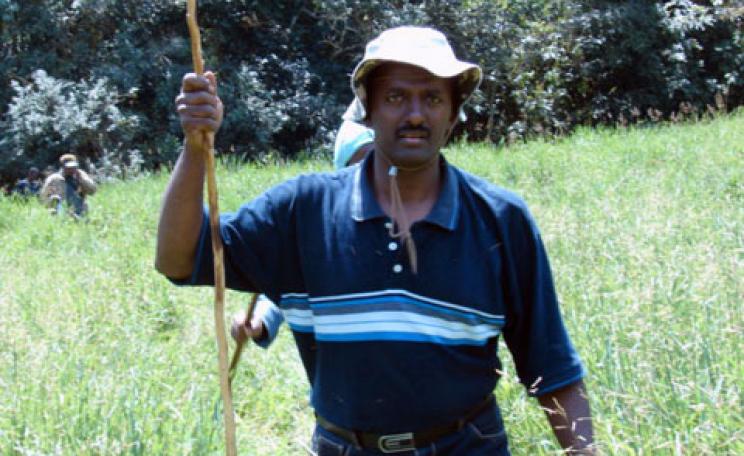
Ecological campaigner Million Belay talks about why protecting Ethiopia's biodiversity is so important and why he opposes the intervention of philanthropists like Bill Gates
The exuberance of childhood celebrated in books such as Just William is now frowned upon as inappropriate behaviour, resulting in more and more children being prescribed behavioural drugs. Rachel Ragg investigates