Increasingly mild winters have caused an abundance of acorns and beech nuts in Europe's woodlands, writes Paul Brown, triggering a wild boar population explosion - just one of the effects of warming climate on wildlife populations.
Britain's dairy farmers have been having a hard time, writes Vicki Hird, largely thanks to their exposure to an unregulated, unstable, global food market. But if the EU's TTIP 'trade deal' with the US is ever signed, pitting UK dairy farmers against zero-welfare US mega-dairies run on hormones and antibiotics, they won't have a chance.
President Obama's plan to cut greenhouse gas emissions may look like a climate victory, writes Tim Kruger - but it's no such thing. It's feeble because the US can meet its targets by reducing emissions to 2030 more slowly than it has since 2000. And it's fragile as any future President can scrap it at will.
There is huge untapped potential in the green economy to create millions of decent jobs, writes Jean Lambert - but only if lessons are learned from the Government's flawed, now scrapped, Green Deal. Lesson one: we desperately need a well-funded, ambitious replacement.
Scotland's small-scale farmers have welcomed their government's decision to prevent the growing of GM crops, aimed at enhancing the country's 'clean, green status', among a coalition of green NGOs.
Previously suppressed documents show that Bayer and Syngenta, the makers of controversial 'neonic' insecticides subject to an EU ban, took part in and sought to influence a key meeting of pesticide experts to decide whether to lift a ban on their use in the UK.
Hundreds of pilot whales were slaughtered in Faroes waters last week alone, writes Captain Paul Watson. But in 2011 no whales were killed while Sea Shepherd vessels patrolled. The difference? Since 2014 the Royal Danish Navy has defended the whale hunt.
Friends of the Earth has taken the first legal steps towards striking out last week's emergency approval of bee-harming 'neonic' pesticides in England, granted last week despite a Europe-wide ban.
Engineers in Norway aim to put their mighty hydroelectric dams to a new purpose, writes Paul Brown - as giant batteries to store up surplus power from wind and sun across Europe, and put it back in the grid when generation falls off or demand is strong.
'Detox' campaigners scored a huge victory this week when EU countries voted unanimously to ban imports of clothes and textiles containing the toxic 'gender bender' chemical NPE.
Three in one: EFSA set to re-licence glyphosate based on secret industry studies; Monsanto moves against IARC verdict that glyphosate is a 'probable carcinogen'; and new science shows that FDA principle of GMO 'substantial equivalence' is bunk.
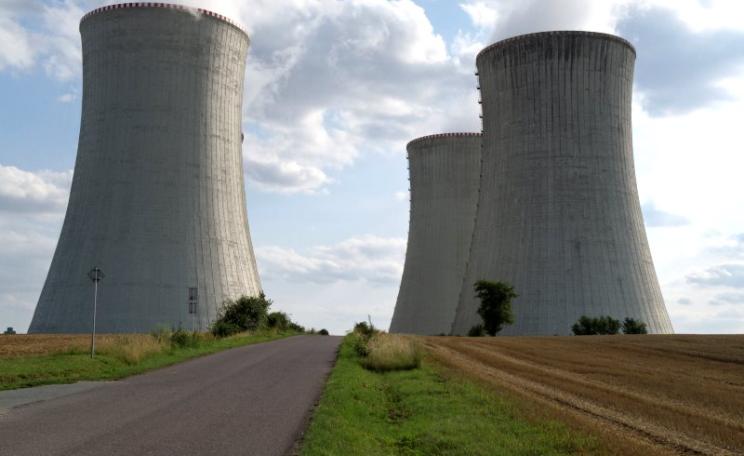
A second legal challenge to the UK's proposed Hinkley C nuclear power plant in Somerset was launched this morning by ten renewable and municipal power suppliers in Germany and Austria, citing grave distortions to European energy markets.
Supporters of Greece's fight for sovereignty are unanimous in blaming the evil troika for its humiliating defeat, writes Oliver Tickell. But the real fault is with Syriza for their needless, shameful surrender. Now, as the real battle begins, we must hold firm with the Greek people against neoliberal occupation.
As the EU comes down for neoliberalism, austerity and capital against popular will, Greens and other 'progressives' must consider switching sides in the 'in or out' debate, writes Jenny Jones. A Union that stands for TTIP, corporate empowerment and the trampling of Greek democracy is one we are better off leaving.
Dissent over the massive USA-EU TTIP trade deal is focused on the 'corporate courts' allowing investors to sue national governments, But largely neglected has been the equally serious issue of 'Regulatory Cooperation' - which would impose a huge burden of 'red tape' on EU and US legislatures, while forcing down health, safety, social and environmental standards.
The EU's nature directives provide effective protection for endangered species and habitats, writes Leonardo Mazza. So why the Commission's decision to 'review' and 'modernise' the laws? With its commitment to business-friendly deregulation and uninterest in the environment, the aim is surely to gut them - something only EU-wide citizens' mobilisation can prevent.
MEPs backed the TTIP EU-USA trade and investment deal by almost 2:1 today, ignoring civil society fears. New texts on key issues like ISDS appeared to address public concerns, but campaigners insist that 'the most dangerous proposals' remain.
Greece's economic woes will never be solved by merely moving money around the banking system, writes Oliver Tickell. The lasting solution is to restore native forests to her barren hills and mountains, invest in large-scale solar power to energise Europe, and create an examplar of sustainable development for our global future.
The EU Parliament is voting tomorrow on the controversial Transatlantic Trade and Investment Partnership (TTIP) being negotiated between the USA and the EU. But do MEPs realise that the agreement could force European markets open to 'new biotech' foods and crops using advanced GM technologies that do not meet current definitions of 'GMO' within the EU?
Austria today filed its legal challenge to the UK's €108 billion support package for the Hinkley Point C nuclear plant, writes Oliver Tickell. A second such challenge at the European Court is due from green energy suppliers in Germany and Austria who fear unfair competition from subsidised nuclear power in Poland, Czech and Hungary if the Hinkley C precedent stands.
Greece's refusal to accept a century of debt servitude to illegitimate creditors is a decisive moment for Greece, Europe and indebted nations everywhere, writes Yanis Varoufakis. With even the IMF agreeing with SYRIZA's economic analysis, the troika's insistence on endless austerity was only meant to ruin Greece and humiliate its government. But now everything has changed.
Early yield figures indicate a bumper harvest for oilseed rape in England in the first neonic-free growing season - making a nonsense of the 'emergency' lifting of the ban of the bee-killing pesticides.
Northern Ireland shows just how much we need the EU's laws protecting nature, writes Andy Atkins - and for the Government to enforce them. The province's wonderful natural heritage is at risk from aggressive and often unlawful developments. And the EU nature laws are essential for us to fight off a host of threats - among them sand dredging, gold mining, road-building and over-fishing.
It's a hard life being an organic farmer, writes Alicia Miller - and specially when it comes to engaging with a bureaucracy that's trying to 'green' our agriculture. Should small scale farmers change their farming practices to fit in with it? Or the other way round?