Rewilding landscapes impoverished by human exploitation enriches nature and brings back life to an increasingly ravaged world, writes Jessica Rothwell. But more than that, it's a vital step in making human existence sustainable in the long term, depending as we do on our planet's functional ecosystems for our health and survival. It's time for people to pull back - and make space for the wild.
However much you think nature is worth, it's a lot more, writes Neil Nightingale. According to the BBC's 'Earth Index', published today in the world's financial press, water alone is worth as much as the entire global economy, and a single beaver's landscape and wetland management clocks in at $120,000 a year.
Cornish beaches are awash with millions of 'nurdles', tiny wildlife-choking plastic pellets presumed spilled from an rogue shipping container. As England's plastic bag charge comes into force, it's a sign that there's still a long way to go to rid our seas of the plastic menace.
While other countries apply themselves to environmental challenges from climate change to nature protection, Russia - with its massive wealth of nature and natural resources - is stubbornly refusing to take part, writes Lucy E J Woods. And as the economy declines, the pressure is on: to ignore environmental regulations, and clamp down on environmental defenders.
A month after warning the government of legal action over its decision to allow farmers to use bee-killing pesticides banned under EU law, Friends of the Earth has filed a High Court legal challenge to have the 'derogations' declared unlawful.
Previously suppressed documents show that Bayer and Syngenta, the makers of controversial 'neonic' insecticides subject to an EU ban, took part in and sought to influence a key meeting of pesticide experts to decide whether to lift a ban on their use in the UK.
Friends of the Earth has taken the first legal steps towards striking out last week's emergency approval of bee-harming 'neonic' pesticides in England, granted last week despite a Europe-wide ban.
All too often language is used to objectify nature, writes Caspar Henderson. But there's another, older vocabulary - introduced in this 'counter-desecration phrasebook' - that achieves the reverse: connecting us with the wonders of life and arousing delight in the natural world.
In the battle to save America's real wild west of unlogged forests, grizzly bears, mountain goats, Bull trout, free flowing streams and roadless wilderness, a single person stands out, writes Jeffrey St Clair, for her dedication, courage and remarkable success: Arlene Montgomery of Friends of the Wild Swan, Montana.
The Earth is now undergoing the biggest mass extinction since the end of the dinosaurs 65 million years ago, writes James Dyke - the result of our collective desire to convert our planet into goods, services and trash. If we go on the biosphere itself will survive, but it will be impoverished. As will we.
Who are we? We are the people who are ready to fight back, writes Derrick Jensen. The people who no longer live in hope that the Earth will be saved, but in the certainty that we will save her. We are activists, survivors, lovers and fighters. And we say: the destruction will stop.
Rewilding is now firmly on the agenda, writes Paul Jepson, and that brings a huge opportunity to re-invigorate conservation. But we must look to creating new functional ecosystems for the future, rather than trying to recreate a lost and perhaps imagined past.
A new study led by RSPB shows that more than half of Britain's most precious upland moors are suffering from burning - widely used to increase the numbers of red grouse available for recreational shooting.
Last week David Cameron backed down over his plans to bring back fox hunting by 'fatally amending' the Hunting Act, writes Dominic Dyer. The way he spun it, it was all about SNP interference in English law, but the real problem was opposition within the Conservative Party, which increasingly sees blood sports as a barbaric relic that alienates voters of all persuasions.
A polite knock on the door of a Mr John Shaw of Hastings got Emily Johns a visit from the police. How so? He's the CEO of a secretive 'non-profit company' that's using tens of millions of pounds of public funds to build white elephant business parks and destroy valuable nature sites. And avoiding accountability looks like a major point of the exercise.
A welt of anti-wildlife 'riders' have been attached to essential legislation in the US Congress, writes Caeleigh MacNeil - aimed at stripping protection from endangered species and so grease the skids for industrial exploitation of wildlands against the wishes of the great majority of Americans.
The world has become intolerable for people everywhere, and for Earth herself, says Pope Francis. Profound, transformative change leading to social and economic justice is now an absolute necessity and something we must all fight for. We must also act to safeguard the Earth herself, our common home.
The EU's nature directives provide effective protection for endangered species and habitats, writes Leonardo Mazza. So why the Commission's decision to 'review' and 'modernise' the laws? With its commitment to business-friendly deregulation and uninterest in the environment, the aim is surely to gut them - something only EU-wide citizens' mobilisation can prevent.
Next Tuesday MPs will be voting on an 'amendment' to the Hunting Act that outlaws fox hunting and other cruel sports, writes Robbie Marsland. But its effect would be to make the law a dead letter - so full of holes as to permit the return of full-blown hunting with dogs. MPs must vote down this 'repeal by stealth'.
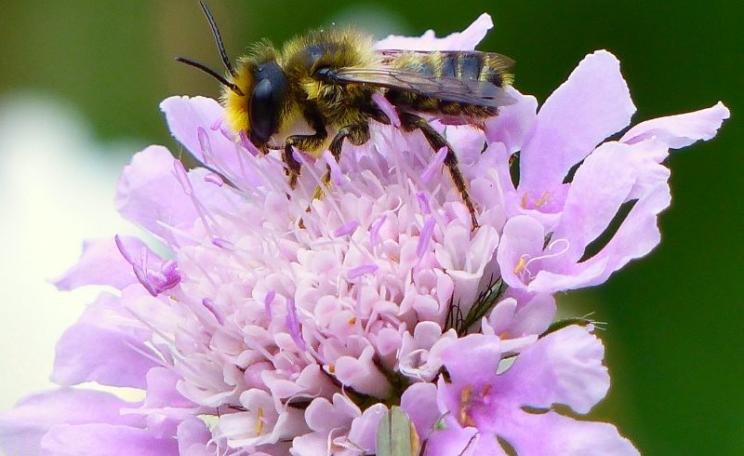
When Oxeye daises looked like taking over her mini-meadow, Jo Cartmell was tempted to intervene. But instead, she held back and let nature take its course. Now, a few seasons later, the floral diversity has only increased, taking in some unexpected but welcome arrivals - along with their insect companions, all making their home on what used to be an unloved patch of lawn.
Early yield figures indicate a bumper harvest for oilseed rape in England in the first neonic-free growing season - making a nonsense of the 'emergency' lifting of the ban of the bee-killing pesticides.
It's time to halt the loss of the nation's front gardens to dreary paving, writes Jenny Jones. Green gardens protect against floods, provide homes for wildlife, keep cities cool in summer, and help us all feel happier. Now, with 7 million gardens already paved over, we must protect those that remain.
In his new book environmental journalist Michael McCarthy bears witness to the astonishing decline in the once common wildlife of our countryside of the last few decades. But as Chris Rose writes, he does far more than bemoan the losses as he shares with us the joy that he still discovers in nature.
Northern Ireland shows just how much we need the EU's laws protecting nature, writes Andy Atkins - and for the Government to enforce them. The province's wonderful natural heritage is at risk from aggressive and often unlawful developments. And the EU nature laws are essential for us to fight off a host of threats - among them sand dredging, gold mining, road-building and over-fishing.