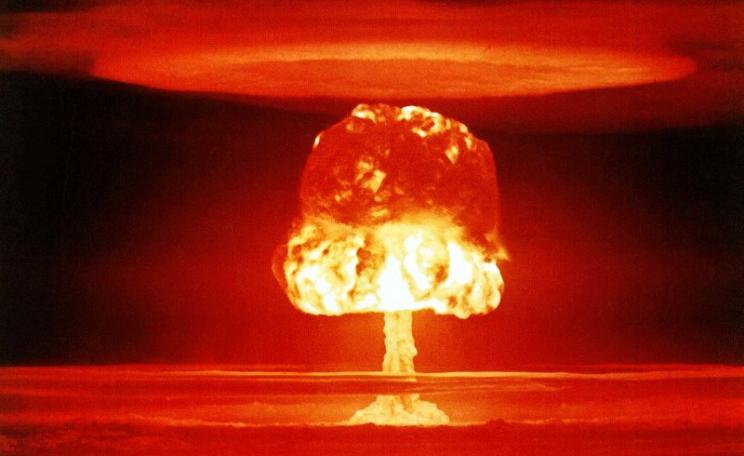
Last week the UN General Assembly's Disarmament and Security Committee voted for negotiations to begin next year on a new international treaty to prohibit nuclear weapons, writes Rebecca Johnson, bypassing the stalled Non Proliferation Treaty. One immediate consequence is to make the UK's plans to replace its Trident nuclear missile system 'completely untenable'.
With the International Monsanto Tribunal beginning this week (14-16 October) in The Hague, MICK GRANT reports from Vietnam with this special investigation for The Ecologist five decades after the company's lethal herbicide Agent Orange first devastated the country - and discovers the agribusiness giant is sneaking its way back into Vietnam with modern herbicides and 'Roundup-Ready' GMO crops.
As we remember the bombing of Hiroshima and Nagasaki this month 71 years ago, we have largely forgotten the racist propaganda that made it possible, writes LINDA PENZ GUNTER. We have likewise sanitised history to exclude the voices of African Americans who loudly protested the use of nuclear weapons, connecting them to American colonialism abroad and racism at home.
Thanks to an increasingly aggressive US foreign policy pursued over decades, NATO nuclear missiles and armed forces are poised on Russia's border, writes Conn Hallinan - forcing it to abandon its 'no first use of nuclear weapons' pledge in view of the massively asymmetrical threat it faces. The world must step back from the brink of nuclear annihilation.
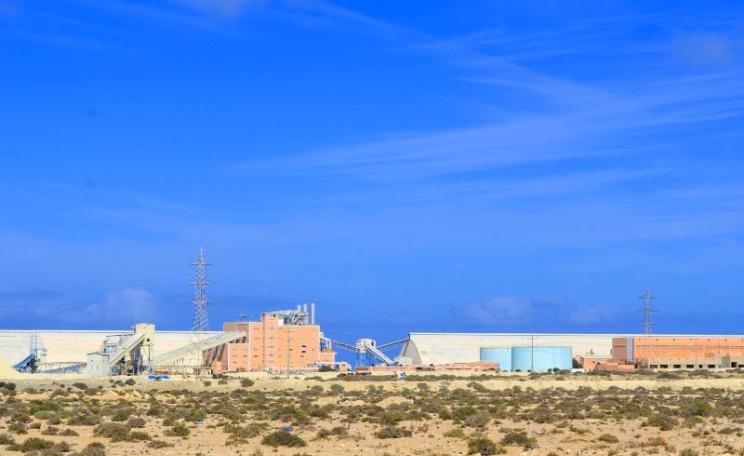
Africa is being opened up like a tin of sardines to a new wave of resource extraction, writes Colin Todhunter. Masked under the soubriquets of 'investment', 'growth' and 'free trade', a handful of vast global corporations are systematically plundering the continent's mineral wealth and leaving desolation in their wake, backed to the hilt by that ever-faithful servant of capital - the UK government.
The Chilcot report reveals that the UK has disclaimed any duty to decontaminate the toxic, radioactive ash left behind by its DU munitions, or even monitor the impacts on human health, writes Doug Weir. But Iraq and other countries are working towards a UN Resolution this October that would hold contaminating governments like the UK and the US legally accountable for DU pollution.
The political vacuum left by the Iraq war provided the space for radical extremism to take root in the Middle East and rampage across the region, writes Dr Robert Dover. That makes Tony Blair directly responsible for the refugee crisis that is destabilising Europe today, reflected in the UK's Brexit vote. And it fatally wounded the credibility of his 'third way' social democratic politics across the EU.
Israel is inflicting 'water starvation' on Palestinian communities, writes Ramzy Baroud, with residents of all-Jewish settlements in the West Bank each receiving thirty times more water than their Palestinian neighbours. Meanwhile resistance to the Occupation is routinely punished by water closures and the destruction of water infrastructure, contrary to international humanitarian law.
A future of green abundance for all is possible, writes Glen Barry. Instead we are mired in the destruction of the Earth's vital ecosystems, divided by obscene wealth and shameful poverty, and pitted against each other in genocidal wars over energy, resources and global dominance. To make that alternative a living reality, we must shed our fears and come together in common purpose.
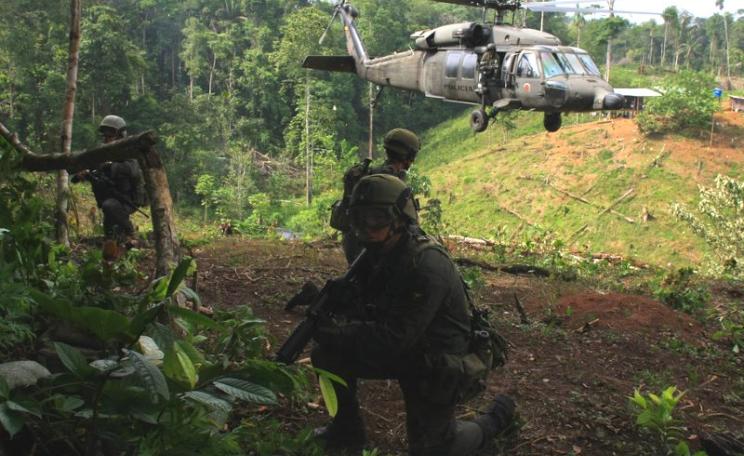
The 'war on drugs' is presented as a necessary battle against social evils, writes Benjamin Ramm. But from the Andes to the Caribbean, prohibition has criminalised both religious and cultural expression. And it's a war that is strictly for the global poor: people in Colorado can grow pot - so why not Colombians?
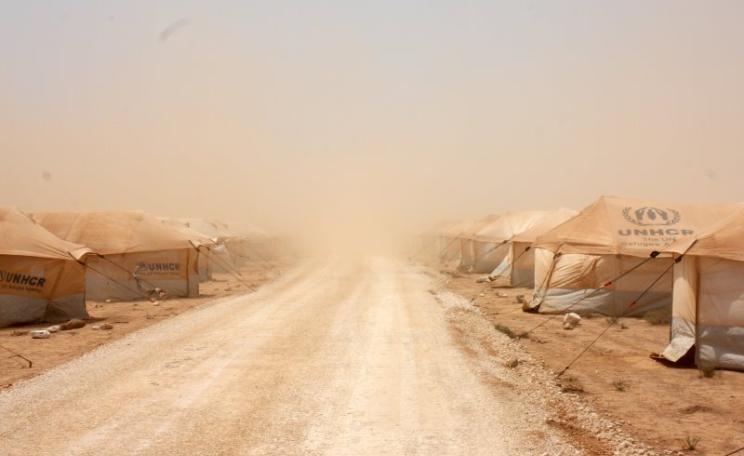
Since 1948 Jordan has taken in millions of refugees from Palestine, Iraq and most recently Syria, writes Doug Weir. Politically and economically the country has proved astonishingly resilient - but the population increase has caused huge damage to its fragile environment. Ecological degradation, pollution and resource scarcity may cause political instability unless more is done to tackle the problems.
The 'brutal savage' meme has enjoyed a resurgence in popular culture and establishment narratives, writes Stephen Corry, despite abundant evidence that it's fundamentally wrong. But it suits today's dominant mindset of conquest, conflict and colonialism all too well, and serves to justify the ongoing genocide and expropriation of surviving Indigenous Peoples today.
Why do we humans resort to shooting, whenever a challenging problem confronts us? Whether it's culling badgers to protect hedgehogs, or renewing the Trident missile threat with expensive upgrades, our species seems determined to upset the balance of nature and harmony on Earth by shooting first - and never asking the questions at all.
There are many good reasons to criticise Donald Trump, writes John McMurtry. But none of these matter to the US media, political and corporate powers determined to keep him out of the White House. With his radical talk of halving military spending, controlling Big Pharma and exiting 'free trade' agreements, Trump is a direct threat to the parasite capitalism that's destroying America.
In trying to evaluate charitable interventions in 'value for money' terms, the movement for 'Effective Altruism' has lost its moral compass, Sam Earle & Rupert Read. The real changes the world needs are profound, systemic and political. There is no better example than the refugee crisis: the problem is not insufficient aid, but structural inequality, too many weapons, and too much war.
Nuclear power sites in Belgium have been targetted by Daesh radicals seeking radioactive materials to use in terrorist attacks, write Robert J Downes & Daniel Salisbury. One top nuclear researcher has come under hostile surveillance, while 'insider threats' have led to 11 workers being excluded from nuclear sites. But despite increased security, the threat has not gone away.
In 1975 Indonesia invaded the small Pacific country of East Timor, writes John Pilger, and then massacred a third of its population to suppress demands for independence. Now unearthed documents show the genocide was supported by Australia so it could grab the oil and gas reserves of the Timor Sea. Despite East Timor's independence, won in 1999, Australia is still stealing its oil and gas revenues worth $5 billion and counting.
The random, murderous violence we just saw inflicted on the people of Brussels is absolutely, categorically unacceptable, writes Chris Floyd. So too is the far greater violence routinely inflicted by rich, powerful countries against their innocent victims around the world, and especially in the oil-rich Middle East. To move away from a world of terror, we must make our outrage, and our compassion, inclusive.
The world is in the grip of a massive wave of militarism of which most of us are blissfully ignorant, writes John Pilger. When did mainstream media last tell you about the US's $1 trillion nuclear weapon renewal? NATO's massive build up of military power on Russia's eastern frontier? The encirclement of China by nuclear-armed US bases? The world is at war. Pass it on!
Cancer is just one of of the outcomes of the genetic damage inflicted by nuclear radiation, writes Chris Busby, and perhaps one of the least important. Of far greater long term significance is the broad-scale mutation of the human genome, and those of other species, and the resulting genomic instability that causes cascades of heritable mutations through the generations.
What was NATO's violent intervention in Libya really all about? Now we know, writes Ellen Brown, thanks to Hillary Clinton's recently published emails. It was to prevent the creation of an independent hard currency in Africa that would free the continent from economic bondage under the dollar, the IMF and the French African franc, shaking off the last heavy chains of colonial exploitation.
As if Iraq has not suffered enough under Saddam Hussein, the vicious UN sanctions regime, the US-UK occupation and the depradations of Daesh, a new threat looms that could kill a million people or more, and destroy Baghdad and a string of other cities along the Tigris river. The porous rocks beneath the Mosul dam are dissolving away and the entire edifice could collapse at any moment, releasing 11 cubic kilometres of water.
Why is it so important to the US that Britain renew its nuclear weapons of mass destruction? The main purpose of Trident, writes Oliver Tickell, is to allow the UK to join American nuclear attacks, adding 'legitimacy' to them and so lowering the threshold for nuclear war - even if it guarantees our own destruction.
Plane Stupid's Heathrow 13 escaped immediate incarceration yesterday for occupying Heathrow's northern runway last summer. But the threat of imprisonment remains firmly in place, writes Ali Tamlit, from a state determined to defend the corporations that are inflicting the systemic violence of climate change on us all. The peaceful fight for a better world must go on.