Those opposed to the mass release of GM crops and foods inadequately tested for health and ecological safety are routinely accused of being anti-science, writes Elizabeth Henderson. But it's the GM corporations and their academic allies that are suppressing scientific research, and organic farmers that are building alliances with independent scientists for a future of safe, healthy food.
A future of green abundance for all is possible, writes Glen Barry. Instead we are mired in the destruction of the Earth's vital ecosystems, divided by obscene wealth and shameful poverty, and pitted against each other in genocidal wars over energy, resources and global dominance. To make that alternative a living reality, we must shed our fears and come together in common purpose.
Where does the Green Party go now? Last week's uninspiring election results show that Jeremy Corbyn's Labour poses a serious challenge to us Greens, who can no longer succeed by being merely left wing. We must fulfil our own destiny, representing a distinct, authentic ecological strand in politics, making the case for living as if we only had one planet - as is in fact the case.
A recent scientific study found the same long-chain omega-3 oils that are engineered into a new GM Camelina oilseed variety make butterflies grow up with deformed wings, writes Claire Robinson. Attempts by the 'pro-science' non-scientist Mark Lynas to discredit the study are a mixture of ignorance, research failures, 'straw man' arguments and outright errors.
The quiet desperation of declining towns and cities across America's West is understandable, writes George Wuerthner. Of course people dream of the 'good old days' when there were wild prairies to be grazed, forests to be felled and oil wells to be sunk - and try to bring them back. But in so doing they neglect and abuse their real and enduring wealth: nature, landscape and wildlife.
A new study shows that the market-leading Roundup herbicide kills soil microbiota at concentrations 50 times lower than used in agriculture, writes Claire Robinson. The findings raise serious new concerns about the environmental impacts of glyphosate herbicides.
Britain's ash woods are under threat from a fast-spreading 'dieback' disease, write Steve Woodward and Eric Boa. With 3% of ash trees resistant to the fungus, the species should just be able to survive. But now scientists fear the arrival of the Emerald ash borer beetle, already infesting forests in the US and mainland Europe. Could the two combine to push our ash trees into extinction?
As a society, we are strangely disconnected from the Earth, writes Stephan Harding. It's as if we were aliens placed here to prod and poke with our scientific instruments whilst feeling no sense of meaning, belonging or closeness to her ancient crumpled surface or rich, teeming biodiversity - a state of mind that a forthcoming course at Schumacher College aims to reverse.
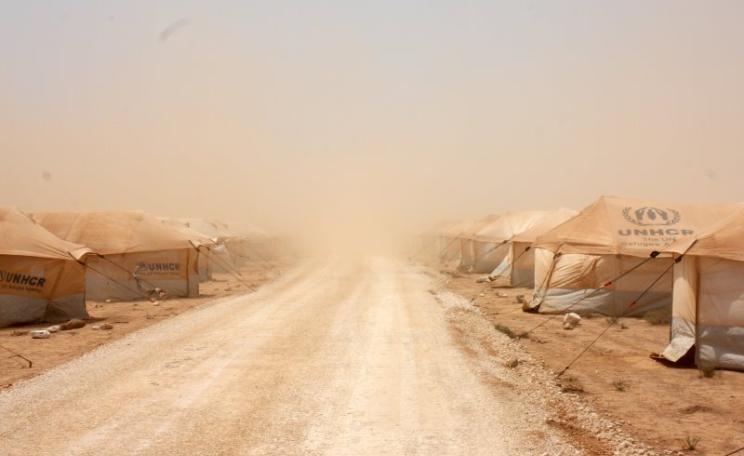
Since 1948 Jordan has taken in millions of refugees from Palestine, Iraq and most recently Syria, writes Doug Weir. Politically and economically the country has proved astonishingly resilient - but the population increase has caused huge damage to its fragile environment. Ecological degradation, pollution and resource scarcity may cause political instability unless more is done to tackle the problems.
Faced with multiple converging crises humanity is challenged to redesign the human presence on Earth within the lifetime of present generations, writes Daniel Christian Wahl, and so transform our impact from degeneration to regeneration. We are capable of creating diverse creative cultures elegantly adapted to the uniqueness of place.
Why do we humans resort to shooting, whenever a challenging problem confronts us? Whether it's culling badgers to protect hedgehogs, or renewing the Trident missile threat with expensive upgrades, our species seems determined to upset the balance of nature and harmony on Earth by shooting first - and never asking the questions at all.
It looked like such a good idea: take the pressure off wild fish stocks by growing GM oilseeds that produce health-enhancing long-chain omega-3 fatty acids, writes Claire Robinson. But as a new study has established, those fish oils, novel in terrestrial ecosystems, cause wing deformities in cabbage white butterflies. Yet a third open field trial of these GM crops could soon be under way.
'Natural capital' is an understandable attempt to put a value on our living planet and all the services it provides for us, writes John McMurtry. But it fails by measuring nature in dollars and cents. We need to develop a new concept of 'life capital' that must be preserved from exploitation and degradation no matter what the economic cost, because we, and Earth herself, depend upon it.
New research from Australia's Great Barrier Reef shows that no-take marine reserves don't just mean more and bigger fish, write Camille Mellin, Aaron MacNeil & Julian Caley. They also boost the resistance of reef communities to disturbances like storms, bleaching and predation, and speed their subsequent recovery. It's time for global rollout of coral reef marine reserves!
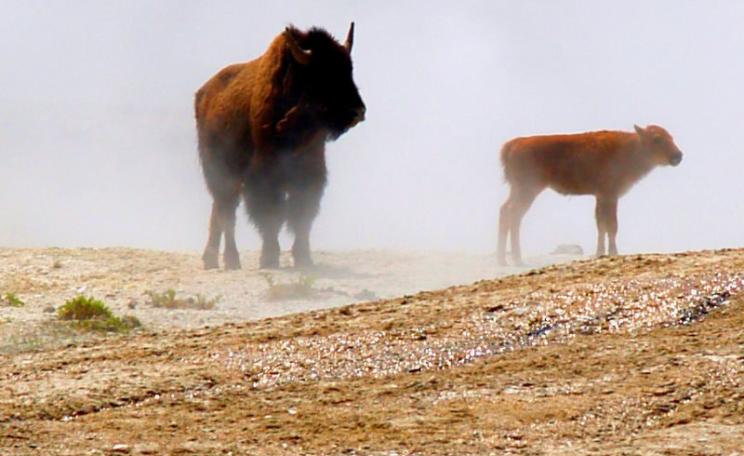
North American buffalo are officially 'vulnerable to global extinction', writes Louise Willcox, yet the US National Parks Service and Montana are intent on their wholesale slaughter. In place of a complete ecosystem with wild-roaming buffalo and grizzly bears, wildlife managers are systematically favoring the over-abundant elk that drive the politically powerful hunting industry.
Poland is intent on a huge increase in logging in Europe's greatest ancient forest, writes Lucinda Kirkpatrick. The government says it's needed to control spruce bark beetles. But the insect is a key part of the ecosystem, creating woodpecker nest sites and habitat for other endangered species. In truth it's just a big timber grab that must be strongly resisted.
A coalition of fishing, consumer, and environmental groups are suing the FDA for its 'unlawful' approval of Aquabounty's GM salmon, as it relied on treating the fish as an 'animal drug' under a 1938 law, and ignored serious risks to wild salmon and fishing communities.
Coffee may be grown all around the tropics, writes Fiona Hesselden, but it originates in just one place: the 'coffee rainforests' of the Ethiopian highlands. We depend on the wild plants for new genes and varieties, yet the forests are falling fast to the advance of farmers. To preserve the forests and all their biodiversity, the original people of the forest must receive their just rewards.
GMO enthusiasts insist that organic, agroecological farming could never feed the world, writes Colin Todhunter. But it has been feeding us all for millennia - and it's the only way to continue while enriching the soils and biodiversity on which all farming depends. As Mahatma Gandhi once observed, industrial agriculture is but a nine-day wonder. And its time will soon be up.
The insecticide chlorpyrifos is not just highly toxic to developing human foetuses. A new study finds that it also damages the memory and learning ability of Forager bees even at very low doses, threatening the survival of this important pollinator.
Andrea Wulf's book about the remarkable 19th century explorer and naturalist Alexander von Humboldt is welcome, opportune and a pleasure to read, writes Matt Mellen, packed as it is with high adventure and amazing discoveries. We have much to learn from him today in tackling the world's environmental crises; reading this book is an excellent - and enjoyable - way to begin.
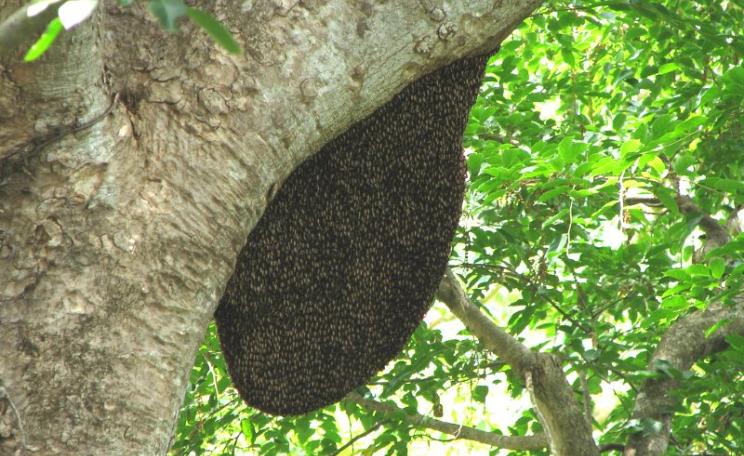
A warming climate and the loss of natural areas are driving Indian bee colonies to the brink, writes Premila Krishnan. Losing this cousin of our European honeybee could be disastrous, as rural communities depend on their honey for food and income, and the bees perform vital pollination services.
A synthetic biology plant producing the anti-malarial drug artemisinin has just shut down as it's much cheaper to use wormwood grown by African farmers, writes Almuth Ernsting. The technology is even further from making affordable diesel, with a production cost of $20-50 per litre. No wonder investors are losing patience - and confidence - in loss-making synbio companies.
India's farmers are the targets of structural violence aimed at uprooting indigenous agriculture and replacing it with an intensive corporate model based on GMOs and agrochemicals, writes Colin Todhunter. But as Monsanto's GM cotton succumbs to insect infestations despite repeated pesticide applications, agroecological farming is an increasingly attractive option for cultivators.