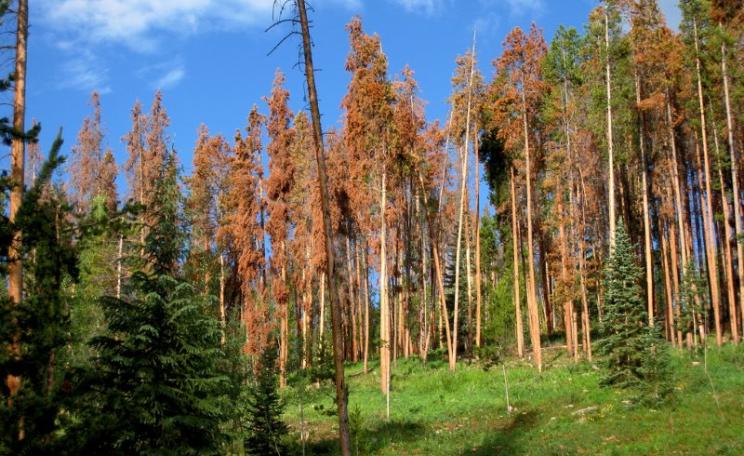
Poland's environment ministry has a plan for a huge increase in logging in Europe's last great primeval forest, writes Zachary Davies Boren. Officials claim it's to control bark beetles. But ecologists say the insects are regulated naturally within the forest ecosystem, while logging threatens huge damage to irreplaceable biodiversity.
The Aedes mosquitos that carry the Zika virus and dengue fever are not just perfectly adapted to life in cities, writes Nadia Pontes. They are also being helped along by warming climates which increase their range. It's time to get serious about the health implications of a hotter planet.
Bananas are at the sharp end of industrial agriculture's chemical war on pests and pathogens, writes Angelina Sanderson Bellamy. But even 60 pesticide sprays a year isn't enough to keep the diseases at bay. It's time to seek new solutions with little or no use of chemicals, working with nature, growing diverse crops on the same land - and breaking the dominance of the banana multinationals.
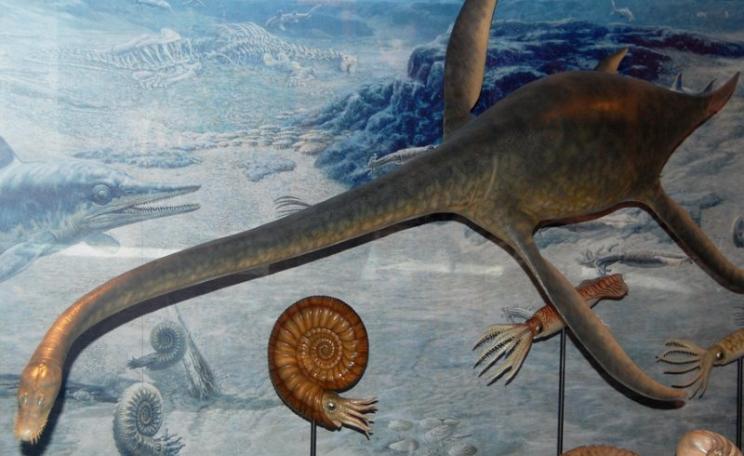
For long periods animals in ancient oceans could live only in shallow surface waters, above vast 'dead zones' inhabited only by anoxic bacteria, writes Richard Pancost. Human activity is now creating immense new dead zones, and global warming could be helping as it reduces vertical mixing of waters. Could this be the beginning of something big?
The over-hunting of wildlife in the Amazon has an unexpected knock-on effect: the reduced seed dispersal reduces the forest's capacity to store carbon in its biomass, increasing emissions from apparently 'intact' rainforest areas.
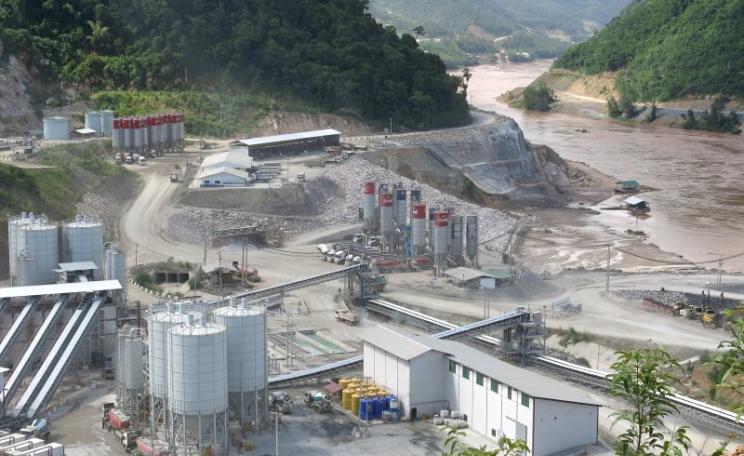
Dam builders have a new mantra, writes Tom Fawthrop: 'sustainable hydropower'. Repeated at every opportunity, it is based on the unproven idea that large dams can be made 'sustainable' by promising future 'mitigation'. And so it is at the Don Sahong dam in Laos which is about to devastate the mighty Mekong and the 60 million people who depend on it for food and livelihood.
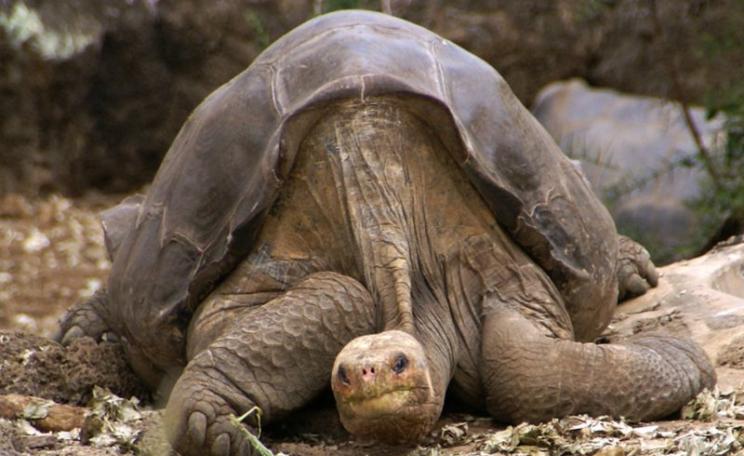
The endemic giant tortoises discovered by Charles Darwin on Floreana and Pinta islands in the Galápagos are extinct, write Luciano Beheregaray & Adalgisa 'Gisella' Caccone. But scientists have found that their genes live on in newly discovered hybrids on other islands. A selective breeding programme now aims to recreate the originals, and return them to their native islands.
Bhaskar Save, the 'Gandhi of natural farming', died last year after a lifetime of organic growing and determined campaigning against the destruction of India's traditional, sustainable agriculture, writes Colin Todhunter. His 2006 open letter, published here, sets out a devastating critique of industrial agriculture and its impacts, and an eloquent and timely agroecological manifesto.
Humanity is continuing to drive species into extinction at a terrifying rate, writes Robert J. Burrowes - not just nameless beetles and midges, but mammals, birds, reptiles, amphibians, fish and trees. The biggest causes are habitat destruction, pollution and hunting ... and unless we stop soon, we too will be among the victims of our ecocidal attack on Earth.
Rising levels of carbon dioxide don't just cause global warming, writes Jason Hall-Spencer. Another consequence is acidifying oceans - which promises to disrupt marine ecology around the world, killing off oysters and corals, while boosting 'nuisance species' like stinging jellyfish.
Yellowstone Park is home to America's last pure-bred wild bison, writes George Wuerthner. Yet the Park's management is planning to kill around a thousand of these precious animals this winter. Ostensibly it's to protect cattle on public lands near the park from brucellosis. But bison have never been known to transmit the disease to them. The real reason is to keep all the pasture for livestock.
How can Green parties acquire real political power? A new book by Per Gahrton, founder of the Swedish Green Party, is much more than a useful reference text on the history of Green Parties around the world, write Bennet Francis and Rupert Read. It's also a valuable manual in realpolitik that resonates here and now in the UK.
Increased atmospheric CO2 is doing much more than warming the Earth, writes Tony Juniper - it's also acidifying oceans, something that is already having major impacts on ocean ecology in the Southern Ocean and the North Atlantic. Likely effects: more CO2 in the atmosphere, more jellyfish.
Fresh or dried wild seaweed may be on sale in a supermarket near you, writes Fiona Bird. But much better than supporting what may be unsustainable harvesting, gather your own at low tide on rocky shores, picking just enough for your needs. Once a poverty food, seaweed is now a sought after ingredient that expresses the 'fifth taste', umami.
Novel canids are hunting the forests of Eastern North America from Florida to Labrador, writes Roland Kays, where hybrids of coyote, dog and wolf have evolved into highly competitive forms. But is it the evolution of new species? If left in long term isolation, perhaps - but that's not about to happen. Genetic mixing and evolution still have a long way to run.
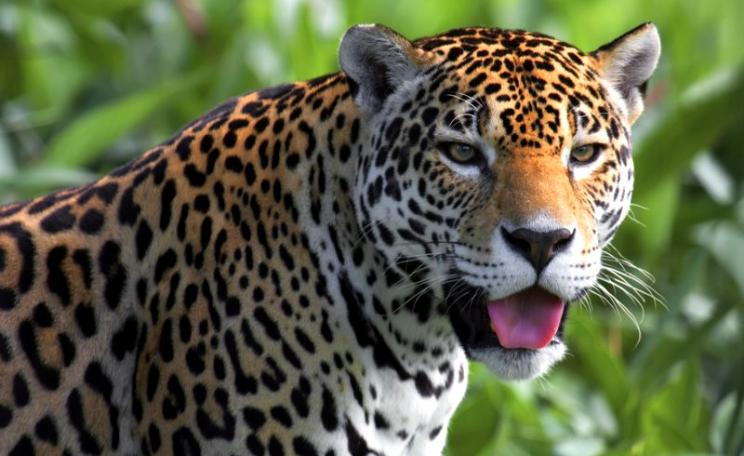
Mexico is determined to restore populations of its largest native predator, the jaguar, to long term viability, writes Kent Paterson. That means creating millions of acres of ecological corridors across the country, and joining with US colleagues to secure large areas of habitat in southwestern states, where recent sightings give hope that jaguars are returning to their former range.
Bark beetles are invariably presented as terrible, forest killing pests, writes Chad Hanson. But in truth forest biodiversity depends on them to create the snags for insects to burrow in, woodpeckers to feed off, and countless birds and even pine martens to nest in. So when you hear politicians calling for bark beetle 'salvage' logging, send them off with a flea in the ear!
Vultures are superbly adapted creatures for the essential role they play, efficiently disposing of the mortal remains of millions of dead animals, writes Louis Phipps. Yet we humans appear to be doing our best to kill them off - creating a vast hazardous waste problem that's costing us billions.
By keeping marine herbivores in check, predators from sharks to crabs are essential to keep the oceanic 'carbon pump' working - with seaweed and plankton fixing atmospheric carbon and bearing it down to deep waters and sediments before getting munched. It's time to give ocean predators the protection they deserve, for climate's sake.
For the women farmers of Tamil Nadu life has long been a struggle, Sheelu Francis told Tristan Quinn-Thibodeau, all the more so following the advent of 'Green Revolution' industrial agriculture. So now women's collectives are organising to restore traditional foods and farming methods, resulting in lower costs, higher yields, improved nutrition, and a rekindling of native Tamil culture.
A new study shows it's not just neonicotinoids that impair bees' ability to navigate to nectar and pollen sources, and to their nests: now the herbicide glyphosate has been found to have the same impact even at very low levels.
Longer than England, almost as deep as the Grand Canyon, Russia's Lake Baikal is one of the world's greatest aquatic wonders, writes Bryce Stewart. But it's a fragile paradise: the limpid waters are warming much faster than the global average, with as yet unknown effects on its ecology. And it faces the danger of a huge dam on its principal tributary, Mongolia's Selenga River.
Worried about debt, defaults and deficits? Save up your concern for the real problem, writes Glen Barry. The systematic destruction Earth's natural ecosystems for short-term profit is the 'bubble' that underlies economic growth - and if allowed to continue its bursting will leave the Earth in a state of social, economic and ecological collapse.
Biologist E O Wilson's grand idea of setting aside half of the planet for nature to thrive is both appealing and deeply challenging, writes William Lynn. But it's missing a key element: an urban vision of how people can live ecologically, joyously in the half we make our own.