As deadly H5Nx bird flu strains diversify in giant, fast-rotation flocks and and adapt to poultry that tens of thousands of human handlers care for and process every day, the emergence of a deadly human-specific flu becomes ever more likely, writes Robert G. Wallace. The industry can no longer blame wild birds for the problems it is creating - and must urgently reform its own practices.
Just imagine: gas for your cooking and heating made by composting home-grown British grass, writes Almuth Ernsting. What's not to like? Well, it would need almost all the UK's grassland to match our gas demand, leaving cows and sheep to starve or forcing them into sheds to eat foreign-grown feeds. And methane leakage could easily wipe out any climate benefit.
With USDA proposing to redefine GMOs for the purposes of food labeling, the issue is more important than ever, writes Jonathan Latham. It's not just to give consumers' the 'right to know' when they buy GM food, it's also a vital means to empower citizens to fight back against the industrialisation of food and farming, and the monopolies of agribusiness corporations.
What with rising rainfall in the west, and hotter, drier summers in the east, British farmers place plenty of challenges from global warming, writes Anna Bowen. But there are also positive opportunities for agricultural innovators to adapt their farming systems to changing conditions, make their operations more resilient and sustainable, and make themselves part of the solution.
Will the UK keep Theresa May's promise to 'leave the environment in a better state than it found it' in the Brexit negotitions? Or is the government bent on the 'bonfire of red tape', including environmental protections, demanded by right-wing former and serving ministers? Viviane Gravey sets out four 'green lines' by which to judge the Brexiteers' true colours.
Leaving the EU provides a "once in a lifetime opportunity" for England to change the way its land is managed so that nature, the environment, and society are better off according to a new report by the UK charity People Need Nature which is published to coincide with this week's Oxford Real Farming Conference. KATHRYN HINDESS reports
Supported by state and national governments, palm oil plantations are advancing over the rainforest hills of Sabah, Malaysia, writes Sophie Chao. In their way: the indigenous Murut of Bigor, whose culture, livelihood and very lives are under threat as forests and farms fall to chainsaws and bulldozers, enriching loggers and distant investors beyond the dreams of avarice.
After two decades of neoliberalism, India's magnates and corporations are profiting as never before, writes Colin Todhunter. But the entire economic edifice is built on the dispossession of the poor, locked into debt servitude, and ever rising income inequality. Prime Minister Modi's latest move, 'demonetization', is yet another example of the state stealing from the poor to give to the obscenely rich.
The Scottish government has announced that its wild beaver populations will be given the full protection of both UK and EU law. The decision has been welcomed by campaigners who point out all the benefits of beavers to biodiversity, water management and flood control. Now, they say, England and Wales should follow suit.
A study of GMO cotton varieties shows they disrupt an important beneficial soil fungus, writes Eva Sirinathsinghji, apparently due to the Bt insecticide they are engineered to express. Disruption caused by the transgenic cotton to mycorrhizal fungi, and the wider soil ecosystem, may underlie the low yields and poor pest resistance now endemic among Bt GM crops.
A government-led shrimp farming project meant to tackle extreme poverty in northern Sabah, Malaysian, won local support in 2010 by promising job opportunities for impoverished indigenous communities. Six years on, mangrove forests local people depend on for food, materials and income are closed off and being cleared - but the jobs have yet to materialise.
To feed the world we must abandon not just GMOs but all diversity-destroying selective crop breeding, organic farmer John Letts told Oliver Tickell. Only by using biodiverse local seed mixtures that evolve in the field can food production adapt to climate change without ever-increasing chemical inputs, and meet human needs for wholesome nourishment.
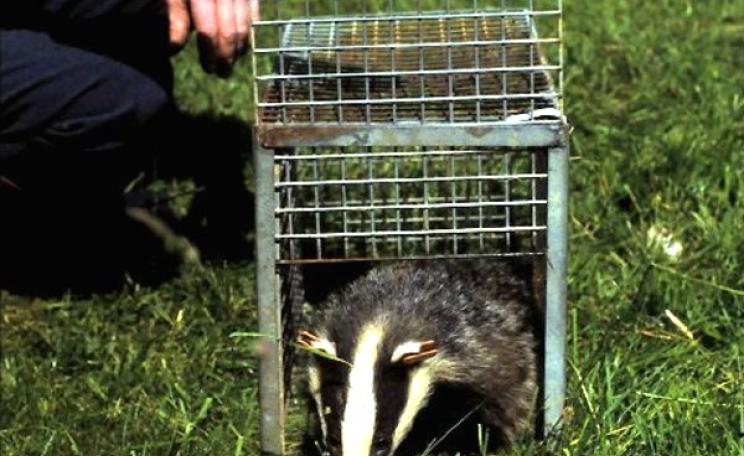
Wales has achieved enviable success in reducing bovine TB in its cattle herds without killing badgers, writes Lesley Docksey. The farming lobby is still demanding an England-style cull, but the Welsh government's 'refreshed' policy on bTB remains firmly science-based and no badgers will be killed without 'objective evidence' of infection.
We refer to them as kitchen basics - milk and eggs - but how often do we stop to think about the true cost of their production? Not often enough writes TIM MADDAMS
Abusive farming of animals in factory farms is one of the great cruelties of the modern age, writes Philip Lymbery. While some may justify it as necessary to 'feed the world', it is no such thing. The answer lies in supporting small scale traditional farmers, and respecting the livestock that are intrinsic to sustainable agriculture across the planet.
It' a perfect win-win solution for World Food Day, writes Kirtana Chandrasekaran: agroecology that sequesters carbon into soils, making them more fertile, productive and resilient, while also supporting sustainable livelihoods and tackling climate change. But instead governments are desperately trying to attract agribusiness investment that does the precise opposite.
Regulatory failures are allowing Danish pigs infected with lethal antibiotic-resistant bacteria into British farms, writes Andrew Wasley, with contaminated pork found in UK supermarkets, and three human infections recorded. The official response? Deny there's a problem, take no action, and hope for the best. Six people may have died from the bug in Denmark, but the UK is safe, surely?
The organizers of tomorrow's International Monsanto Tribunal describe it as a 'moral trial', while the company dismisses it as a 'mock trial' and 'stunt'. The truth, writes Pete Dolack, is that it's about much more than this one company. On trial is the entire neoliberal system of 'free market' finance and monopoly capitalism.
Hot on the heels of the recent revelations of antibiotic-resistant bacteria on UK meat, a new Early Day Motion in the House of Commons calls on supermarkets to prohibit 'routine mass-medication of livestock' in their supply chains, and commit to 'drastic reductions' in farm use of critically important antibiotics. Make sure your MP signs!
Thirty years ago, there was no evidence that badgers spread bovine TB among cattle, writes Lesley Docksey. Nor is there now. Yet badgers are still being slaughtered in a futile attempt to control the disease. This timely republication of Richard Meyer's 1986 book reveals the belligerent ignorance of the officials, politicians and farmers driving the failed policy.
With the International Monsanto Tribunal beginning this week (14-16 October) in The Hague, MICK GRANT reports from Vietnam with this special investigation for The Ecologist five decades after the company's lethal herbicide Agent Orange first devastated the country - and discovers the agribusiness giant is sneaking its way back into Vietnam with modern herbicides and 'Roundup-Ready' GMO crops.
The purported mission of the Cornell Alliance for Science is to explain the science underlying biotechnology and GMOs, writes Jonathan Latham. So with a debate on the issue taking place tomorrow, 5th October, on the Cornell campus, how come CAS can't find a single speaker prepared to defend their zealously pro-GM stance?
Members of the food movement share an infectious vision, writes Jonathan Latham - one which is constructive, convivial, classless, raceless, international, and embraces the whole world. Unled yet inspirational, it rests on a novel, harmonious philosophy that combines science, recognition of planetary boundaries, and the universal need for wholesome sustenance.
Global food production may need to double over the next century to feed a growing world population, writes Tim Radford - just as yields crops in major crop-growing areas fall due to higher temperatures. But there is another way: to build sustainability into our food production and consumption.