Something important just happened at Cornell's Alliance for Science, writes Steven M. Druker. Long known as a keen promoter of genetic engineering, the organization has experienced a profound change of direction. Its new director, Sarah Davidson Evanega, has opened an inclusive scientific dialogue on the safety of GMO crops. Who says it's all 'over'?
Industrial agriculture and industrial food processing have combined to produce something extraordinary, writes Julian Rose: 'KRISS the unrecognisable croissant'. Just don't make the mistake of confusing it with food. Devoid of nutrition, laced with hydrogenated oil and a long list of artificial ingredients, if you care about your own health and that of our planet - give KRISS a miss!
For the women farmers of Tamil Nadu life has long been a struggle, Sheelu Francis told Tristan Quinn-Thibodeau, all the more so following the advent of 'Green Revolution' industrial agriculture. So now women's collectives are organising to restore traditional foods and farming methods, resulting in lower costs, higher yields, improved nutrition, and a rekindling of native Tamil culture.
At least a third of the food the world grows each year goes to waste, writes John Mandyck, most of it in fields, transport and storage. The result is poor farmers, hungry people, and a massive 3.3 billion tonnes of needless CO2 emissions. It should be a key topic for action at COP21 in Paris - but so far it's not even on the agenda.
Scotland's decision to maintain its GM-free status is in the best interests of the country, its people and its farmers, 30 scientists write to Rural Affairs Secretary Richard Lochhead. It is abundantly justified by the scientific evidence and will support the sustainable, agroecological farming systems of the future.
Following scientific confirmation of the severe hazards to health caused by residues of glyphosate weed killers in food, the Soil Association is calling on bakers and retailers to stop 'pre-harvest' spraying on arable crops. The SA's Peter Melchett just sent out this letter - adapt as necessary and send to retailers, bakers, makers of cereals, pasta, biscuits and others.
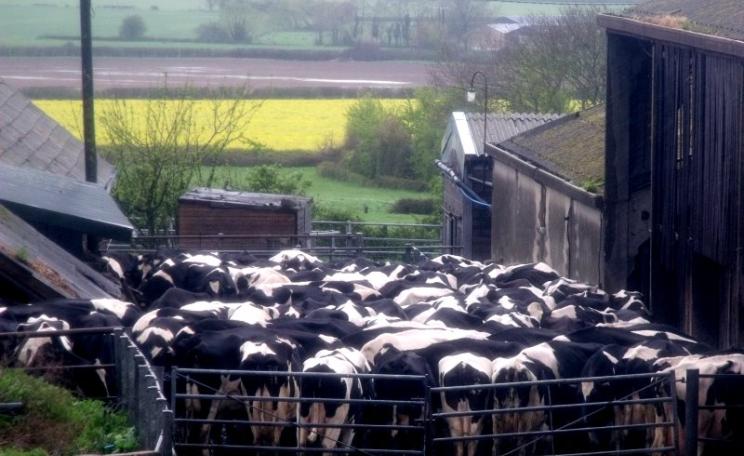
Britain's dairy farmers have been having a hard time, writes Vicki Hird, largely thanks to their exposure to an unregulated, unstable, global food market. But if the EU's TTIP 'trade deal' with the US is ever signed, pitting UK dairy farmers against zero-welfare US mega-dairies run on hormones and antibiotics, they won't have a chance.
Just as the banks are 'too big to fail', so Britain's struggling dairy farmers are 'too small to save', writes Simon Fairlie. And it's not just the government that's happy to see 16 dairy farms go the wall every week - it's also the National Farmers Union to which most pay their dues. The NFU's paradoxical response to the milk glut is to push for ever higher, more intensive milk production.
Farmers' first line of defence against pests is the ecosystem in and around their fields, write Jonathan Lundgren & Scott Fausti. With widespread or indiscriminate use of pesticides essential biodiversity is lost - and the result is more frequent and serious infestations, and a decline in food security.
Scotland's small-scale farmers have welcomed their government's decision to prevent the growing of GM crops, aimed at enhancing the country's 'clean, green status', among a coalition of green NGOs.
Monsanto is stepping up its attack on the WHO's classification of glyphosate as a probable human carcinogen, writes Peter Saunders. Dismissing the finding as 'junk science' the company is convening its own industry friendly panel and pushing its secret studies at regulators. Don't let them get away with it!
Human existence relies on healthy soils, writes Jane Rickson. But all over the world they are being lost and degraded by inappropriate land use, reducing their capacity to produce food and store water, nutrients and carbon. Sustainable land management must be incentivised to conserve this essential resource.
Japanese rice farmers won a reprieve last week when TTP negotiations in Hawaii ended without conclusion on opening Japan up to cheap US rice imports, writes Nicole L Freiner. But with Japan keen to export more cars to the US, the victory is a temporary one. At stake is a way of life, an ancient land-rooted religion, and the future viability of Japan's farming villages.
A key paper that's been widely cited to justify the use of GM 'Golden rice' to boost vitamin A nutrition has been withdrawn due to ethical breaches, with no proof of consent by parents of the children taking part in trials. But that's not the only objection.
A BBC documentary claimed 90% success for a controversial GM crop in Bangladesh, Bt brinjal, writes Claire Robinson. But as journalist Faisal Rahman discovered, there's no evidence to support the claim, the BBC relied on biased sources, and its journalists failed to investigate reports of widespread crop failure. Was it all an exercise in pro-GMO propaganda?
Jairo Restrepo is a leading champion of organic farming in Brazil, writes JuanFran Lopez, and now his influence has spread across the world. His mission too has expanded to include campaigning for the rights of small scale farmers, and an even wider project of economic, technological and societal transformation to put people at the centre of political power.
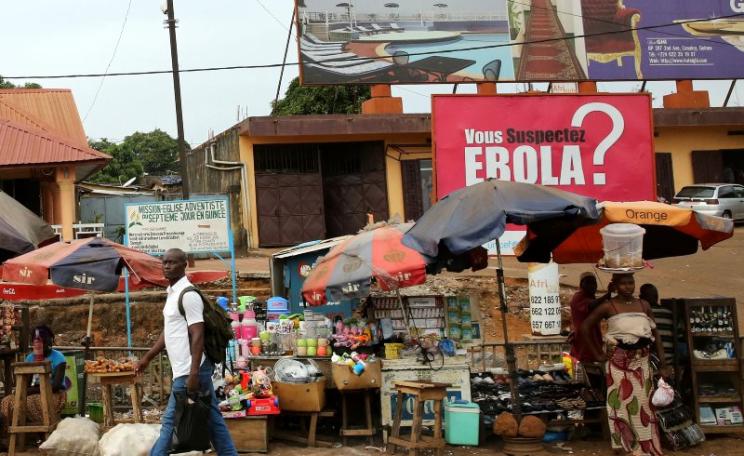
The outbreak of Ebola in West Africa had everything to do with logging, deforestation and the disruption of traditional agro-forestry by large scale industrial agriculture, writes Rob Wallace. The only long term solution to this terrible disease may lie in forest conservation, the restoration of agroecological farming systems, and the exclusion of agribusiness investment.
Soon UK farmers will begin to spray their fields of wheat, barley, oats and peas with weed killer to make crops easier to harvest, writes Natasha Collins-Daniel. But the chemicals - including glyphosate, a probable carcinogen - can end up in our bread and other food. Let's put a stop to it now!
A new biosafety report for the Norwegian Environment Agency says GM foods cannot be declared safe due to major gaps in the science, writes Nafeez Ahmed. Indeed research clearly indicates harmful and adverse impacts to both health and environment. But Monsanto insists that GMOs are just as safe as, or even safer than, conventional crops.
In her new book The Vandana Shiva Reader, the celebrated campaigner and scientist deplores the way in which the Green Revolution forced India's poorest farmers off their land, writes Colin Tudge. Now she fears even worse outcomes in Africa where a GMO-fuelled farming revolution is under way.
African governments, ignoring the protests of their farmers and civil society, this week agreed an oppressive 'plant variety protection protocol' that will open up their countries to commercial seed monopolists, while limiting farmers rights to save, use, exchange, replant, improve, distribute and sell the seeds they have developed over countless generations.
Meat is already a huge contributor to climate change, write Dora Marinova & Talia Raphaely, and as 'atmospheric space' for greenhouse gas emissions contracts, its importance will only increase. The good news? If rich countries were just to eat less of it, there's a huge climate win there for the taking!
French photographer and environmental activist, Yann Arthus Bertrand, author of 'The Earth from the Air', sets out his hopes and fears for the future in this interview with Tadzio Mac Gregor - and explains why, despite all the problems that afflict the world, he has no space for pessimism.
You might be forgiven for thinking that climate change is all about fossil fuels, writes Chris Lang. But with livestock farming causing around a sixth of global emissions, there's one quick, cheap way to cut our carbon footprints: go vegetarian, or better still, vegan. So what's taking us so long?