The OECD is pursuing a complaint that WWF has funded abuses against the indigenous forest-dwelling Baka or 'Pygmy' peoples of Cameroon, after determining that its human rights guidelines do apply to WWF owing to the 'commercial nature' of its conservation activities.
Indonesia's plans to meet its Paris Agreement obligations by protecting its swamp forests, the world's biggest land reservoir of carbon, have been acclaimed by the world's press, writes Yuyun Indradi. But they contain so many loopholes and flawed compromises that - unless radically reformed - they are doomed to certain failure.
Peru's Congress may soon approve a road through remote rainforest which is home to the country's last uncontacted tribes. The link to the Inter-Oceanic highway would open the area up to land grabs, wood cutting and gold mining, and expose vulnerable indigenous people to diseases to which they have no immunity.
A government-led shrimp farming project meant to tackle extreme poverty in northern Sabah, Malaysian, won local support in 2010 by promising job opportunities for impoverished indigenous communities. Six years on, mangrove forests local people depend on for food, materials and income are closed off and being cleared - but the jobs have yet to materialise.
COP22 has revealed signs of real momentum toward an effective role for tropical forests in achieving a low carbon future, writes Tony Juniper. Now for the hard bit - connecting with realities on the ground to make it happen. This will mean working with indigenous and other forest communities to support and reward their conservation efforts, while harnessing large-scale international carbon finance.
A project to reintroduce red squirrels to isolated areas of regenerating forest in the Scottish Highlands gets under way this month. This will increase both the numbers and the range of red squirrels in the UK, and help to regenerate their native Caledonian forest habitat.
Contrary to arguments advanced in a recent Ecologist article, the biomass industry supplying the Drax power station in North Yorkshire is a model of sustainability, writes Nina Skorupska, and delivers genuine, substantial emissions reductions compared to coal.
The Drax power station in North Yorkshire is among Britain's greatest greenhouse gas emitters, writes Almuth Ernsting. Not only is it burning some 6 million tonnes of coal every year, it is also burning its way through forests in the USA and other countries as it converts to biomass-fired units, rewarded by £1.3 million a day in subsidies. Join the #AxeDrax protest this weekend!
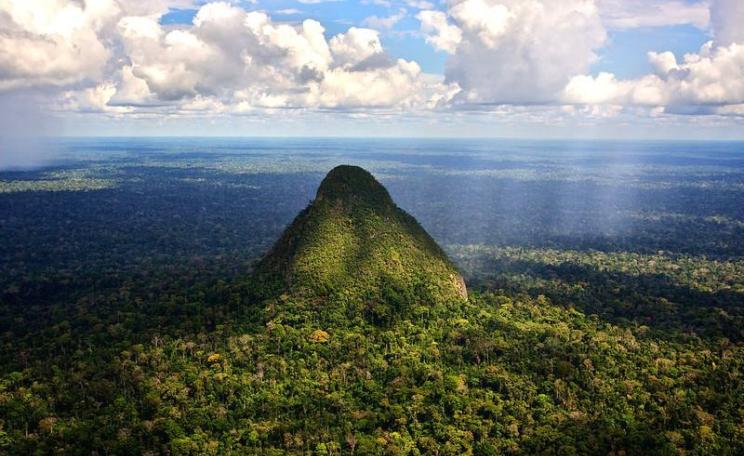
Full credit to Peru for creating the Sierra del Divisor national park in one of the most precious areas of the Amazon, write Lewis Evans & Sarina Kidd. But not for leaving it open to oil drilling, risking the future of uncontacted indigenous tribes that depend on their pristine rainforest environment to survive.
There's a simple way to induce us to make good environmental choices, writes Cass R. Sunstein: make them the default setting. Whether it's selecting double sided photocopies or renewable electricity tariffs, defining easily-overridden 'green defaults' is by far the most efficacious means to influence consumer choices for the environment and the planet.
It's not that Dilma Rousseff, Brazil's ousted President, was wonderful for the environment, writes Ed Atkins. It's that Michel Temer's new regime is certain to be far worse. Plans are afoot to weaken environmental assessments for large projects like mines, roads and dams. And the new Minister of Agriculture is a notorious campaigner for hugely increased deforestation.
The destruction of the world's wilderness is accelerating with a new clutch of mega projects from dams, roads and mines to large scale agriculture, write James Watson, Bill Laurance, Brendan Mackey & James Allan. It's cost-effective to put a stop to it right now for the carbon value of wilderness alone - never mind the biodiversity and indigenous peoples it safeguards.
In the thick of the Olympic frenzy, one voice that was systematically excluded from mainstream narratives is that of Brazil's Indigenous Peoples, writes Lewis Evans, who have fought to survive through centuries of dehumanisation, theft and genocide. And now they face a fresh attack as a proposed constitutional change, PEC 215, threatens a new round of indigenous land theft.
This month wood pellet mills in the southern US that supply the UK's Drax power station were awarded 'sustainability' certificates under a voluntary scheme governed entirely by energy companies. The certificates provide no credible guarantee that the fuel does not come from ecologically valuable natural forests and wetlands, clear-cut and replaced by industrial plantations.
Brazil's new neoliberal government is intent on building a massive new dam deep in the Amazon rainforest on the on the Tapajós river, writes Helle Abelvik-Lawson, obliterating the indigenous territory of the Munduruku people in defiance of their constitutional rights.
A new UN report warns of a threefold increase in extraction of the Earth's primary materials between 1970 and 2010, writes Alex Kirby. The boom in the production of minerals, ores, fossil fuels, timber and biomass and will be to intensify climate change, increase air pollution and reduce biodiversity.
The UK imports millions of tons of American wood pellets every year to be burned in power stations for 'climate friendly' electricity, writes Matt Williams. But his recent visit to the southern US showed him that this practice is devastating beautiful, natural forests rich in wildlife - while the UK government's own research shows that it's worse for the climate than the coal it replaces.
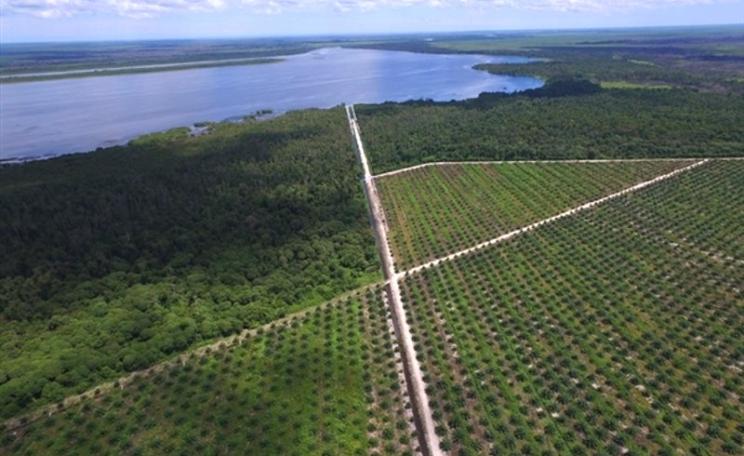
Over 300 major food companies used to buy palm oil from IOI, writes Annisa Rahmawati. But after the company was found to be destroying vast areas of Indonesia's rainforest and draining peatlands to make new palm oil plantations, it has been deserted by its customers. Now IOI must go beyond just sticking to the rules, and start actively repairing the damage it has caused.
A constitutional amendment that would allow 'strategic' public works including dams, roads, mines and other mega-projects to go ahead following the mere completion of an environmental impact assessment is being considered by a Committee of the Brazilian Senate, writes Helle Abelvik-Lawson.
Slavery is a terrible thing for the world's estimated 36 million slaves, writes Kevin Bales. But it's also an environmental disaster. Many slaves are forced to work in destructive activities like clearing forests for mines, farms and plantations - making slave labour the world's third biggest 'country' in terms of CO2 emissions. It really is time to end slavery!
The remarkable Leuser ecosystem in Aceh, Sumatra, has faced massive destruction over recent years with rice farms, palm oil, roads and mines, writes Bill Laurance. But that's all set to end with a moratorium on forest clearance that's supported at the highest levels of government, both state and national. This is definitely news to celebrate! But we must also maintain our vigilance.
Madagascar's unique Spiny Forest, a stronghold for the island's lemurs, is fast being felled for charcoal, writes Charlie Gardner - and it's a knock-on impact of the increasingly unpredictable climate and sparse rains that are forcing farmers from the land. To create a 'safety net' for the forest, first safety nets must be put in place to protect displaced farmers, fishers and pastoralists.
Britain's ash woods are under threat from a fast-spreading 'dieback' disease, write Steve Woodward and Eric Boa. With 3% of ash trees resistant to the fungus, the species should just be able to survive. But now scientists fear the arrival of the Emerald ash borer beetle, already infesting forests in the US and mainland Europe. Could the two combine to push our ash trees into extinction?
How do you solve a problem like deforestation? By a change of diet, writes Laura Kehoe. Scientists have discovered that we can feed the world and stop destroying forests by eating less meat. If we all went vegetarian that would reduce deforestation by 94%. And if we went the whole way to veganism enough land would be freed up for a new forest the size of the Amazon, and allow a widespread shift to organic farming systems.