A film investigating the 2012 murder of a forest defender has been banned by the Cambodian Government, writes Rod Harbinson. Chut Wutty's campaign to protect the forest on which his community depends clashed with powerful business and military interests. A first attack by soldiers was held off by campaigners, but...
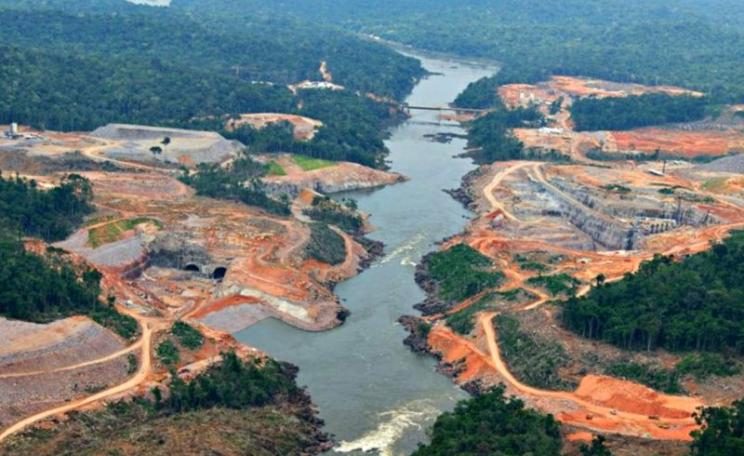
Disregarding revelations of systemic political corruption in Brazil's hydropower sector, President Dilma Rousseff is ploughing ahead with a cascade of giant dams on the mighty Tapajos river. Among the companies touting to win huge construction contracts are France's EDF and Engie, and Germany's Voith and Siemens - in a consortium led by Brazil's Electrobras, which stands accused of high-level corruption over four other dam projects.
The rights of nature and of indigenous communities are enshrined in Ecuador's constitution, writes Kevin Koenig. But down in the Amazon the government is going full speed ahead with oil extraction on indigenous territories whose owners are committed to keeping their forests and waters pollution-free. A mighty battle is brewing that looks certain to come to a head this year.
Poland is intent on a huge increase in logging in Europe's greatest ancient forest, writes Lucinda Kirkpatrick. The government says it's needed to control spruce bark beetles. But the insect is a key part of the ecosystem, creating woodpecker nest sites and habitat for other endangered species. In truth it's just a big timber grab that must be strongly resisted.
Coffee may be grown all around the tropics, writes Fiona Hesselden, but it originates in just one place: the 'coffee rainforests' of the Ethiopian highlands. We depend on the wild plants for new genes and varieties, yet the forests are falling fast to the advance of farmers. To preserve the forests and all their biodiversity, the original people of the forest must receive their just rewards.
Andrea Wulf's book about the remarkable 19th century explorer and naturalist Alexander von Humboldt is welcome, opportune and a pleasure to read, writes Matt Mellen, packed as it is with high adventure and amazing discoveries. We have much to learn from him today in tackling the world's environmental crises; reading this book is an excellent - and enjoyable - way to begin.
An encounter with a Colombian shaman led Peter Bunyard on a spiritual journey into and beyond the living, breathing, transpiring Amazon rainforest, providing key insights into the essential role of the great tropical forests in the workings of Gaia. He emerged re-energised from his visions - and inspired to redouble his efforts to save our wondrous planet.
Monarch butterfly numbers are dwindling despite protection of their wintering forests in Mexico, and voluntary schemes to restore their food plant, milkweed, in US field margins, writes Eva Sirinathsinghji. These measures alone are insufficient: no less than an end to the mass spraying of glyphosate on crops, predicated by 'Roundup-ready' GM corn and soy, will do.
Australia's rainforest state, Queensland, is destroying well over 100,000 hectares of native vegetation a year, and rising, write Martine Maron, Bill Laurance & colleagues, including 'at risk' habitats and Koala bear forests. This is more than reversing the entire nation's eco-restoration programs and pushing endangered species ever closer to extinction.
Poland's environment ministry has a plan for a huge increase in logging in Europe's last great primeval forest, writes Zachary Davies Boren. Officials claim it's to control bark beetles. But ecologists say the insects are regulated naturally within the forest ecosystem, while logging threatens huge damage to irreplaceable biodiversity.
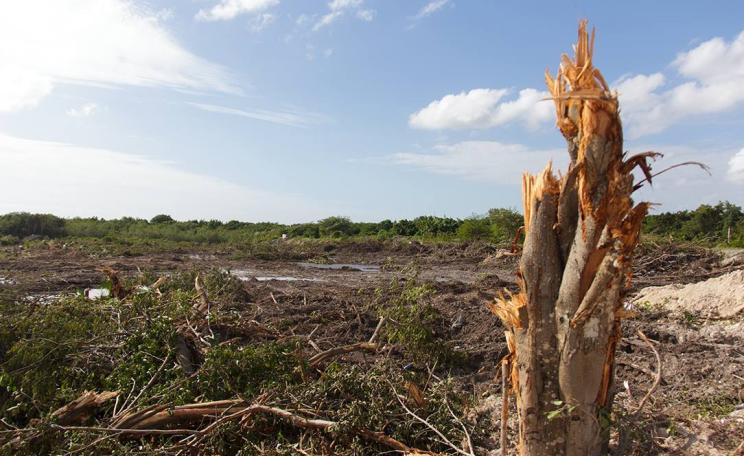
Mexico's tourist resort of Cancún has just lost one of its greatest natural riches, writes Miguel Rivas: 57 hectares of species rich mangrove forest, bulldozed in a massive overnight attack by property developers in league with local officials. But people power can still win the battle and see the Tajamar mangroves restored.
The public interest is already derelicted by federal officials on the US's public lands routinely intimidated by aggressive local economic and political interests, writes George Wuerthner. And now it's only going to get worse, with media coverage of the Malheur Wildlife Refuge debacle uncritically promulgating the false narrative of over-zealous enforcement of regulations.
For years the 'market mantra' has been to save forests by selling the carbon they embody, writes Chris Lang, harnessing the profit motive for the benefit of trees and climate. But it never worked, and now even former fans are admitting that REDD is just another failed conservation fad. So what next? How about asking local communities to manage their forests as commons?
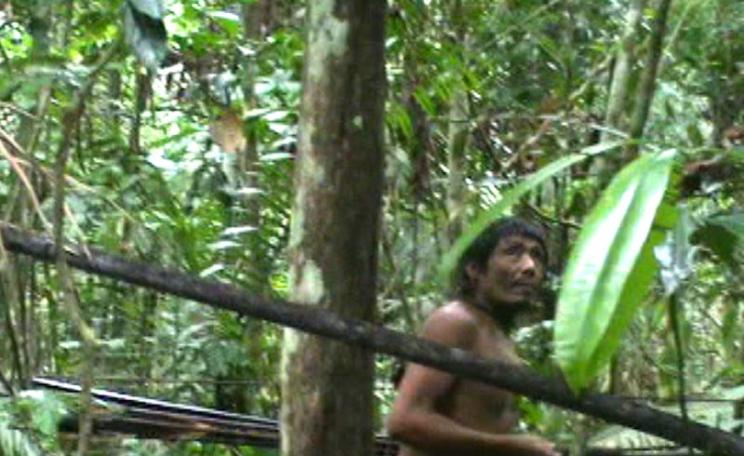
The Kawahiva, an uncontacted tribe in the Amazon rainforest, face extinction unless Brazil's government acts to secure their legal rights to land, security and to remain undisturbed by outsiders, writes Lewis Evans. The decree that would achieve this vital goal has been sitting on the Minister of Justice's desk since 2013. Let's make sure he signs it soon, before it's too late.
Roads, mines, dams, power lines, pipelines and other infrastructure projects are fast eating into the world's 'core forests', writes Bill Laurance. These rare and precious places where wildlife and ecological processes can flourish undisturbed must come before the evanescent gains of 'development'. To save what's left, governments and funders must learn the word 'No!'
The over-hunting of wildlife in the Amazon has an unexpected knock-on effect: the reduced seed dispersal reduces the forest's capacity to store carbon in its biomass, increasing emissions from apparently 'intact' rainforest areas.
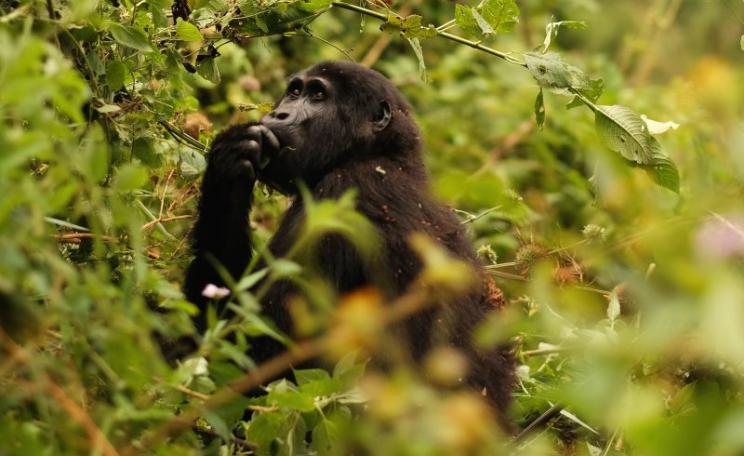
Mountain gorillas in the Bwindi Impenetrable Forest are at risk from tea plantations that would obliterate the adjacent Kafuga Forest, a vital buffer zone for local people, writes Richard Sadler. Deprived of foods, herbs, medicines and clean water from the forest, human pressure on the gorillas would inevitably increase, and expose them to potentially lethal diseases.
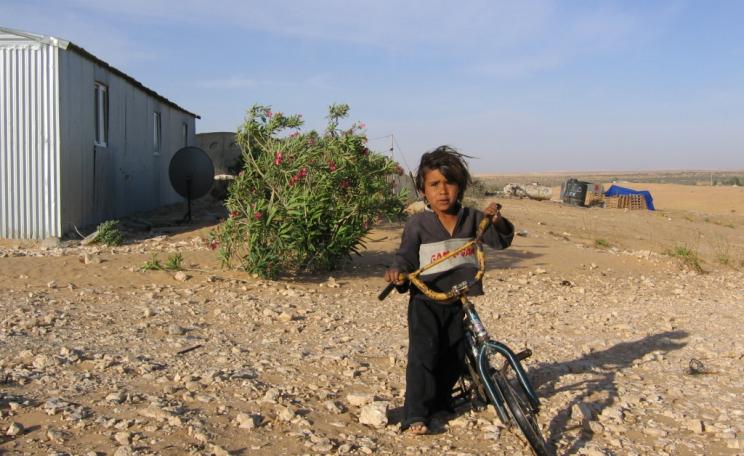
Israel's government is now free to expel 1,200 of its Bedouin citizens from their 'unrecognised' villages in the Negev desert, following a Supreme Court decision not to hear their appeal. Now only one thing can save the Bedouin, their communities and their way of life: an international outcry.
The world we inhabit is a miracle of billions of years of evolution as life has unfolded in its full beauty and diversity, writes Grant A. Mincy. But human activities - deforestation, mining, urbanisation, pollution, climate change - are tearing away at the functioning fabric of the living biosphere. A mass extinction is under way, and it must be halted, and reversed. But how?
Never mind Brazil's COP21 promises to cut its carbon emissions, writes Jan Rocha. New laws passing through Congress will encourage deforestation by removing safeguards and opening up indigenous territories to mega-projects. Serious drought is already contributing to a big increase in forest fires.
Farmers on Palawan are being tricked into giving land away to palm oil companies with local government support, writes Rod Harbinson. Under the palm oil company 'leases' the farmers lose all rights to their land, never receive any money, and are saddled with 25 years of debt. Those who resist the land grabs are now in fear for their lives following the murder of a prominent campaigner.
Which of hand dryers or paper towels have the greatest impact on the environment? asks Simon Lockrey. Are your paper towels recycled or tree-pulped, your dryers power-hungry and long-blowing or short-blast and power-saving. Only full Life-Cycle Analysis can reveal the true punches these seemingly harmless items can deliver to our environment.
Hidden away in the pages of UN-speak that make up the Paris Agreement are the makings of global carbon market in which a host of exotic emissions derivatives can be freely traded, writes Steffen Böhm. And it's all going to be a huge and expensive distraction from the real and urgent task of cutting emissions.
The key to reducing the risk of more floods like those in Carlisle is to realise that conventional 'flood defence' can never provide security against the ever more extreme weather events that global warming will bring. We must embrace natural solutions to holding back flood waters: more trees; and bring back the beavers!