Paris has been awash with hype about 'CO2 recycling' and 'carbon neutral' or even 'carbon negative' technologies based on burning millions of trees, writes Rachel Smolker. But the alchemical notion that waste carbon can be spun into corporate gold is hitting serious reality checks. It's time to ditch the fantasies and progress the real solutions: like caring for land, soils, forests and grasslands.
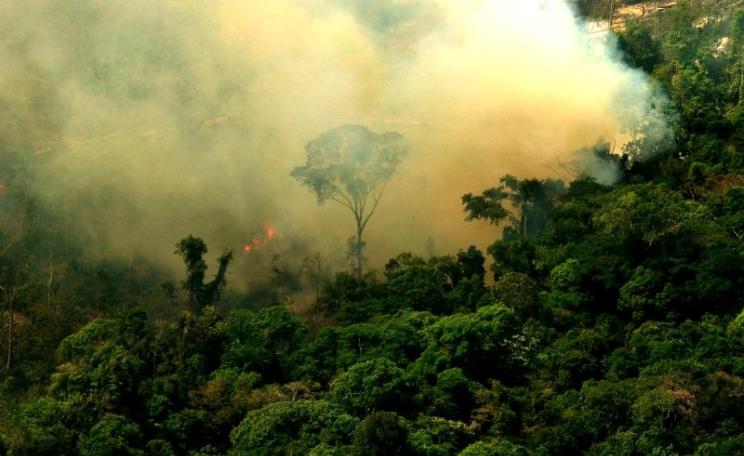
It's not just Indonesia's forests and peatlands that are burning - the Amazon is suffering almost as badly, with over 18,000 fires last month in Brazil alone, write Jos Barlow & Erika Berenguer. The future is looking hot and fiery.
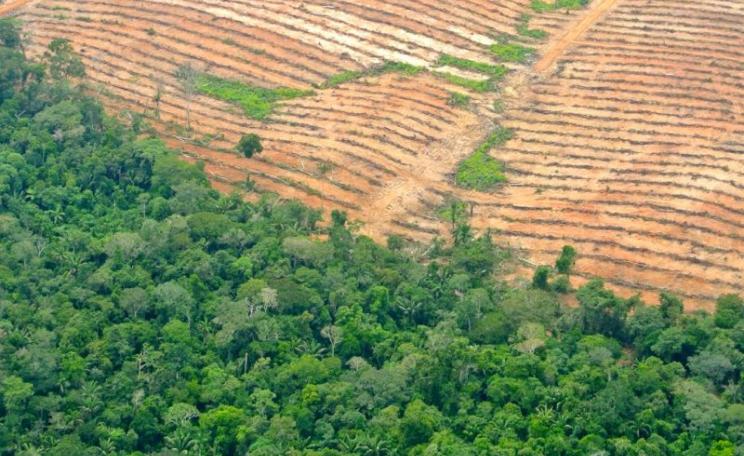
'No deforestation' pledges by global food corporations are yielding results, writes William Laurance. But now the Indonesian and Malaysian governments are calling on them to abandon their promises - even as the region's rainforests go up in smoke, cleared for new oil palm plantations. The companies must hold firm to their commitments.
Death threats to an indigenous forest defender in Peru have followed his success in closing down an illegal palm oil operation on his tribe's lands carried out by a member company of the Roundtable on Sustainable Palm Oil, now meeting in Kuala Lumpur.
A new investigation of palm oil plantations, companies and auditors has found that the Roundtable on Sustainable Palm Oil is failing to deliver on its promise, writes Chris Lang. Widespread fraud, collusion between auditors and companies, conflicts of interest, and a flawed complaints system mean that RSPO-certified palm oil may be destructively and illegally produced.
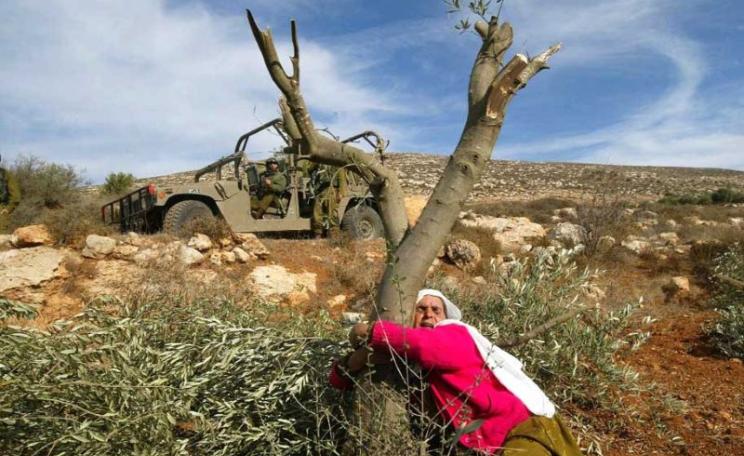
The uprooting and cutting down of over a million olive and fruit trees in occupied Palestine since 1967 is an attack on a symbol of life, and on Palestinian culture and survival, writes Dr. Cesar Chelala. A grave crime under international humantarian law, the arboricide is also contrary to Jewish religious teachings.
India's neoliberal government is attempting the mass seizure of indigenous lands, commons and forests in order to hand them over for corporate exploitation with mines, dams and plantations, writes Pushpa Achanta. But tribal communities are rising up to resist the takeover, which is not only morally reprehensible but violates India's own laws and international human rights obligations.
Indonesia's President Widodo has promised strong action to put out his country's raging forest fires, writes Scott Edwards. Yet this year's conflagrations are the worst since 1997. His problem? Powerful elites in forested provinces are making big money from the burning. And they see little reason to heed Widodo's pleas - or anyone else's.
Just as Indonesia's forests are going up in flames, in part as a result of illegal logging on a massive scale, the country's Trade Minister has issued a regulation that would rubber stamp exports of illegal timber - also undermining a timber agreement with the EU that's due to come into force next month.
A new paradigm of forest conservation is gaining ground, writes Isaac Rojas: 'financialising' them and the climate and ecological services they provide to global investors. But this is a false solution - and one that excludes the local and indigenous forest communities who can truly be relied upon to sustain their sylvan heritage.
Deep in the Brazilian Amazon indigenous people have been protecting their reserve from illegal loggers, writes Luana Lila. The loggers took their revenge by kindling one of the Amazon's biggest fires ever, destroying almost 200,000 hectares of rainforest.
It was all going so well for Chevron - a New York court had ruled that a $9.5 billion judgment against it set by Ecuador's supreme court for massive pollution deep in the Amazon was corrupt and fraudulent. But then its star witness broke ranks and admitted, in another court, that he had lied, and the only bribes were coming from Chevron. Will Ecuador's pollution victims finally get justice?
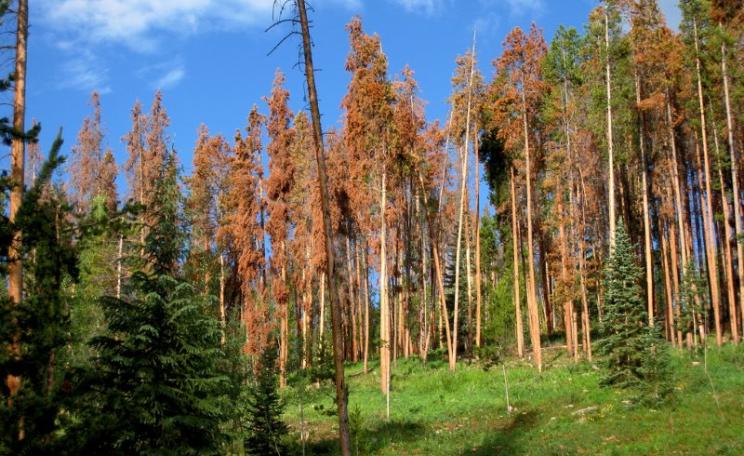
Bark beetles are invariably presented as terrible, forest killing pests, writes Chad Hanson. But in truth forest biodiversity depends on them to create the snags for insects to burrow in, woodpeckers to feed off, and countless birds and even pine martens to nest in. So when you hear politicians calling for bark beetle 'salvage' logging, send them off with a flea in the ear!
'Climate Smart Agriculture' advocates were out in force at the just concluded climate talks in Bonn, writes Pavlos Georgiadis. But their finely crafted corporate message presents a real threat to genuine agroecological solutions to the interlinked food, farming and climate crises.
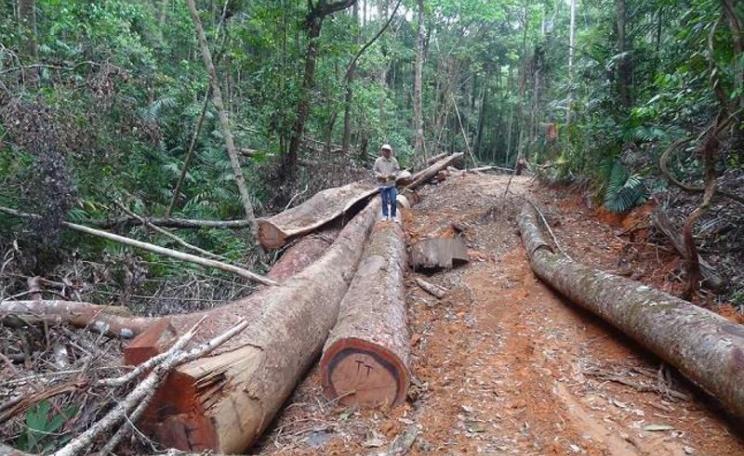
Forests in Laos are disappearing at a ferocious rate under the impact of rampant illegal logging which accounts for 90% or more of the industry, with lucrative export markets in Vietnam and China, writes Chris Lang.
As indigenous activists opposing hydropower dams on their territories gather this weekend in the rainforests of Sarawak, Malaysia, they have good news to celebrate, writes Rod Harbinson: a giant dam on the Baram river has been put on hold. But the forests are still being logged, local people have been stripped of land rights, and a programme of 12 giant dams is still official policy.
Austrian timber company Schweighofer is linked to large-scale illegal logging which accounts for half of Romania's timber production. An EIA investigation finds that almost all the illegal timber ends up in the company's mills.
Sue Lloyd Roberts, the brilliant investigative journalist who died yesterday, was a unique phenomenon in the BBC, writes Oliver Tickell - fearless, rooting out the dirtiest of secrets, fighting the cause of the oppressed, abused, exploited and downtrodden. Now the BBC must keep her mission alive with a new, independent unit dedicated to human rights worldwide.
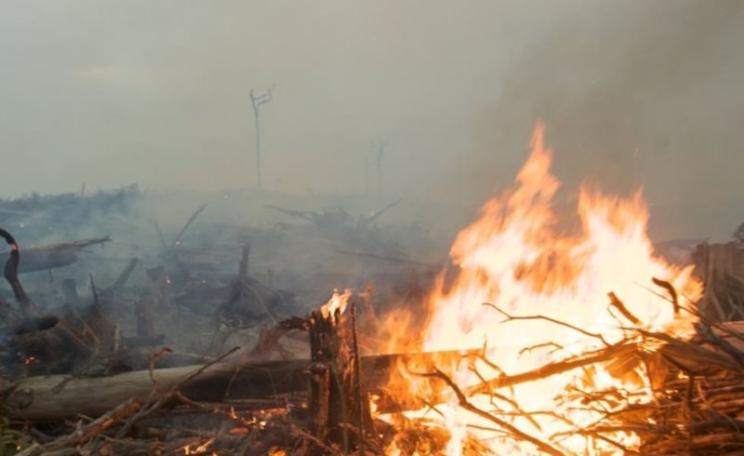
Thanks to massive forest clearance for palm oil plantations combined with drought conditions in this 'El Nino' year, writes Zachary Davies Boren, rainforest and peatland fires across Indonesia are set to emit more carbon than the UK, while covering millions of square kilometres with choking smoke.
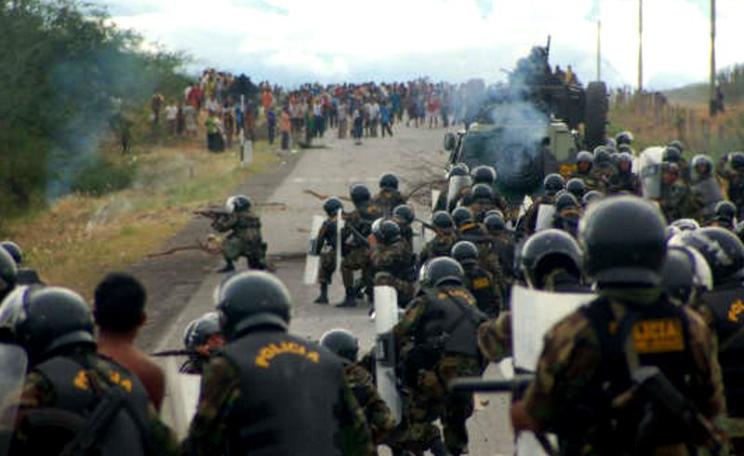
Peru is in hot competition with Brazil to be the main focus of Amazonian deforestation, writes Clément Doleac. A neoliberal government desperate to hand over the country's forests, oil, gas, minerals and indigenous lands for corporate exploitation is unafraid to break national laws, turn a blind eye to air and water pollution, and respond to any challenges with overwhelming violence.
The orangutans of Southeast Asia make a fantastic symbol of endangered rainforests, writes Liana Chua, rousing public opposition to palm oil companies and their bulldozers. But this story of good versus evil omits the essential human dimension. To save the rainforests and their great apes, we must make forest peoples a key part of the conservation narrative.
Coming so soon after the Magna Carta celebrations, the eviction and destruction of the Runnymede Eco-village is a parable of our times, writes Nicholas Sebley: a violent assertion of the power of capital over people and community, and part of a deliberate, systematic closure of alternative ways of living outside the mainstream economy.
The burning forests and peatlands of Indonesia are once again casting a pall of choking smoke across the region, in the process releasing billions of tonnes of carbon. Promises to solve the problems stand betrayed - and COP21 commitments to tackle the problem are being weakened.
Longer than England, almost as deep as the Grand Canyon, Russia's Lake Baikal is one of the world's greatest aquatic wonders, writes Bryce Stewart. But it's a fragile paradise: the limpid waters are warming much faster than the global average, with as yet unknown effects on its ecology. And it faces the danger of a huge dam on its principal tributary, Mongolia's Selenga River.