The government's 'misclassification' of an eight-lane M25 road bridge over the river Thames East of London as a 'rural road' meant they did not have to report the illegal levels of pollution found there, writes Keith Taylor - getting off the UK off the hook for a 17th breach of EU air quality standards. What an unfortunate error!
UK supermarkets led the world in saying 'no!' to GM foods and ingredients, writes Liz O'Neill. But they faltered on GM feeds for pigs, cattle, poultry and fish, with GM soy and corn dominating the UK's non-organic market. Now campaigners are putting the pressure on supermarkets to make their entire supply chains GMO-free for the sake of animal, human and ecological health.
We know the outcome of Defra's latest 'public consultation' on killing badgers long before the results have even been analysed, writes Lesley Docksey. Environment secretary Andrea Leadsom has already promised farmers to extend the cull 'even further' - although it brings no proven benefits. Welcome to the new world of 'alternative facts' that's driving UK government policy.
The UK's inability to import radio-isotopes for cancer therapy is just the latest outcome of the UK's decision to leave EURATOM to hit the headlines, writes Pete Roche. It may also put a brake on the UK's plans to build new nuclear plants, and import and export nuclear fuel and wastes. The UK's exit from the treaty, as a strongly pro-nuclear state, could also mark an EU-wide anti-nuclear swing.
With most of our food exports going to the EU, and most of our food imports coming from the EU, Molly Scott Cato wondered what plans the government had for the sector after Brexit. The answer? None! Two reports published today map out a positive future of sustainable farming, local food, thriving rural economies and abundant biodiversity. But is the government on the same page?
The coal power station at Aberthaw is not just polluting much of South Wales with its filthy emissions. It could also be seriously damaging the health of children in Colombia with coal dust from BHP Billiton's massive Cerrejón coal mine. In this open letter, Luz Ángela Uriana Epiayu implores RWE npower to shut down its stinking, obsolete and illegal power station.
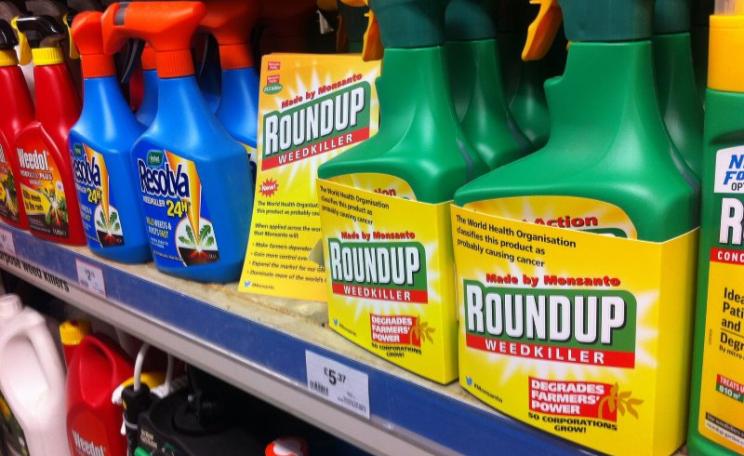
Letters from an EPA toxicologist to the EPA official in charge of assessing whether glyphosate, the active ingredient of Monsanto's Roundup herbicide, causes cancer, reveal accusations of 'staff intimidation' and 'political conniving games with the science' to favour pesticide corporations, writes Carey Gillam. Could this be a game-changer for cancer-suffering plaintiffs?
At what point are technologies so complex, uncertain, or unmanageable as to be beyond regulation? The question is key to human and ecological health, writes Jonatham Latham. But instead of learning from successful approaches, such as aviation safety, we are throwing the lessons away when faced with truly complex problems - like chemicals, GMOs, and now 'gene drives'.
It's not just that the government does not seem to care about the millions of Britons that have died prematurely from traffic pollution, writes Donnachadh McCarthy. It's that every policy intervention they have made is making the problem worse! Join us this Saturday to demand a sane transport policy that will make our roads safe for people, and our air fit to breathe.
I am pro-vaccine, writes Robert F. Kennedy Jr. I had all of my six children vaccinated. I believe that vaccines save millions of lives. So let me explain why I edited the book 'Thimerosal: Let The Science Speak', which exposes the dangerous and avoidable use of the mercury-based preservative thimerosal in vaccines given to millions of children and pregnant women here and around the world.
If it wasn't climate change, was the real purpose of the Number 10 meeting of Theresa May's advisors and President Trump's environmental transition supremo Myron Ebell to plan the post-Brexit deregulation of UK farming, including pesticides? That's how it looks, writes Georgina Downs - and we had better begin now to fight for our health, wildlife and environment.
Reeling from California's decision to ban glyphosate, fearful of 're-evaluation' by EU and US regulators, and facing ruinous cancer claims in federal courts, the US chemical industry are fighting back, writes Carey Gillam. Their key argument: don't trust independent doctors and scientists - trust us! And as they just told a California court, profit must come before people.
As deadly H5Nx bird flu strains diversify in giant, fast-rotation flocks and and adapt to poultry that tens of thousands of human handlers care for and process every day, the emergence of a deadly human-specific flu becomes ever more likely, writes Robert G. Wallace. The industry can no longer blame wild birds for the problems it is creating - and must urgently reform its own practices.
Alexey V Yablokov (1933-2017) was a scientific giant of the post-Chernobyl age, writes Chris Busby. It was he who brought together the work of dissident Soviet scientists and revealed to the world, in English language, the true health impacts of the Chernobyl nuclear catastrophe. His hard work and dedication underlies the continuing opposition to the nuclear industry today.
As Kraków, Poland's second city, takes steps to protect its citizens from rising electromagnetic 'smog' from mobile phones, wifi, Bluetooth, smart meters and other devices, Lynne Wycherley summarises 2016's news highlights on the emerging bio-risks of rising exposure to non-ionisiong radiation. For how much longer can governments continue to ignore the growing evidence of harm?
Cutting-edge molecular profiling analyses reveal that the popular weedkiller Roundup causes serious liver damage to rats at low doses permitted by regulators, reports Claire Robinson. The findings suggest that residues of glyphosate-based herbicides in food could be linked to rises in the incidence of non-alcoholic fatty liver disease, obesity, diabetes and 'metabolic syndrome'.
Days into the 2017 pollution limits on the Brixton Road in Lambeth, South London, has already breached EU pollution limits for NO2 for the entire year. Meanwhile UK sales of diesel cars - one of the main causes of NO2 pollution - reached record levels in 2016, reflecting the government's failure to tackle the problem in spite of numerous court orders.
The US Environmental Protection Agency was on the defensive last week in its hearings to determine whether glyphosate, the word's number one herbicide, causes cancer, writes Carey Gillam, as it stood accused of giving preferential treatment to industry representatives, excluding evidence of cancer links, and refusing testimony from a world expert epidemiologist.
The Lifetime Study of Japanese A-bomb survivors is a monumental fraud which deliberately excludes controls for being 'too healthy', writes Chris Busby. Put them back in, and you find that low levels of radiation cause over 100 times more cancer than they are 'meant' to, creating a silent global massacre of the innocent. Under the Euratom treaty, the entire nuclear industry must now be 'rejustified'.
Al available science indicates that badgers have little if anything to do with bovine TB in cattle, writes Lesley Docksey. This is reflected in Wales's consultation on its 'refreshed TB Eradication Programme'. We must hope that Northern Ireland's bTB Eradication Strategy will be equally science based - and ready to campaign hard if it relies on cruel, ineffective and expensive badger culls.
Magnox has applied to dissolve spent nuclear fuel canisters and release the liquid into the sea near Bradwell nuclear power station in Essex, writes Chris Busby. This will wash radioactivity onto mudflats in a populated area already suffering from excess cancers, however the publicly available documents ignore this key fact. We must make sure this dangerous application is refused.
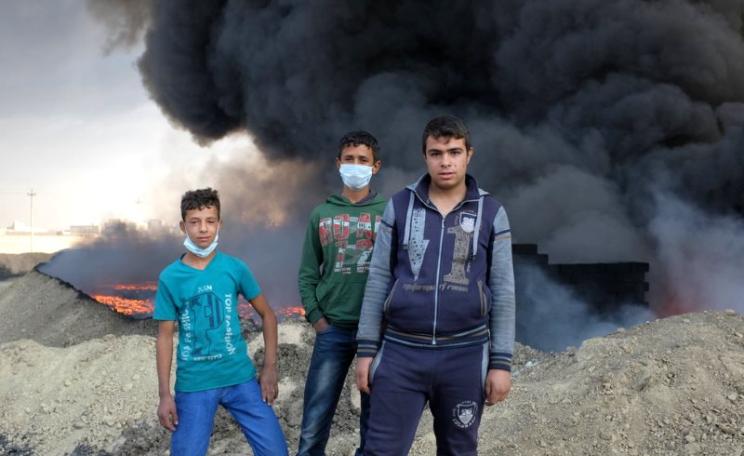
Hundreds of square kilometres of Iraq are eclipsed by dense clouds of toxic smoke from fires at oil facilities and a sulphur factory blown up by 'Islamic State' terrorists, writes Doug Weir. With the fires left to burn for months on end, entire towns are suffering a public health catastrophe. But the Iraqi government is slow to act, or even collect vital health and environmental data.
Article 6 of the Euratom Treaty provides for nuclear industry practices to be rejustified in the light of new scientific evidence of harm to health, writes Chris Busby. We now have that evidence, in particular that radiation exposure even at very low levels causes severe and heritable genetic damage to people and entire families. Now, we must use the law to protect our health from radiation!