With the coming of summer, South Korea's 'Boknal' dog-eating festival is under way, writes Anneka Svenska. Known for the extreme cruelty deliberately inflicted on dogs to improve the taste of their meat, Boknal is a barbaric relic rooted in ignorance and pseudo-medical superstition whose time is well and truly up.
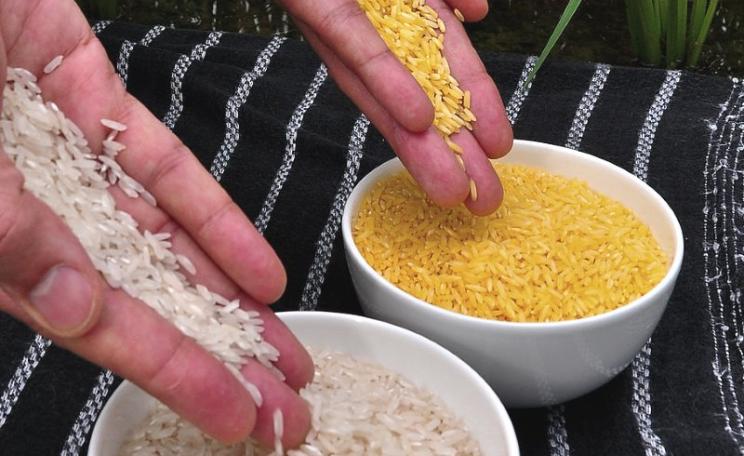
Greenpeace is being attacked for 'crimes against humanity' by 100 Nobel laureates for blocking GMO 'golden' rice, reports Claire Robinson. But the low-yielding crop is years away from going on sale, and there is no proof of any nutritional benefit to the malnourished children it's meant to benefit. Could the distinguished prize-winners have fallen for slick pro-GMO PR and spin?
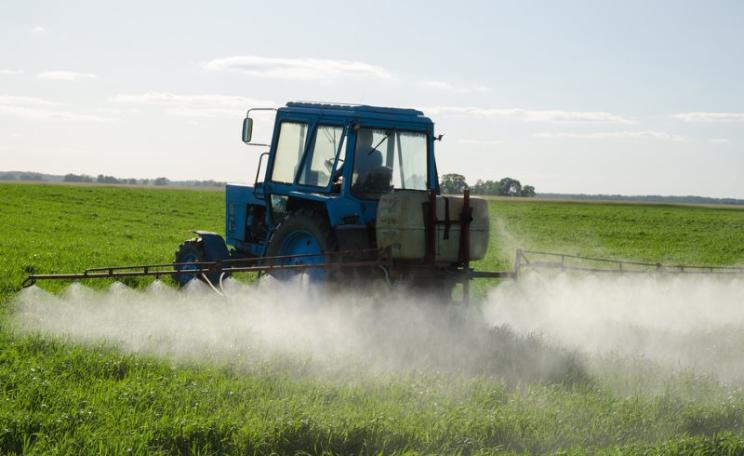
As the EU prepares to vote on whether to re-authorise glyphosate this week, a new study finds that commercial formulations of the herbicide alter the development of rats' uteruses, potentially causing cancer and affecting fertility.
Plastic is ubiquitous around the world's oceans, writes Lesley Henderson, but although it's visible from space, it can be surprisingly elusive in the water - as she heard from Jo Ruxton, producer of the investigative documentary 'A Plastic Ocean'. Solutions to this growing hazard have also proved elusive to date, hence the film's strong focus on action: educational, cultural and legal.
The government's new 'strategy' for cycling is a feeble attempt to hide huge cuts to local transport budgets with a minute line of funds that would take over 2,000 years to bring the UK up to Dutch cycle lane standards, writes Donnachadh McCarthy. We must demand better!
The Royal Society has form on GM crops, writes the Soil Association - consistently Gung-ho! for the last 20 years, while refusing to engage with critics of the technology or even accept the existence of any problems. Its latest effort represents more of the same, while exposing this once August body to ridicule for its egregious scientific howlers.
The lives of all the thousands of badgers slaughtered in the name of TB eradication have been lost in vain, writes Martin Hancox. The cryptic reservoir of bovine TB is the cattle themselves, and no amount of badger killing will make the slightest difference to the problem. Once we have grasped this reality the solution is astonishingly simple: improved TB testing that picks up all infected cattle.
With EU ministers due to decide tomorrow on the future of the glyphosate in the EU, Colin Todhunter finds evidence of collusion between regulators and the corporations whose sales of the 'probably carcinogenic' herbicide add up to many billions of dollars a year - evidence that underlies a legal action alleging fraud by the European Food Safety Authority against the EU's 508 million citizens.
News headlines today suggest that a UN report on glyphosate residues has given the controversial herbicide a clean bill of health, writes Georgina Downs. But that's seriously misleading: the panel concludes that exposure to the chemical in food is unlikely to cause cancer. But that does not apply to those exposed to it occupationally or who live near sprayed fields.
The IUCN has mysteriously placed Homo sapiens outside its systems of thinking when defining the criteria for Critically Endangered, Endangered and Vulnerable Species, writes Willemijn Heideman: our collective inability to tackle our existential crises makes our survival on this planet a highly uncertain prospect.
The EPA's release of an internal memorandum last month showing the increasing use of the cancer-linked weedkiller glyphosate looked like a welcome opening up of information to the public, writes Carey Gillam. But then it was suddenly withdrawn, along with other related documents - though not before she grabbed her copy and reviewed the scale and scope of glyphosate usage.
Bristol's decision to trial vinegar as a weedkiller in place of glyphosate certainly grabbed headline-writers' imaginations, writes Harriet Williams. But with a wide choice of proven chemical-free weed control strategies available, might this experiment be 'set up to fail'?
A recent scientific study found the same long-chain omega-3 oils that are engineered into a new GM Camelina oilseed variety make butterflies grow up with deformed wings, writes Claire Robinson. Attempts by the 'pro-science' non-scientist Mark Lynas to discredit the study are a mixture of ignorance, research failures, 'straw man' arguments and outright errors.
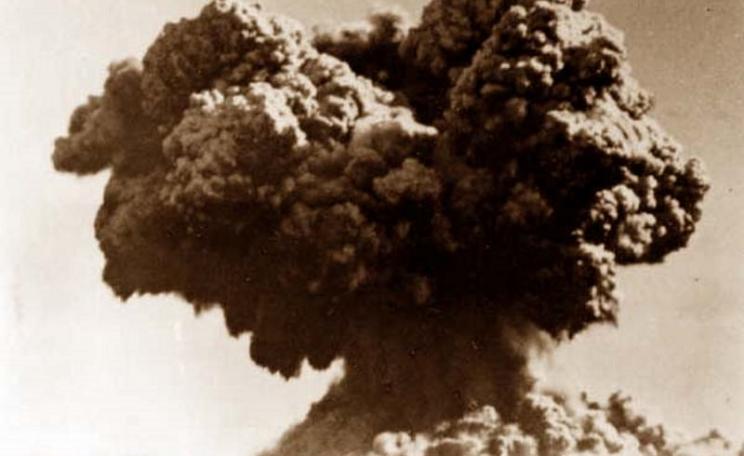
Britain's nuclear bomb test veterans suffered severe genetic damage from radiation, writes Chris Busby, and their case for compensation is being heard in the High Court today. Key to their case is evidence of similar damage inflicted on in utero babies exposed to radiation from the Chernobyl disaster, and how the dreadful health impacts of radiation cascade down to future generations.
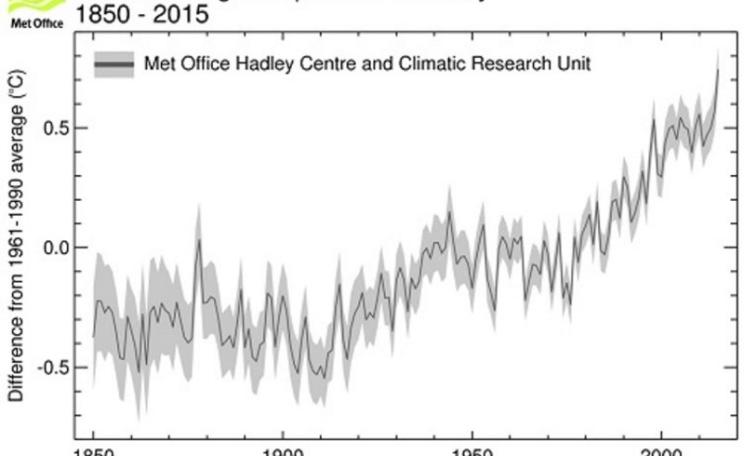
The deliberate misrepresentation of climate science in our media deserves an urgent corrective, writes John Krebs. Recent misreporting by The Times - passing off partisan, unscientific, non-peer reviewed, ill-informed climate change-sceptic opinion as 'science' - deserves particular opprobrium.
The British establishment does nothing quite so well as lies, cover-ups and high-level corruption, writes Georgina Downs - whether it's the Hillsborough disaster or permitting polluters to poison us. Georgina won her own High Court legal victory protecting rural residents from pesticide exposure as long ago as 2008 - only to have it snatched away as Court of Appeal judges closed ranks.
Investment analysts say Oxitec's GM mosquito technology 'won't work, is way too expensive, and is many years from generating even minuscule revenue', writes Claire Robinson. As shares in its owner, Intrexon, slump, three law firms have announced they are investigating.
Field studies show that the intense radioactivity released by the Chernobyl and Fukushima nuclear disasters is seriously and unequivocally damaging to wildlife, writes Timothy A. Mousseau - in stark contrast to theoretical studies that show little or no impact on plant and animal health and populations.
Thirty years since the 1986 nuclear disaster at Chernobyl the impacts are still being felt, writes Ian Fairlie, and they will persist long into the future. Some 40,000 cancer deaths can be expected across Europe over the next 50 years, and 5 million people still living in areas highly contaminated with radiation. Yet the nuclear madness continues, with even Belarus building new nuclear reactors.
Thirty years after Chernobyl former Soviet leader Mikhail Gorbachev remains haunted by the world's greatest ever industrial catastrophe, writes Linda Pentz Gunter. Now 85 and a committed environmentalist, he's still campaigning to bring the failed nuclear experiment to an end before further disasters follow, and encouraging a clean, efficient and renewable global energy economy.
The very term 'genetic engineering' implies high precision in the alterations made to genes and deep understanding of their consequences, writes Jonathan Latham. In fact, we have never had either. And even with the arrival of CRISPR and other 'gene editing' systems, that remains the case: technologists are thrashing about in a perilous sea of unfathomable complexities and unknowable outcomes.
Evolutionary biologist Timothy Mousseau and his colleagues have published 90 studies that prove beyond all doubt the deleterious genetic and developmental effects on wildlife of exposure to radiation from both the Chernobyl and Fukushima nuclear disasters, writes Linda Pentz Gunter. But all that peer-reviewed science has done little to dampen the 'official' perception of Chernobyl's silent forests as a thriving nature reserve.
The EU Commission has caved in to US pressure in TTIP trade talks by deciding to consider organisms modified by new 'gene editing' techniques as non-GM - in violation of the EU's own laws. The move could make the 'new GMOs' exempt from labeling and from health and environmental testing.
The Reuters news organisation has just sullied its reputation with a disgraceful attack on the WHO's specialist body on cancer, the IARC, writes Claire Robinson. Resorting to smear, innuendo and anonymous critics, it relies heavily on discredited industry sources including tobacco defenders in its attempt to undermine IARC's view that glyphosate probably causes cancer.