Today's threats of legal action by ClientEarth against the UK Government highlight the problem of London's poisonous air, which is killing some 10,000 people a year, writes John Weeks. Fortunately there are simple, low cost, effective measures that could be taken to bring about big improvements to the city's air quality, fast.
With 29 applications for new badger culls, writes Lesley Docksey, the government still has no idea how many badgers there are in the cull areas, or how many of them have TB. Nor does it want to find out. The badger culling project is getting less scientific by the day - or should that be by the square kilometre?
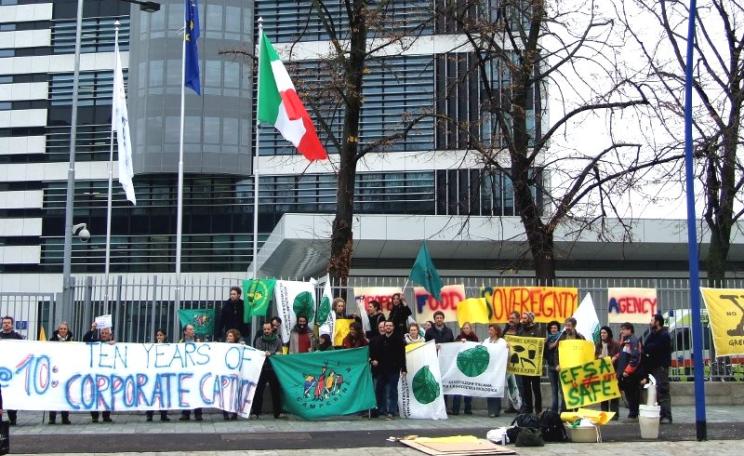
The chemical industry and the European Food Safety Authority are refusing to disclose key scientific evidence about glyphosate's risks, citing 'trade secrets' protection, writes Corporate Europe Observatory. They must be compelled to publish the 'mysterious three' scientific studies EFSA used to assess glyphosate as 'unlikely' to cause cancer to humans - contradicting the IARC's view.
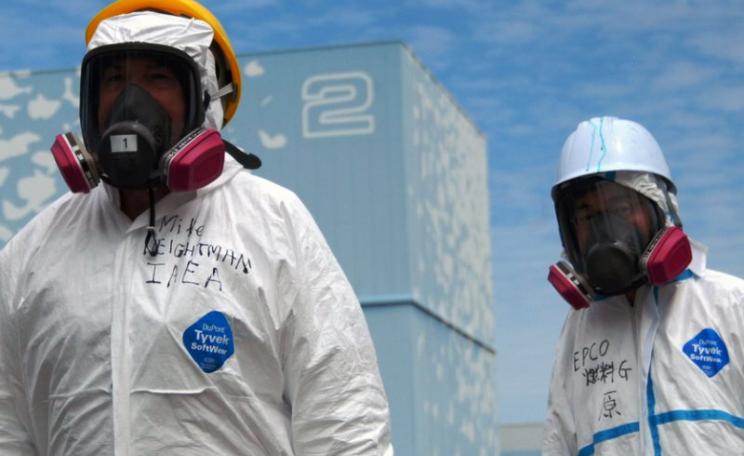
The Japanese were kept in the dark from the start of the Fukushima disaster about high radiation levels and their dangers to health, writes Linda Pentz Gunter. In order to proclaim the Fukushima area 'safe', the Government increased exposure limits to twenty times the international norm. Soon, many Fukushima refugees will be forced to return home to endure damaging levels of radiation.
Amid the growing call for those guilty of causing Flint, Michigan's water crisis to be prosecuted, Jane F. Barrett finds little prospect of criminal charges under the Safe Drinking Water Act. But federal, state and common laws offer prosecutors a range of potential charges, from malfeasance, misfeasance and nonfeasance to involuntary manslaughter.
The Gates Foundation has received a 57,000 strong petition denouncing its support for a 'biopirated' GM banana program in Africa, and calling on it to suspend a feeding trial on US students, writes Vanessa Amaral-Rogers. The banana threatens both the health of the students, say campaigners, and the future of African agriculture.
The government makes bold claims about tackling climate change and phasing out coal power stations, writes Guy Shrubsole. Yet it's 'relaxed' about two huge new coal mines that would produce ten million tonnes of coal, blighting landscapes and afflicting the health of vulnerable communities. It's time to say no to all onshore fossil fuel production.
High levels of toxins mercury and cadmium have been found in all organs of the whales recently beached on Scotland's North Sea coast, including the brain. The research shows that rising mercury levels in the oceans leads to toxic stress in the long-lived marine mammals.
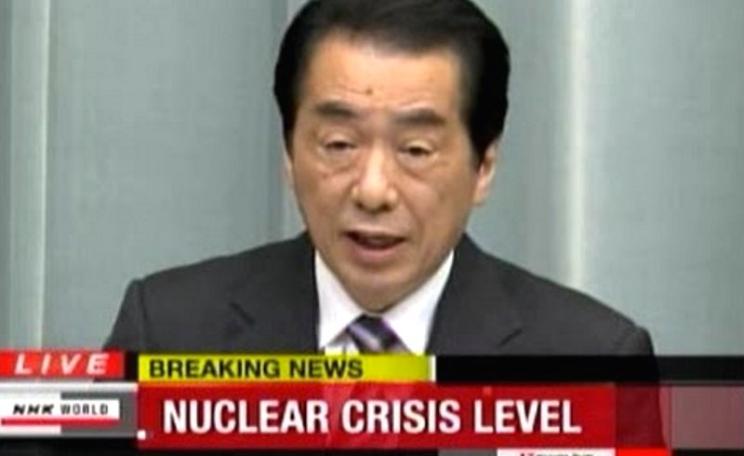
Nuclear power is a uniquely hazardous technology that can destroy entire nations, Japan's prime minister at the time of the Fukushima nuclear disaster has warned British MPs. The lessons of from such catastrophes must be heeded in other countries that believe that nuclear fission can be harnessed safely, writes Linda Pentz Gunter - or they, and the world, will reap the whirlwind.
With the proposed connection between the Zika virus and Brazil's outbreak of microcephaly in new born babies looking increasingly tenuous, Latin American doctors are proposing another possible cause: Pyriproxyfen, a pesticide used in Brazil since 2014 to arrest the development of mosquito larvae in drinking water tanks. Might the 'cure' in fact be the poison?
The Aedes mosquitos that carry the Zika virus and dengue fever are not just perfectly adapted to life in cities, writes Nadia Pontes. They are also being helped along by warming climates which increase their range. It's time to get serious about the health implications of a hotter planet.
A growing body of scientific evidence show that cell phone users suffer a range of negative health impacts from infertility and brain tumors to hyperactivity and memory loss, writes Gary Null. Yet the Center for Disease Control has taken a weak and ambiguous stance on the issue, reflecting industry interests at the expense of citizens. We deserve - and must demand - better.
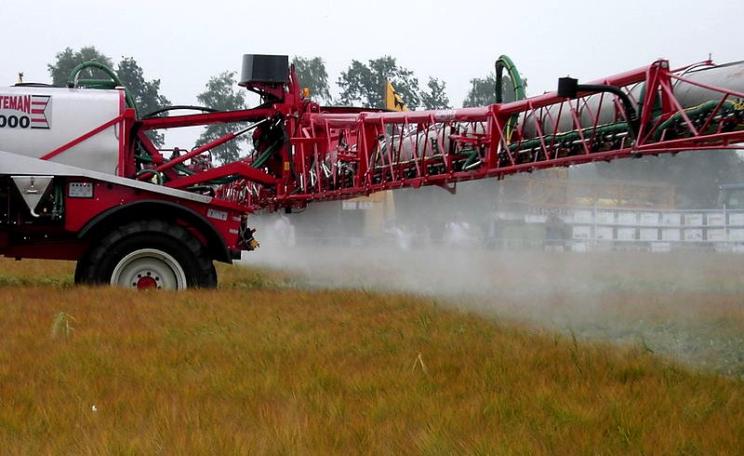
Bananas are at the sharp end of industrial agriculture's chemical war on pests and pathogens, writes Angelina Sanderson Bellamy. But even 60 pesticide sprays a year isn't enough to keep the diseases at bay. It's time to seek new solutions with little or no use of chemicals, working with nature, growing diverse crops on the same land - and breaking the dominance of the banana multinationals.
Air pollution from vehicles is killing tens of thousands of people every year in the UK alone, write Jean Lambert, Molly Scott Cato & Keith Taylor, an outrage set into stark focus by VW's 'test cheating'. The EU's response? To relax tests and allow cars to be more polluting - with the full support of the UK government.
In Brazil's microcephaly epidemic, one vital question remains unanswered: how did the Zika virus suddenly learn how to disrupt the development of human embryos? The answer may lie in a sequence of 'jumping DNA' used to engineer the virus's mosquito vector - and released into the wild four years ago in the precise area of Brazil where the microcephaly crisis is most acute.
The European Commission must not re-approve the 'probably carcinogenic' weedkiller glyphosate so long as its assessment is based on secret industry studies, actual products are not investigated, and in the absence of scientific criteria for endocrine disruption, write 66 MEPs in this Open Letter to Commissioner Andriukaitis, in charge of health and food safety.
A new report from leading physicians published today reveals the excess mortality caused by UK air pollution, writes Vanessa Amaral-Rogers. The Government has already been found in breach of the EU's Air Quality Directive, but its policies remain weak. Will it finally step up to prevent early deaths from this silent killer?
To save a small amount of money residents of Flint, Michigan, have been forced to consume hazardous levels of lead in their drinking water, writes Farron Cousins. Just the moment for the Republican House Speaker to attack the Clean Water Act.
Easy to miss in the New Year Honours list: a little-known civil servant for 'services to pesticides regulation'. But none the less shocking for that, writes Georgina Downs. Paul Hamey MBE is the very man who has been responsible for ensuring that rural residents receive no proper protection from repeated exposure to toxic mixtures of pesticides on nearby farms. Go figure.
The massive methane leak at Aliso Canyon in California tell sus everything that's wrong with fossil fuels, writes Pete Dronkers: toxic, under-regulated, unsafe, and climate destroying. But the catastrophe also brings us a timely message: this is the time for the California, the US, and the world, to begin a rapid transition away from fossil fuels and into our clean, green, renewable future.
The TTIP 'trade agreement between the US and the EU would devastate EU farms as it opens them up to competition from larger, less regulated US operations, writes Dario Sarmadi. This is the conclusion of a new study to be published tomorrow, which also finds that small-scale farmers would be the first to go - with the big winners the large agri-food corporations.
Each year the US Department of Agriculture manages to test for over 400 pesticides in food, writes Carey Gillam. But glyphosate, the world's biggest-selling herbicide, is not among them, even as evidence of its dangers mounts. It's time for USDA and EPA to stop their buck-passing - and give consumers their right to know.
As the evidence of the extreme harm to health inflicted by nuclear radiation mounts, the denialists are resorting to ever greater extremes, writes Chris Busby. On the one hand, advancing the absurd claim that ionising radition is not merely harmless, but health-enhancing. On the other, closing down the experiment that would have provided the strongest evidence yet.
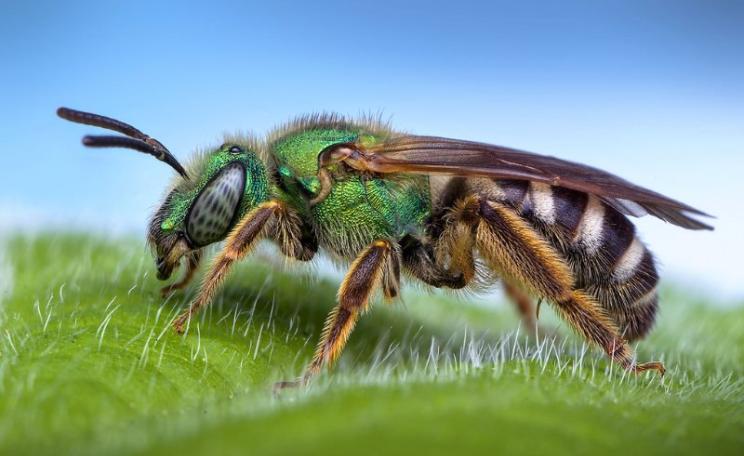
Wild bee decline is closely associated with the advance of intensive farming and habitat loss, a new study shows. It follows an earlier paper that linked 'delayed action' decline of wild bees to exposure to pesticides including fungicides - previously considered 'bee-safe'.