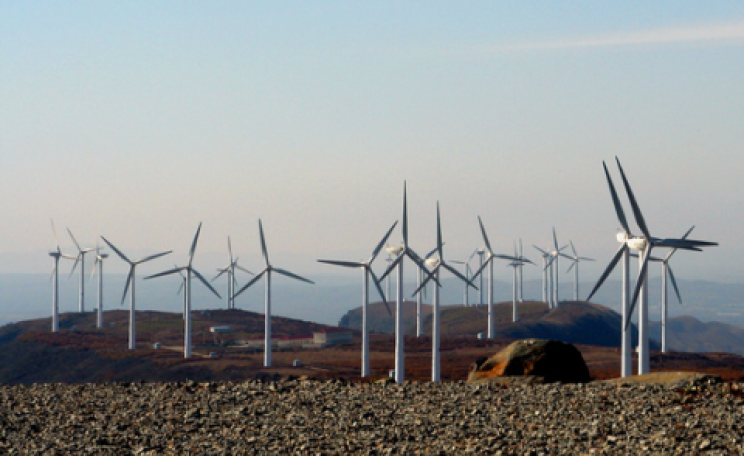
Reports of China opening a huge new coal fired power station every week belie the reality - China is the new global powerhouse for renewable energy. As John Mathews and Hao Tan report, the world must follow its example.
Ingested Uranium is linked with health impacts far greater than is explained by orthodox risk models. Chris Busby explains how the 'demon metal' does its damage - and why the nuclear industry is desperate to hide the truth.
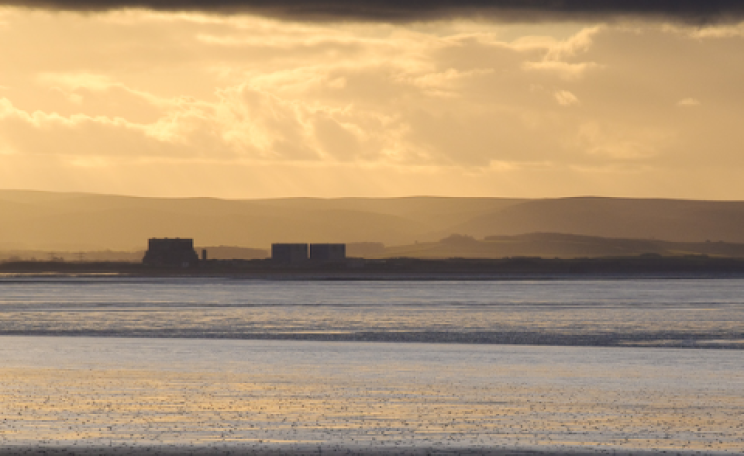
The safety assessment for the Hinkley C reactor design has failed, reports Emma Bateman. Faced with 724 unresolved concerns about the EPR design, the UK regulator went ahead and issued the licence anyway.
USS Reagan & Fukushima cancer levels are miles above comparative levels, according to John Ward. Slowly, the world is waking up to the realities of Japan's nuclear catastrophe: this disaster is real.
2013 has been the nuclear power industry's annus horribilis and the nuclear renaissance can now be pronounced stone cold dead. Dr Jim Green reveals the global unravelling of the nuclear dream ...
The UK government is planning 75GW of new nuclear power, Jamie Doward reports - equivalent to 50 1.5GW reactors, or 25 dual-reactor Hinkley C's - enough to supply 86% of the UK's energy demand.
Can we really produce all our electricity from renewable sources? Yes, says David Elliott - and at lower cost than by using fossil fuels and nuclear power. But powerful forces are opposed to change ...
An EU investigation into the UK's financial support for new nuclear power stations is dividing Europe, with critics saying London is flouting EU rules by offering illegal subsidies to EDF at Hinkley Point in Somerset. Paul Brown reports.
Japan's secrecy law, just passed by parliament, gives the government carte blanche to designate state secrets - and restrict information about anything it likes. Saul Takahashi hears the sound of jackboots on the march ...
On 21st March 2011 George Monbiot stated: "As a result of the disaster at Fukushima, I am no longer nuclear-neutral. I now support the technology." Jonathon Porritt critiques Monbiot's intellectual gymnastics ...
As plans go ahead for the UK’s first new nuclear plant in twenty years, Edgar Vaid reviews a film that takes a look at the issues surrounding the use of nuclear power by our neighbours across the Channel ...
An unexpected outcome of the Fukushima nuclear disaster is that the UK's Sellafield nuclear site - already the world's biggest plutonium repository - is set to store even more of the radioactive, fissionable metal.
Tom Burke expresses his disgust at those who downplay the enormity of the Fukushima nuclear catastrophe, and asks: is the world willing to tolerate repeat nuclear disasters? If not the answer is simple - an end to nuclear power.
A new study finds that radioactive Iodine from Fukushima has caused a significant increase in hypothyroidism among babies in California, 5,000 miles across the Pacific Ocean.
Following the UK Government's announcement of huge public subsidies for the proposed Hinkley C nuclear power station in Somerset, England, Energy Fair has called on EU Commissioner Almunia to open a formal investigation for breaches of competition law.
Former Deputy Chair of the Liberal Democrats, Donnachadh McCarthy, writes to Lib Dem DECC Secretary of State Ed Davey about Hinkley C nuclear power station.
Japan's new State Secrets Act promises a fearful clampdown on journalist and whistle-blowers. Critics say its main purpose is to lock down information about Fukushima.
Three years after the Fukushima nuclear catastrophe hit our TV screens, Paul Mobbs examines the still unfolding global disaster - and the motives of politicians whose love of nuclear power is stronger, than it is wise.
Japanese prosecutors have dropped all charges against Tepco, the operator of the stricken nuclear power plant at Fukushima, along with senior Government officials.
The earthquake and nuclear meltdown in Japan last year compounded pre-existing issues like falling birth rates, fragmented families and shrinking communities. What does the future hold?
The UK government's scientific advisory group found no link between childhood leukaemia and proximity to nuclear power plants, but German and French research has found an alarming doubling of risk
The Semipalatinsk region suffered under four decades of Soviet nuclear testing. Now, the country wants to become an international research hub for the effects of radiation on future generations. Matilda Lee reports from Kazakhstan
Once united in opposition, the environmental movement is now divided on nuclear power. Matilda Lee reports on why some greens say that anti-nuclear is just sentimentalism