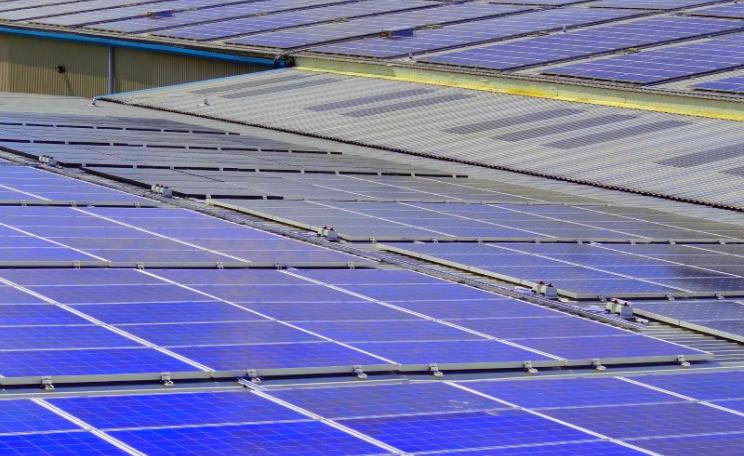
Renewable energy, without doubt, is both driving and shaping the clean global economy of the future, writes Jeremy Leggett. But don't forget its equally essential partner: closing the consumption loop to create a truly circular economy in which there is no longer any such thing as 'waste', only resources we are not yet smart enough to use.
Just imagine: gas for your cooking and heating made by composting home-grown British grass, writes Almuth Ernsting. What's not to like? Well, it would need almost all the UK's grassland to match our gas demand, leaving cows and sheep to starve or forcing them into sheds to eat foreign-grown feeds. And methane leakage could easily wipe out any climate benefit.
Ultimately the UK Government's new industrial strategy has the potential to use government investment to shift the country in the right direction for the environment. But we need more than just ‘public money,' we need the public's money too writes JOE WARE
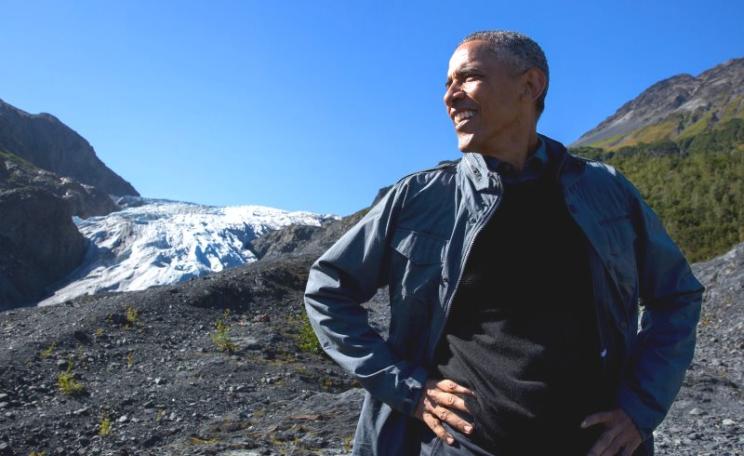
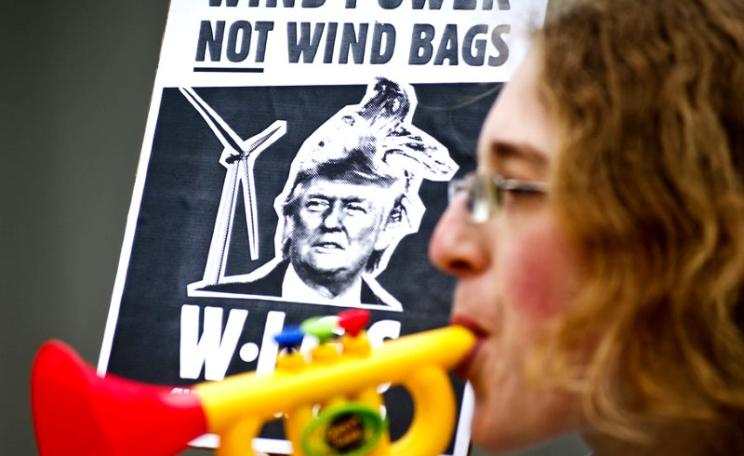
President Trump comes into office determined to discard huge swathes of his predecessor's legacy on day one, writes Mark Barteau. But he will struggle to undo Obama's clean energy regulations. It's not just that they are legally robust, it's also that energy markets in the US and the wider world have shifted firmly, and irreversibly, towards efficiency and renewables. Sorry, Mr Trump.
On 10 January 2017 a new emergency plan was presented in a commission in Belgium's Parliament. The evacuation perimeter was conveniently halved to 10km to avoid an evacuation of Belgium's second and third cities in case of a meltdown. The plan has been called totally inadequate. NICK MEYNEN reports
The nuclear industry faces an uncertain future as the reactor building boom is struck by unexpected costs, serious technical problems, and long, expensive delays, writes Paul Brown. Meanwhile renewables like wind and solar are offering investors an enviable combination of falling cost, low risk, fast build times, predictable returns and minimal long term liabilities.
Marine ecologists have shown how noise pollution is changing the behaviour of marine animals - and how its elimination will significantly help build their resilience. LAURA BRIGGS reports
To secure the clean energy transformation for the long term we must get the good news out there, writes Natalie Bennett - driving forward a popular movement for warm, comfortable homes, affordable fuel bills, community renewables and thriving local economies.
The world's poorest and most vulnerable countries are doing their bit to promote the expansion of renewable energy. The least we can do in the developed world is to ensure the money in our bank account helps rather than hinders their efforts, writes JOE WARE
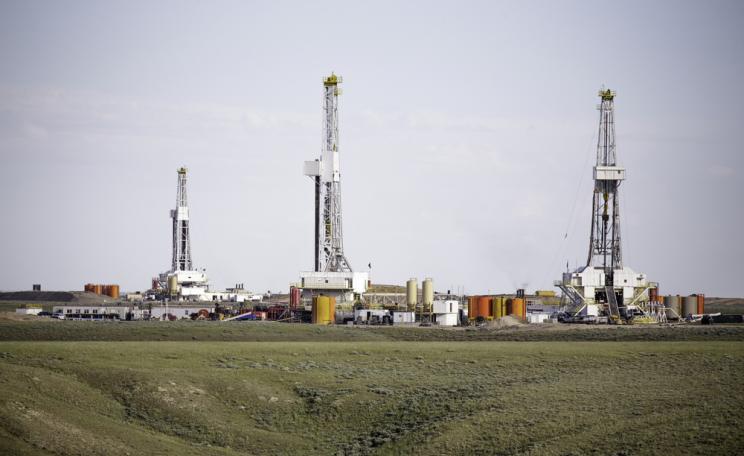
Eight years ago the first exploration applications for unconventional gas extraction were submitted in South Africa. Last week fracking finally received official attention from South Africa's legislature during a debate that revealed how the country's different political parties gauge the benefits and risks linked to the drilling technique. JASPER FINKELDEY was at that debate.
Next April the UK government proposes to increase taxes on self-consumed solar electricity installations on schools, offices, warehouses and factories by a whopping 6-8 times, write the STA and undersigned. This inexplicable move, which threatens a once thriving solar industry already on its knees, must be abandoned.
The Valbona Valley in northern Albania faces destruction from the planned works, despite being within the protected area of the Valbona National Park. LAURA BRIGGS reports
The International Energy Agency's latest World Energy Outlook is calling for increased investment in new oil and gas, writes Oliver Tickell, while minimising the fast-growing and ever lower-cost contribution to world energy supply of renewables like wind and solar.
Malawi is a country on the front line of climate change. Unlike nations ravaged by a typhoon or rich western cities swamped with floodwater, the kind of impacts Malawians face barely raise a flicker of interest in the media. Compared to a hurricane, a few degrees of temperature rise and shifting rainfall patterns sound mild, but in reality they have the potential to be far more devastating writes JOE WARE
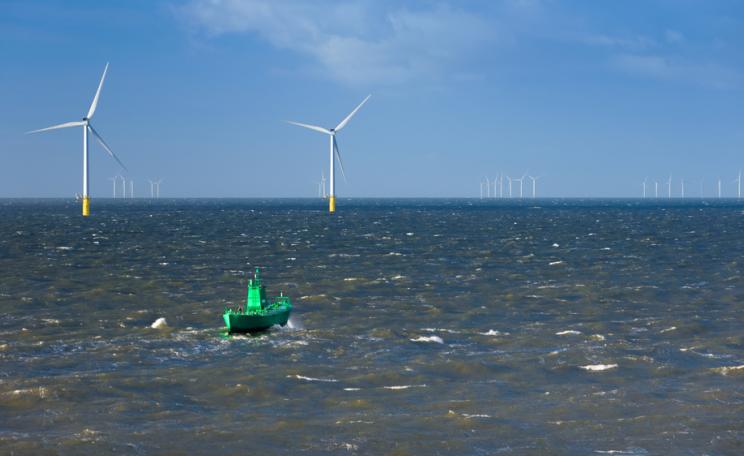
Onshore wind power is effective, hugely popular, and the UK's cheapest form of new power generation, writes Max Wakefield, already competing against gas turbines in prime locations. So why did Cameron's Government ban it? And what will it take to get Chancellor Philip Hammond to reverse that decision next week?
The construction of the Don Sahong Dam in Laos PDR must be halted until full information on the project's impacts - in particular the fate of millions of fish that migrate each year through the Hou Sahong channel now being dammed - has been published, writes the Save the Mekong Coalition in this open letter sent today to the project developers.
With European climate policy in post-Brexit lockdown, and US delegates gripped by uncertainty (even for their own jobs) following Trump's election, a new global climate leader is emerging, writes Natalie Bennett. China is stepping up as the country with the finance, technology and industrial might to take forward the Paris Agreement - and for its companies to reap the benefits.
The Trump Presidency may not be the climate disaster that many fear, writes Joe Ware. The transition to clean energy is increasingly driven by technology and economics, not politics. it was Obama's 'all of the above' energy policy that enabled the fracking revolution. And pro-fossil fuel measures instituted by Trump will now galvanise massive domestic and international opposition.
Renewable energy may play a huge part in helping to achieve the ambitions of the Paris Agreement, now in force and under discussion at COP22 climate talks in Marrakesh, writes Steffen Böhm. But it can never be the whole story, and nor does it relieve the need for deeper changes in how the world works.
British impressionist, comedian, actor and musician Alistair McGowan is also a staunch environmentalist - he doesn't even drive a car. He tells TIM SAUNDERS we should all be doing more to help save the planet and that the environmental costs of the proposed new runway at Heathrow are not worth the promised economic benefits
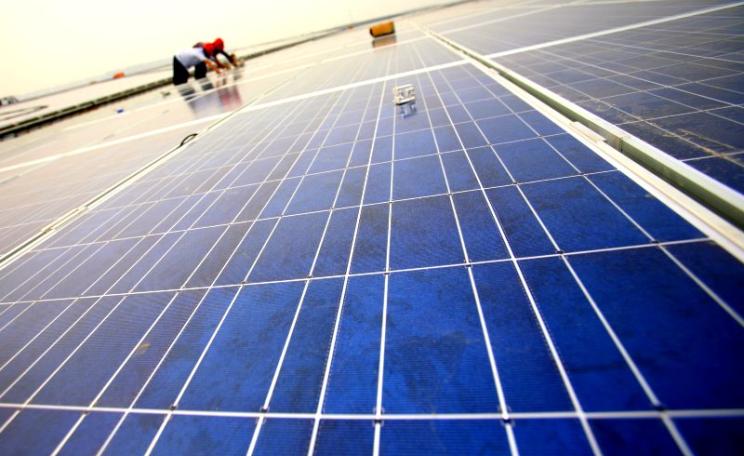
A new study shows that the cost of 'integrating' the variable power output of large scale solar PV is surprisingly affordable, writes Oliver Tickell, at just a few pence per unit. Costs will fall further as more wind power, batteries and ever-cheaper solar drive the transition to a 100% renewable power system.
Off-grid renewable energy is key to achieving the global goal of 100% electricity access by 2030, writes Adnan Z. Amin, and to achieving the emissions reductions enshrined in the Paris Agreement. Thankfully, a confluence of factors - including rapid cost declines and impressive technology innovations - are making this goal more achievable than ever, and investment in the sector is taking off.
There's a simple way to induce us to make good environmental choices, writes Cass R. Sunstein: make them the default setting. Whether it's selecting double sided photocopies or renewable electricity tariffs, defining easily-overridden 'green defaults' is by far the most efficacious means to influence consumer choices for the environment and the planet.
A future Labour government will ban all fracking in the UK and drive forward a clean, affordable energy revolution, Barry Gardiner promised in his conference speech today. And it will openly negotiate 'Just Trade' agreements that respect the environment, health and labour, boosting small business not just multinational corporations.