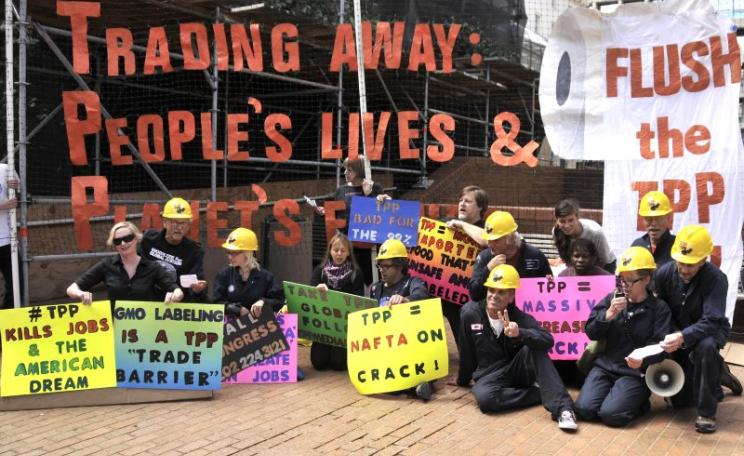
TransCanada has just made a big mistake by bringing its $15 billion lawsuit against the US government for refusing the Keystone XL pipeline, writes Sam Cossar-Gilbert. The move has exposed the real nature of 'trade deals' like TTIP and TPP - and why all democrats must rally to defeat them.
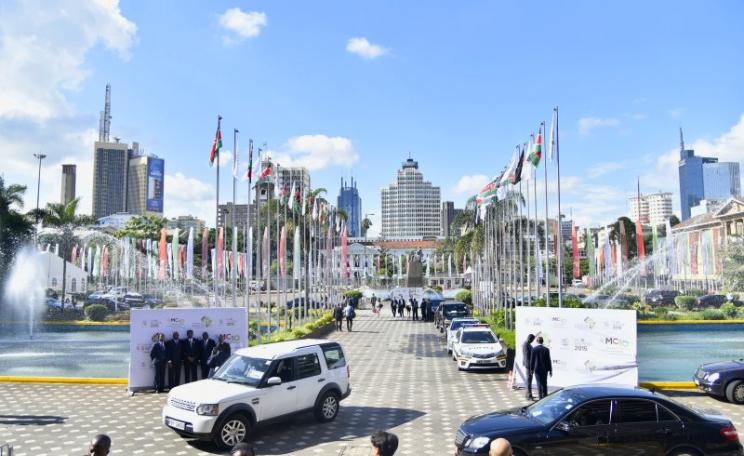
Rich nations at this month's World Trade Organisation summit in Nairobi failed in key objectives, writes Alex Scrivener, like the inclusion of investor rights as in TTIP, TTP and CETA. But the unfair order of global trade remains in place, and the greatest danger for poor countries is that the neoliberal agenda will now be forced upon them in opaque regional and bilateral trade deals.
Overtaken by massive regional trade agreements like TPP, TTIP, CETA and TINA, the World Trade Organisation has slipped into the background, writes Polly Jones. But this week it's back with a vengeance, with its first big meeting in two years. The US's plan is to globalise the investment protection regime set out in the TTP, and open a new era of corporate rule and the eradication of democracy.
The EU's decision to renew 'punitive' tariffs on imports of PV modules and cells from China will cost the EU's solar installers an extra £700 million, writes Oliver Tickell - just as the UK industry is reeling from 87% government cuts.
We cannot rely on governments in meeting in Paris to solve the many-headed climate problem, writes Vandana Shiva. It's up to us to safeguard the future of the Earth, and of our own and other species. So let's all join in this pact to love and protect our one and only home.
Thanks to New Zealand, the full text of the Trans Pacific Partnership has been made public. And as Pete Dolack writes, it's a disaster for health, environment, workers and democracy - one that will unfold over years and decades to come, as investors and corporations consolidate their power over elected governments and cement in the global rule of unaccountable capital.
Greece is Europe's sandbox for the neoliberal free-for-all to follow if the EU and the US sign off on the TTIP trade and investment treaty, writes Pavlos Georgiadis. The termination of public services, the cut-price sell-off of public assets, the dismantling of environmental protection, the democratic closedown, the rule of corporations and finance capital ... all coming your way soon.
Just as Indonesia's forests are going up in flames, in part as a result of illegal logging on a massive scale, the country's Trade Minister has issued a regulation that would rubber stamp exports of illegal timber - also undermining a timber agreement with the EU that's due to come into force next month.
There's been a big fuss about the 'ISDS' clauses in the TTIP trade deal that would allow US corporations to sue the EU and its member states for 'lost profits', writes Maude Barlow. But ISDS is already in CETA, the already negotiated EU-Canada trade deal - and nothing would be easier than for US companies to use it as their 'back door'. We must make sure CETA is rejected at its final hurdle.
The investor protections in the US-EU TTIP treaty would privilege US corporations over the EU's own citizens and businesses, writes Laurens Ankersmit & Oliver Tickell. That would sideline EU courts and undermine the completion of the internal market. It is therefore essential that the EU Court be asked to rule whether they are legal.
The 'regulatory cooperation' clauses in TTIP threaten to strip away vital EU protections on food, health and environment, writes Alex Scrivener. Indeed it has already begun: the mere prospect of TTIP has persuaded the EU to back off on plans to ban lactic acid-treated beef and 31 toxic pesticides. We must reject the entire package!
The leaked chapter of the Trans Pacific Partnership chapter on intellectual property represents a wholesale attack on internet freedom, investigative journalism, and the wider creative commons, writes Jeremy Malcolm. While massively advancing corporate financial interests in binding clauses, the parts that purport to protect information users are soft guidelines that cannot be enforced.
Disastrous water pollution from gold mines in El Salvador has united government and people to oppose new metal mines, writes Lynn Holland. In Central America's most water scarce country, the imperative is to keep lakes, rivers and streams clean and wholesome. But there may be a heavy price to pay, with a Canadian mining company pressing a $300 million 'compensation' claim.
Just how bad is the TPP? Incredibly, we don't know its full horror because even now, the agreement is a state secret, writes Pete Dolack. But the text will have to be released soon so that Congress and other parliaments can vote on it. And only then we will know the full scale of the corporate sellout it represents. The choice facing legislators is clear: democracy, or corporate dictatorship?
The successful conclusion of the TPP talks is a huge blow for social and economic justice, writes Nick Dearden in his twelve point summary. But it's not over yet: the long secret text must now be made public. And there's every chance it can be defeated in an increasingly skeptical Congress.
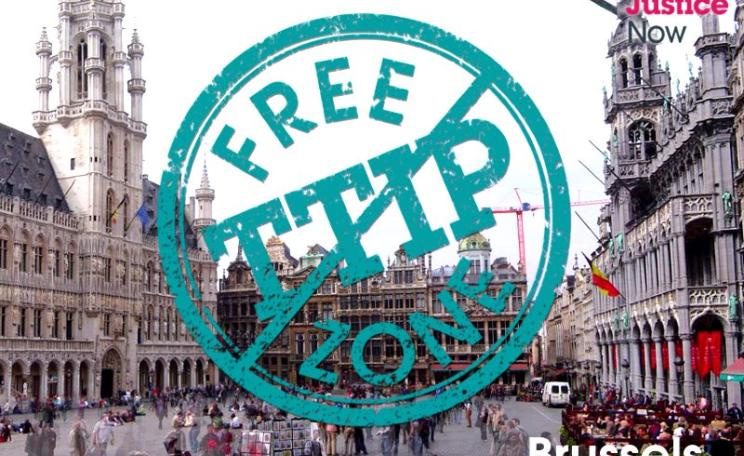
The fight against TTIP is being picked up by local authorities across the UK and other EU countries, writes Kevin Smith. Even Brussels - where the European Commission has been negotiating the deal with its US counterparts - has joined the movement. And now, with the election of the anti-TTIP MP Jeremy Corbyn's as Labour Leader, it's time to drive the message all the way home.
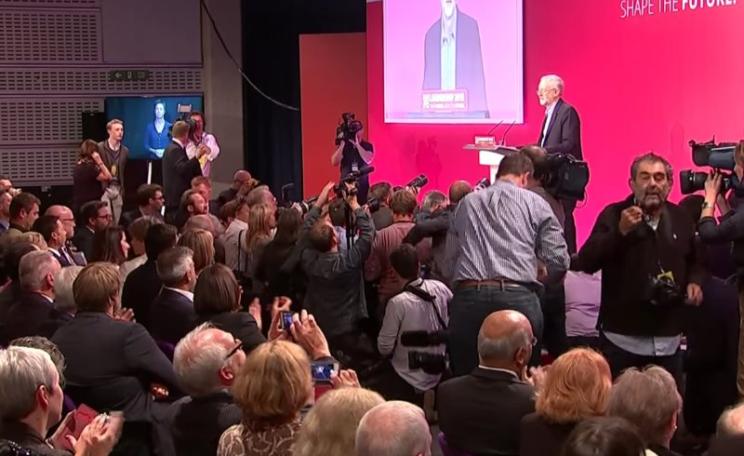
The magnitude of Corbyn's victory today represents an irreversible seismic shift in British politics, writes Oliver Tickell. Finally the Tories face serious, principled opposition that will reveal them as the far-right ideologues they truly are. The reverberations will echo far, wide, long and deep, including to the US where the socialist Bernie Sanders is well on his way to winning the Democratic nomination.
President Obama and India's Prime Minister Modi are best of friends - aren't they? So how come the US took India to the WTO's trade court - and just won a resounding victory? And why isn't India challenging the US's own discriminatory solar subsidies? It's because of the money, writes Charles Pierson. And poor India has no choice but to play by Washington's rules.
There is widely held belief that there' only one way to protect rhinos, elephants and other endangered species poached for the international wildlife trade, writes Douglas MacMillan: a complete trade ban. But it's a dangerous misconception. By raising prices and engaging criminal networks, bans speed up extinction rather than preventing it.
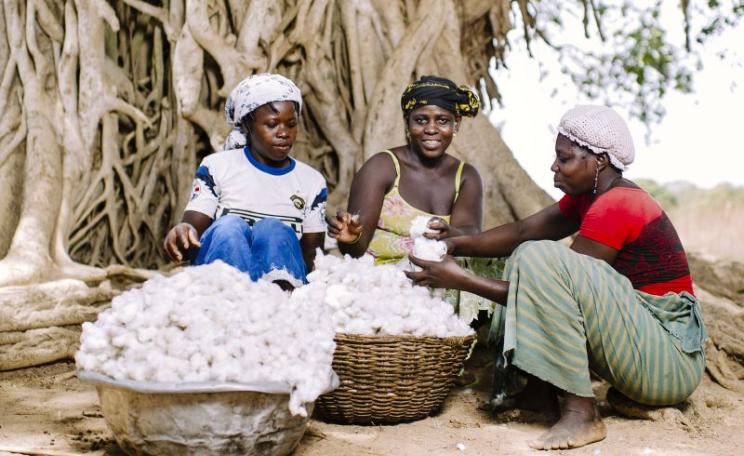
The idea that GMO cotton offers hope to Africa's impoverished cotton farmers is facile and fraudulent, writes Arya Tajdin. In fact it only adds to their vulnerability. Their real problems lie in the structural oversupply of subsidized cotton on world markets, and the flood of 'kifua' - dead white man's clothing - that undermines the continent's textile industries.
Britain's dairy farmers have been having a hard time, writes Vicki Hird, largely thanks to their exposure to an unregulated, unstable, global food market. But if the EU's TTIP 'trade deal' with the US is ever signed, pitting UK dairy farmers against zero-welfare US mega-dairies run on hormones and antibiotics, they won't have a chance.
Canadian mining company Gabriel Resources is seeking over $2.5 billion damages from Romania after it rejected a vast gold mine at Rosia Montana, writes Oliver Tickell. Incredibly, it is taking legal action under a UK-Romania trade agreement.
Japanese rice farmers won a reprieve last week when TTP negotiations in Hawaii ended without conclusion on opening Japan up to cheap US rice imports, writes Nicole L Freiner. But with Japan keen to export more cars to the US, the victory is a temporary one. At stake is a way of life, an ancient land-rooted religion, and the future viability of Japan's farming villages.
Forget tariffs, forget Obama's promises. The whole point of modern 'trade agreements' is to whack pesky labor, environment and health laws, writes David Morris, and so empower capital and corporate power against regulators, governments and democracy itself. Unconvinced? Just imagine what these deals would look like if they were there to empower people.