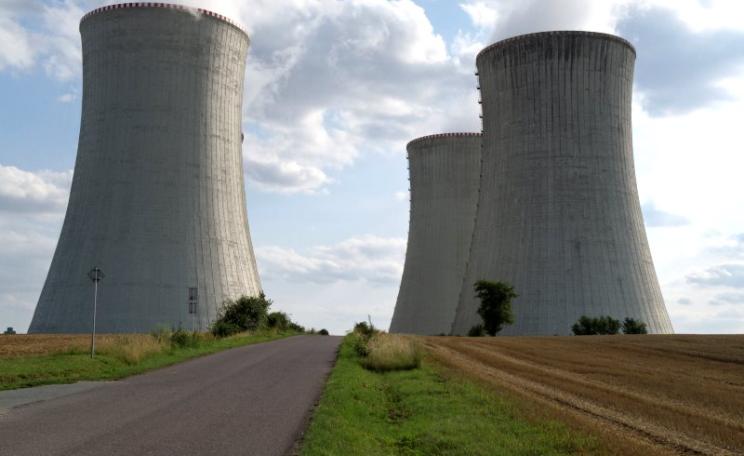
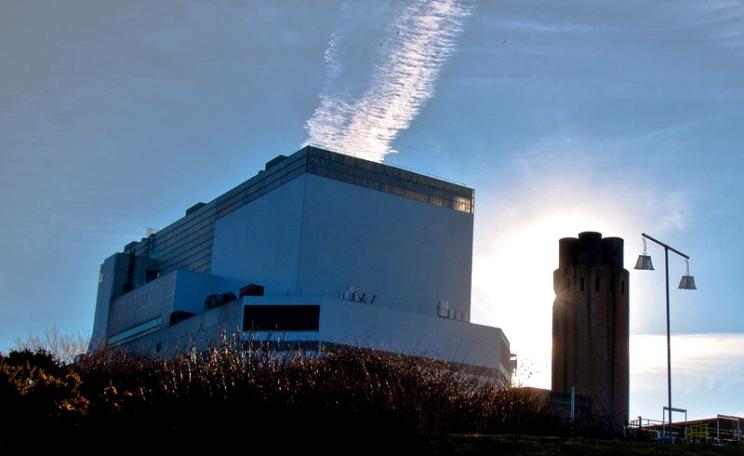
The GMB trade union has called on the UK government to press ahead with the Hinkley Point C power station despite legal challenges and serious technical failures. In this Open Letter, David Elliott, Ian Fairlie, Jonathon Porritt and colleagues tell the union that its members' interests lie in our renewable future, not the nuclear past.
A second legal challenge to the UK's proposed Hinkley C nuclear power plant in Somerset was launched this morning by ten renewable and municipal power suppliers in Germany and Austria, citing grave distortions to European energy markets.
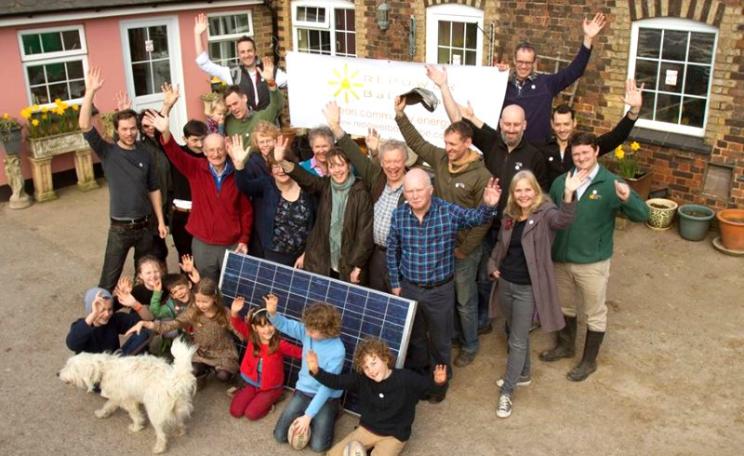
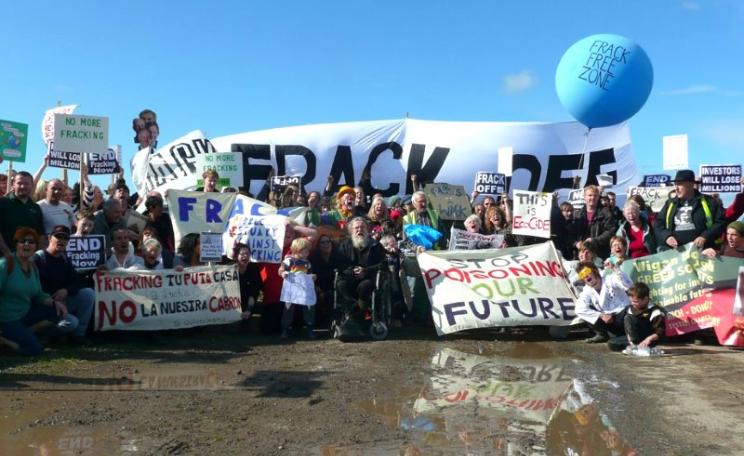
When fracking came to Balcombe in West Sussex in 2013, it divided village opinion, writes Joe Nixon. But the community is now united in its commitment to locally owned renewable energy, with solar projects on schools and farm buildings, and plans just in for a new 5MW solar farm.
Just when the UK's government might want to be boosting its green credentials it has chosen to do the precise opposite, writes Steffen Böhm: giving tax breaks and subsidies to oil and gas, while attacking renewables and energy efficiency. We must unite to oppose these destructive and short-sighted policies
Next Tuesday MPs will be voting on an 'amendment' to the Hunting Act that outlaws fox hunting and other cruel sports, writes Robbie Marsland. But its effect would be to make the law a dead letter - so full of holes as to permit the return of full-blown hunting with dogs. MPs must vote down this 'repeal by stealth'.
When Oxeye daises looked like taking over her mini-meadow, Jo Cartmell was tempted to intervene. But instead, she held back and let nature take its course. Now, a few seasons later, the floral diversity has only increased, taking in some unexpected but welcome arrivals - along with their insect companions, all making their home on what used to be an unloved patch of lawn.
The UK government kicked away one of the main financial supports for renewable energy in yesterday's budget. The surprise move will cost the sector £3.9 billion over the next five years and undermines any prospect of the country meeting its EU renewable energy targets.
In its haste to get fracking, the UK Government is neglecting safe, clean alternatives that could be providing low-carbon gas and heat energy, writes Keith Barnham. The technologies are already well established in other European countries and are picking up fast here too - so why the insistence that only fossil fuels can deliver the UK's energy needs?
Caerphilly councillors yesterday refused permission for a huge open cast coal mine in South Wales that's fiercely opposed by local people furious at its impacts on air, landscape, tranquillity and climate, writes Guy Shrubsole. Coming so soon after the rejection of fracking in Lancashire, the message is clear: fossil fuels are best left safely underground.
Austria today filed its legal challenge to the UK's €108 billion support package for the Hinkley Point C nuclear plant, writes Oliver Tickell. A second such challenge at the European Court is due from green energy suppliers in Germany and Austria who fear unfair competition from subsidised nuclear power in Poland, Czech and Hungary if the Hinkley C precedent stands.
Britain's renewable energy surge will hit the buffers as funding dries up, writes David Toke - while cuts to the energy department's budget will wipe out its ability to guide the UK's low carbon energy transition.
The secretary general of the OECD group of the world's 34 richest nations has issued a dramatic plea to its members to act now to end 'unabated coal' burning, writes Alex Kirby, and invest in renewables around the world to prevent climate disaster.
Within minutes of Labour's election defeat its MPs were denouncing Miliband for failing to 'embrace aspiration' and alienating 'wealth creators', writes Ben Whitham. But the real problem was that he never expressed a coherent alternative to neoliberalism and austerity, presenting at best a 'Tory lite' agenda that failed to inspire. And who are the real wealth creators anyway?
The NHS is one of our greatest institutions and we must defend it to the hilt, writes Natalie Bennett. But to build the healthy society we all want and deserve, we need joined up policies across the policy spectrum, valuing human wellbeing above crude economic growth.
House prices could fall 7% near fracking rigs, according to the 'secret' Defra report on fracking in rural areas, only published in full after a legal battle, while leakage of waste water could damage human health and contaminate food.
With the UK's business air travel falling, the Airport Commission says we need a new London runway to make us happy! But all their data really shows is that people who go on holiday lead happier lives than those who don't, writes Chris Goodall, and that people enjoy holidays: a flimsy basis on which to expand airport capacity, and blow the UK's emissions targets out of the water.
Will Labour turn against nuclear power? As Chancellor, Ed Balls would have cancelled Hinkley C due to its massive cost, writes Ian Fairlie. But he never got the chance, and now the party remains muted even though the Government's nuclear enthusiasm is completely out of kilter with reality. To end nuclear's grip on Labour there's only one choice of leader: Jeremy Corbyn.
It's time to halt the loss of the nation's front gardens to dreary paving, writes Jenny Jones. Green gardens protect against floods, provide homes for wildlife, keep cities cool in summer, and help us all feel happier. Now, with 7 million gardens already paved over, we must protect those that remain.
In his new book environmental journalist Michael McCarthy bears witness to the astonishing decline in the once common wildlife of our countryside of the last few decades. But as Chris Rose writes, he does far more than bemoan the losses as he shares with us the joy that he still discovers in nature.
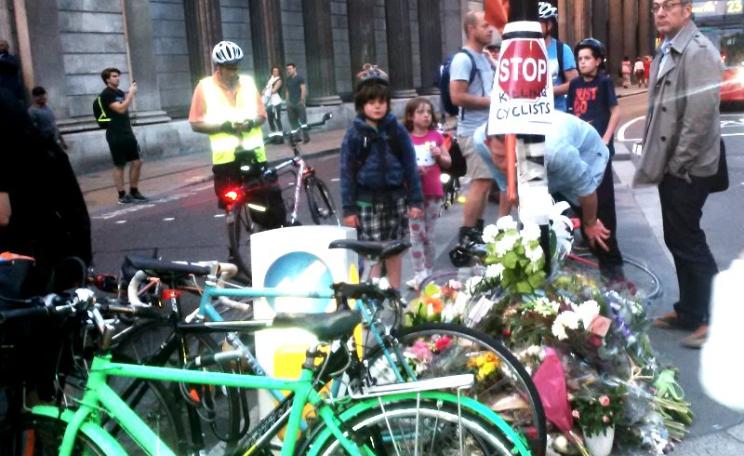
Following a monstrous spate of cyclist deaths in London, protestors are gathering outside the Bank of England tonight to demand: stop killing cyclists! The UK's peaceful cycling revolution is now under way, writes Donnachadh McCarthy, who invites us all to join the movement to make our cities safe for humans.
Independent legal advice shows that Lancashire councillors can refuse Cuadrilla's application for planning permission to frack at the Preston New Road site in Lancashire - contrary to advice from the Council's officers.
UK police now have free rein to create 'dispersal zones' in public places, writes Josie Appleton. This allows them to exclude people for anything from street drinking to looking suspicious, being homeless, protesting, or merely 'congregating'. This represents a serious breach of our Common Law and Magna Carta rights.
Following premature cutbacks to onshore wind farms the UK's energy security will increasingly depend on large scale offshore wind power, write Ian Broadbent & Peter Strachan. But while energy secretary Amber Rudd talked the sector up in her speech yesterday, she revealed feeble ambition, and said nothing to overcome investors' fears of being left out in the cold.
Northern Ireland shows just how much we need the EU's laws protecting nature, writes Andy Atkins - and for the Government to enforce them. The province's wonderful natural heritage is at risk from aggressive and often unlawful developments. And the EU nature laws are essential for us to fight off a host of threats - among them sand dredging, gold mining, road-building and over-fishing.