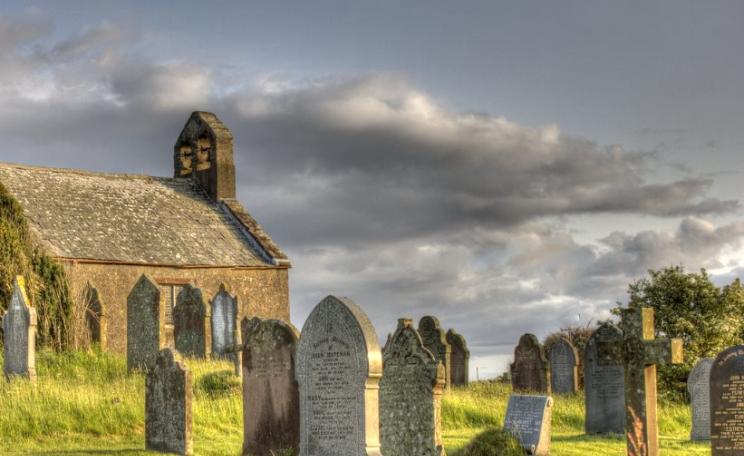
The land grab by NuGen for its triple reactor Moorside site keeps on growing, writes Martin Forwood. The 'biggest construction project in Europe' is expanding from Nugen's original 200 hectare site to 552 hectares of farmland reaching right up to two villages and an 11th Century church. But with compulsory purchase on the cards, there's nothing locals can do except keep on fighting the entire deeply flawed project.
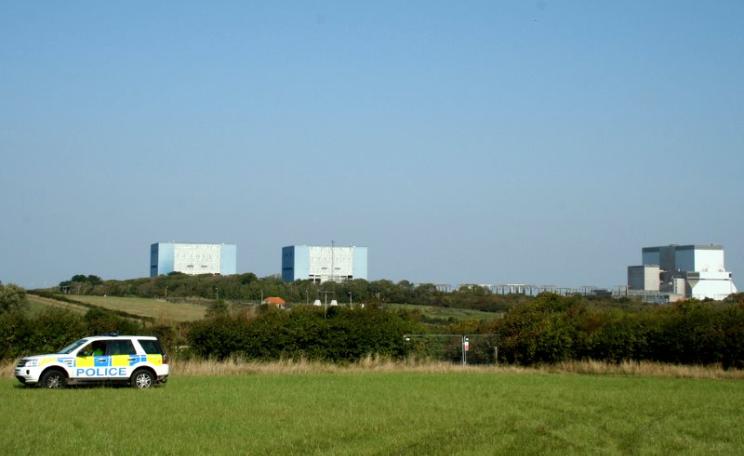
Following high-level criticisms of the Hinkley C nuclear plant from HSBC and the Chancellor's father in law, EDF, the company in line to build the power station, is fighting back hard, writes Oliver Tickell. But it could all be too late to rescue the doomed project.
With the US, China, Germany and other countries firmly fixing their aim on a low carbon, renewable energy future, the UK government has chosen precisely the opposite track, write Noam Bergman, Lee Stapleton & Mari Martiskainen. Its mission to destroy wind and solar power, undercut energy efficiency and boost nuclear power and fracking threatens serious, lasting damage.
Julian Assange's struggle for freedom is one of law and justice against vengeful state power determined at all costs to darken the light of truth that Wikileaks has cast into the murkiest of places, writes John Pilger. Now, after a long series of moral and legal victories, his release may finally be drawing near.
The Conservative attack on the environment is being carried out for good reasons, writes Chris Rose: because they can; because it delights their support base; because it heads off UKIP; and because they think it carries no political risk. Now it's up the UK's green movement to prove them wrong. But have our 'herbivorous' NGOs got the stomach for a fight?
Previously suppressed documents show that Bayer and Syngenta, the makers of controversial 'neonic' insecticides subject to an EU ban, took part in and sought to influence a key meeting of pesticide experts to decide whether to lift a ban on their use in the UK.
A BBC documentary claimed 90% success for a controversial GM crop in Bangladesh, Bt brinjal, writes Claire Robinson. But as journalist Faisal Rahman discovered, there's no evidence to support the claim, the BBC relied on biased sources, and its journalists failed to investigate reports of widespread crop failure. Was it all an exercise in pro-GMO propaganda?
The wind is a force of nature over which only someone with extraordinary delusions of grandeur can truly claim ownership, writes Adam Ramsay. But to prevent that, we must assert our belief that wind, sun and other drivers of our renewable future are a common heritage for us all to benefit from.
Friends of the Earth has taken the first legal steps towards striking out last week's emergency approval of bee-harming 'neonic' pesticides in England, granted last week despite a Europe-wide ban.
Before the election David Cameron promised to increase funding for cycling to £10 a head across the UK, up from its current £2 outside London, writes Matthew Ford. But with the national cycling and walking strategy coming into force this week, that promise is looking ever less likely to be delivered.
Shale gas company Cuadrilla will appeal Lancashire's decision to refuse permission to frack, write Kyla Mandel & Ben Lucas. The planning battle will last well into 2016, as campaigners prepare to fight all the way.
The damage caused by fracking to people, communities and the wider environment will be put under the legal spotlight in public hearings in the US and the UK, write Damien Short & Tom Kerns. While the 'ruling' that emerges will be non-binding, it will provide an authoritative, expert dossier of fact and argument for real legal actions to follow.
Soon UK farmers will begin to spray their fields of wheat, barley, oats and peas with weed killer to make crops easier to harvest, writes Natasha Collins-Daniel. But the chemicals - including glyphosate, a probable carcinogen - can end up in our bread and other food. Let's put a stop to it now!
Rewilding is now firmly on the agenda, writes Paul Jepson, and that brings a huge opportunity to re-invigorate conservation. But we must look to creating new functional ecosystems for the future, rather than trying to recreate a lost and perhaps imagined past.
The UK government has announced massive cuts in support for solar roofs and farms that appear designed to undermine investor confidence just as the technology is on track to be subsidy-free by 2020.
USAID, the UK's DFID and the World Bank are among those covering up for severe human rights abuses against indigenous peoples in Ethiopia's Omo Valley, inflicted during forced evictions to make way for huge plantations, writes Will Hurd. Their complicity in these crimes appears to be rooted in US and UK partnership with Ethiopia in the 'war on terror'.
A new study led by RSPB shows that more than half of Britain's most precious upland moors are suffering from burning - widely used to increase the numbers of red grouse available for recreational shooting.
The UK Government has ditched the requirement for new homes to be 'zero carbon' from April 2016, writes Gordon Walker. With builders already geared up to meet the challenge, this needless reversal will raise energy bills and carbon emissions for a century or more to come, and send out all the wrong signals for the Paris climate talks.
Energy secretary Amber Rudd promised 'a new solar revolution' for the UK, writes Kyla Mandel. But now the industry is braced for a massive round of cuts that could kill off the sector, just as it's on course to be the UK's first subsidy-free renewable power source in 2020.
Last week David Cameron backed down over his plans to bring back fox hunting by 'fatally amending' the Hunting Act, writes Dominic Dyer. The way he spun it, it was all about SNP interference in English law, but the real problem was opposition within the Conservative Party, which increasingly sees blood sports as a barbaric relic that alienates voters of all persuasions.
A polite knock on the door of a Mr John Shaw of Hastings got Emily Johns a visit from the police. How so? He's the CEO of a secretive 'non-profit company' that's using tens of millions of pounds of public funds to build white elephant business parks and destroy valuable nature sites. And avoiding accountability looks like a major point of the exercise.
As nuclear projects using the EPR design run into long delays and huge costs overruns, industry hopes are pinned on the Westinghouse AP1000 reactor, writes Chris Goodall. But with eight AP1000 projects around the world going the way of the EPR, is it really a wise choice for the UK's Moorside nuclear site?
Breaking a clear pre-election promise, the government will allow fracking to take place in the UK's most precious wildlife sites and in vital groundwater source areas, writes Adam Vaughan.
David Cameron is gunning for a strong climate agreement in Paris this December, writes Dr Doug Parr. Meanwhile his government is doing all it can to undermine renewable energy and energy efficiency in the UK, and lock us into a high carbon, fossil-fuelled future. Can he really have it both ways?