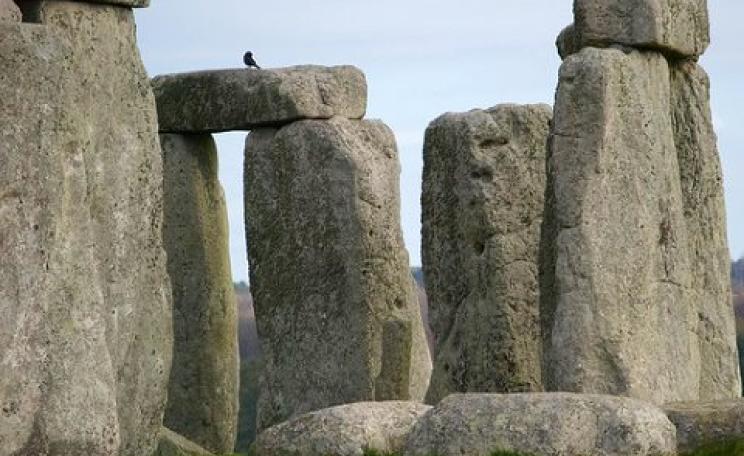
The government's plans to tunnel the A303 under the Stonehenge World Heritage Site has one grievous flaw, writes Kate Fielden. The tunnel is too short, so huge portals and graded junctions at both ends would lie entirely within the WHS causing huge damage to landscape and wipe out archaeological remains.
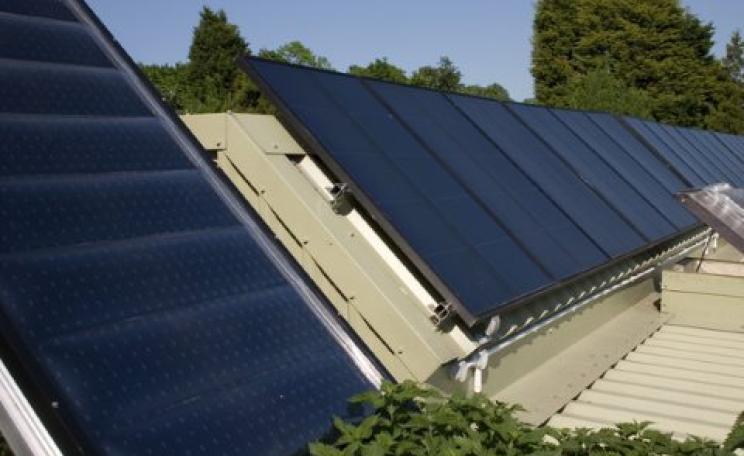
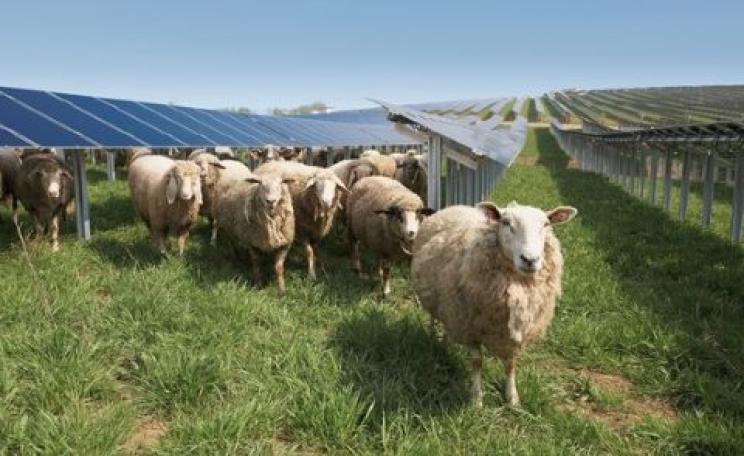
Solar power has a sunny future - even without any major breakthroughs, writes Ralph Gottschalg. There are huge gains to be made simply by getting smarter and using existing technologies more effectively. A new report shows that - given political support - solar PV could be competitive in the UK by 2020.
The EU faces a choice: a green, democratic future of clean prosperity and social justice? Or a dirty future of corporate domination with resurgent nuclear power, expanding fossil fuels, GMO agriculture and weak human and environmental protection? Junckers' Commission represents the latter. We must assert our own vision - or there will be little worth staying in for.
The UK is bidding for a massive €46 billion loan from the European Investment Bank to finance the construction of three new nuclear power stations at Hinkley Point, Wylfa and Moorside - while Poland is seeking €8bn for huge new coal mines and power plants and €12bn for new nuclear.
England's 2015 trial badger cull will be moved to summer, writes Damian Carrington - when cubs are numerous and easy to shoot. The surprise move follows 2014's failed autumn culls, which missed their minimum kill targets.
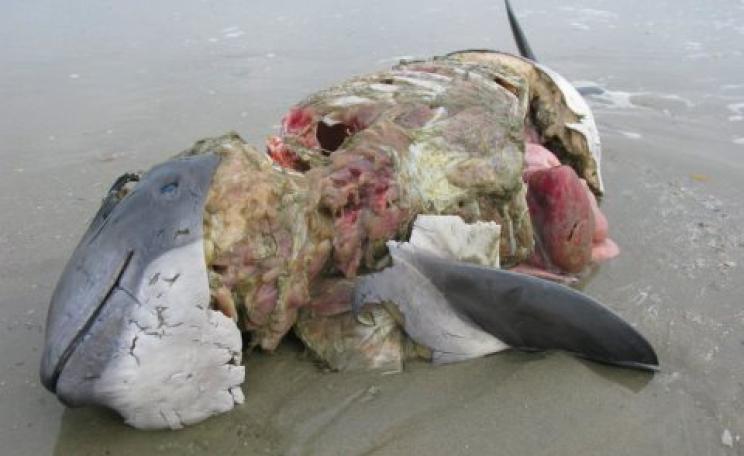
Since 2010 porpoise carcasses have been washing up on our shares, writes Ken Collins - displaying horrific wounds and bite marks that many thought a sign of Great White sharks in Britain's coastal waters. But now scientists have identified an improbably cuddly culprit ...
MPs will be lobbied today by wildlife supporters desperately concerned at the declining state of Britain's nature, writes Martin Harper. Despite clear warnings that both 'protected' sites and threatened species are faring badly, politicians find it all too easy to look the other way. Hence the need for a Nature and Wellbeing Act.
George Osborne's announcement last week of £15 billion for English road schemes may have played well with frustrated drivers, writes Daniel Newman. But all the road spending will achieve is to lock us more deeply into an unsustainable, unhealthy and deeply dissatisfying way of life.
The UK Government plans to lock consumers into a 2.5bn a year, 15-year spend to support peak-time fossil power generation - while undermining energy demand savings capable of achieving the same purpose more cleanly and cheaply. But today the 'unlawful' system has been hit by an ECJ lawsuit.
The Soil Association doesn't need to 'get back to its roots', writes Helen Browning - because it never left them! It remains firmly committed to its founders' original organic mission for health, environment and animal welfare. And that means reaching out to a broader public, ensuring that organic principles are ever more widely understood and applied.
With continuing Coalition in-fighting over the troubled 'zero carbon homes' programme, writes Alex Stevenson, a plan is afoot to allow homes on smaller developments to meet a less demanding energy performance standard - but still carry the 'zero-carbon' label. Critics denounce the plan as 'nonsensical'.
Today the Green party announced a doubling of its membership since January - 500 this last weekend alone, writes Ian Sinclair. They offer an increasingly attractive alternative to the 'mainstream' parties, who have little to offer but a bleak package of privatisation, neoliberalism and never-ending austerity.
Four trustees of the Soil Association just resigned, 'more in sorrow than in anger'. Joanna Blythman, Lynda Brown, Andrew Whitley and former Ecologist editor Pat Thomas all decided they were unable to contribute further to the organisation, the UK's leading organic certifier and the 'mother ship' of British organic farming.
The UK's community energy sector was badly hit by the financial regulator's sudden decision this summer to disallow renewable energy co-operatives, writes Tammy Calvert. A consultation on the topic ends tomorrow, Friday - so get your views in quickly while you can!
A new report shows that the UK's farms can easily generate as much power as the proposed Hinkley C nuclear plant, writes Jonathan Porritt. Not only would it all be renewable, but if could all be in place by 2020. Here he offers some friendly - but strictly confidential - advice for Energy Secretary Ed Davey.
Doubts are growing doubts that the Hinkley C nuclear power station, the EU's biggest construction project, will get the final go-ahead from the UK government, writes Paul Brown. And that's leaving the European nuclear industry, already in serious financial difficulties, facing a struggle for survival.
It's easy to forget that Julian Assange - reviled by mainstream media, hounded by Sweden's judiciary, 'red-listed' by Interpol, publicly attacked by the US defense secretary - remains an innocent man, 'wanted' for nothing more than questioning, writes John Pilger. His disgraceful treatment dishonours only his persecutors.
Six journalists are taking the UK Government to court after discovering that they are listed on its 'domestic extremism' database just for reporting on protests, or undertaking inconvenient investigations into state or corporate misconduct. Adrian Arbib is one of them ...
Jim Ratcliffe of Ineos, Environment Secretary Liz Truss, the Environment Agency and its ex-boss Lord Smith all suffer from a blind spot, writes David Lowry - the dangers of fracking, its radioactive emissions and the toxic chemicals that threaten to pollute our aquifers. As for official advice that 'regulation needs to be strongly and robustly applied' - pass the Tippex!
Would UKIP be riding so high if voters knew of the party's links with powerful right-wing US corporate interests promoting fossil fuels, denying climate change, opposing gun control, and supporting big tobacco, teaching creationism in schools, healthcare privatisation and the lifting of nuclear power regulation? An Ecologist investigation exposes the real UKIP.
A landmark judgment by the European Court of Justice compels the UK Government to act as soon as possible to reduce air pollution in British cities, writes Keith Taylor - and a good thing too for our health, safety and wellbeing. But it's not just the UK that benefits: every EU country must also comply with the ruling.
Farming today is well on the way to becoming a wholly owned subsidiary of the agro-chemical-biotech industry, writes Colin Tudge. Defra and the European Commission are all too keen to make it so, reflecting the interests of an agro-oligarchy obsessed with profits and growth at all costs. But there is an alternative. Join the 'real farming' agrarian renaissance ...
Democratising energy would save thousands of lives a year in Britain alone - releasing us from the clutches of corporate utilities, and building an energy commons in which we are all owners and participants, no longer captive, exploited consumers. More than that, it would be a big step forward in saving the planet.
As the governing conservative party lurches ever further to the right, writes Kyla Mandel, it feels like UKIP has already won the election - six months before it's even happened. Tory ministers are already executing UKIP policies, with their ignorant but implacable hatred of renewable energy in all its forms.