The UK imports millions of tons of American wood pellets every year to be burned in power stations for 'climate friendly' electricity, writes Matt Williams. But his recent visit to the southern US showed him that this practice is devastating beautiful, natural forests rich in wildlife - while the UK government's own research shows that it's worse for the climate than the coal it replaces.
The cost of offshore wind power in the North Sea is 30% lower than that of new nuclear, writes Kieran Cooke - helped along by low oil and steel prices, reduced maintenance and mass production. By 2030 the sector is expected to supply 7% of Europe's electricity.
The winning Brexit slogan was 'Take Back Control', write Victor Anderson & Rupert Read. But leaving the EU will only increase the power of corrupt elites unless the UK reforms its own democratic governance, combats the excessive power of corporations, upholds the rights of all its citizens, decentralises its economy, and forges progressive alliances with its European partners.
Last week a massive 350 hectare open cast coal mine at Druridge Bay took an important step towards winning panning permission. This got Chris Goodall wondering: what if the land was turned into a solar farm instead? His surprise discovery: solar power on England's south coast already costs no more than coal - and it's only getting cheaper.
Renewable electricity is already undermining the big energy utilities' business model, writes Emma Howard, breaking their monopoly and bringing down energy bills. But with the unfolding battery revolution, it's going to reach a whole new level as wind and solar powered families and communities become ever more self-sufficient, leaving utilities high and dry.
Campaigners fear that the abolition of DECC, the department of energy and climate change, indicates that climate will take a low priority in Theresa May's policy agenda. Meanwhile the pro-fracking, pro-nuclear Andrea Leadsom is in charge of environment department Defra.
With today's climate change report sounding a red alert for the UK's national security, Theresa May's response to it will mark the first major test of her leadership when she takes over as Prime Minister tomorrow, writes Ecologist New Voices writer Joe Ware. Imminent climate-related dangers demand urgent, effective, cross-departmental action - but will she step up to the mark?
The Chilcot report reveals that the UK has disclaimed any duty to decontaminate the toxic, radioactive ash left behind by its DU munitions, or even monitor the impacts on human health, writes Doug Weir. But Iraq and other countries are working towards a UN Resolution this October that would hold contaminating governments like the UK and the US legally accountable for DU pollution.
A long-awaited report by the UK Climate Change Committee has found that fracking could produce a 'substantial' emissions footprint if left unregulated, writes Victoria Seabrook, and force the government into more rapid emissions cuts in other areas of the economy to compensate.
In its decision to leave the EU, the UK is cutting itself off from one of the world's most effective systems of climate governance, write Tim Rayner & Brendan Moore. But we still have our own Climate Change Act and can lead the EU, if not as a member, at least by example - provided current and future Conservative Party leadership make their commitment clear, and implement their promises.
The political vacuum left by the Iraq war provided the space for radical extremism to take root in the Middle East and rampage across the region, writes Dr Robert Dover. That makes Tony Blair directly responsible for the refugee crisis that is destabilising Europe today, reflected in the UK's Brexit vote. And it fatally wounded the credibility of his 'third way' social democratic politics across the EU.
The UK's latest carbon budget was well-received, even by environmentalists, write Kate Scott & Marco Sakai. But that's only because they didn't look hard enough. The Paris Agreement hugely elevated ambition to achieve even a 2C temperature rise limit - and the UK's effort is nowhere near the mark.
The UK's exit from the EU won't deliver for the 'victims of globalisation' whose votes were decisive in the referendum result, writes Pete Dolack. All the economic scenarios advanced to date envisage more of the 'free trade' and neoliberalism that has global empowered capital against communities and the well-paid jobs that once sustained them. Plus ca change ...
Following the vote to leave the EU, the UK's energy and climate change policy faces major challenges, writes Paul Brown, with new nuclear power and a third London runway at Heathrow runway looking like the first casualties.
No animal should be killed for our enjoyment, writes Bill Oddie. And that applies alike to Cecil the Lion, shot by a Minnesota dentist almost two years ago; and to the nameless fox cubs that died more recently in England, thrown to hounds by a huntsman to teach them to hate and kill foxes.
The economic impacts of the Brexit vote will very soon make themselves felt to British consumers, writes Chris Goodall - kicking off with higher fuel bills and pump prices. The good news is that nuclear power is now looking increasingly unaffordable. But renewables and green energy research are also likely to suffer, especially if under a right-wing Brexit government.
We have a serious responsibility to fight the more unsavoury symptoms of Brexit, writes Alex Scrivener - making the case for free movement for people, defending the regulations that protect our environment and workers' rights, resisting imperialism abroad and racism on our streets.
We know who the likely runners and riders are in the race to be the new Tory leader and prime minister - but where do the prospective candidates stand on fracking and other environmental issues? Joe Sandler Clarke finds them all decidedly un-green.
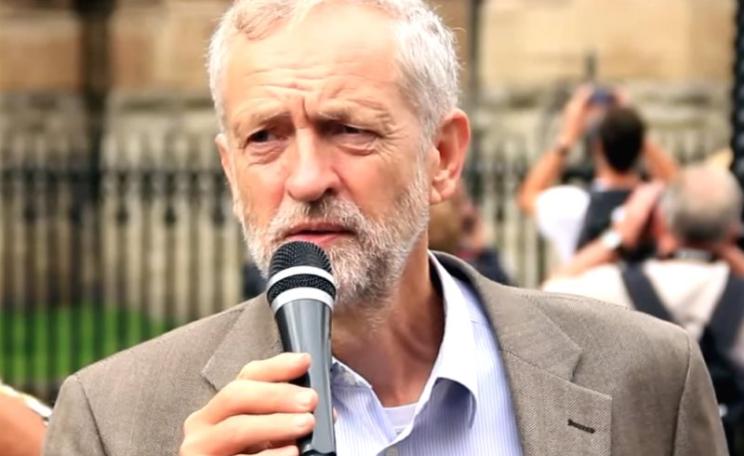
Depressed at the Breferendum result? So you might be, if you are bothered by the environment, social justice and a successful economy, writes Oliver Tickell. But it may never come to that. In fact it's just possible that the Brexit vote could deliver us a reformed 'peoples' EU' that includes the UK, under a progressive government led by Jeremy Corbyn. Here's how.
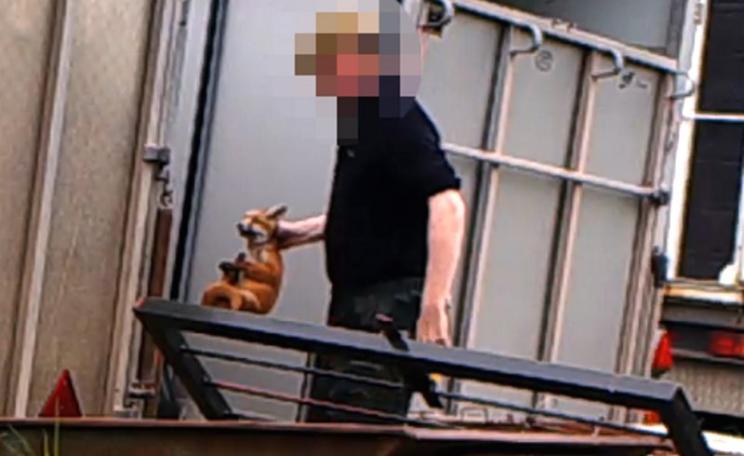
An investigation by the League Against Cruel Sports shows that English hunts are training hounds to kill foxes in horrific secret slaughter sessions, writes Eduardo Gonç;alves. It's just one example of the cruelty and violence that's intrinsic to fox-hunting, and another reason why the ban has to be maintained.
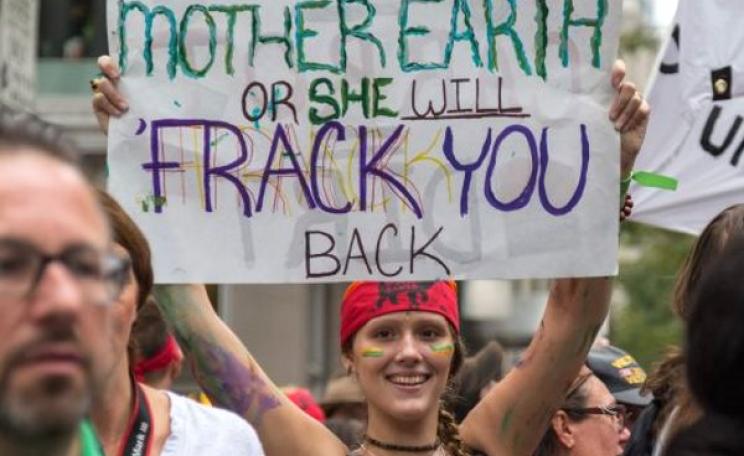
Thanks to fracking company Cuadrilla, grandmother Tina Rothery will be in court tomorrow over a £55,000 'debt' imposed on her for joining a peaceful occupation of a fracking site in Lancashire. But as she explains, she can't pay, she won't pay, and even if she could pay, she wouldn't. Someone has to stand up to corporate vandalism and abuse of justice - and in this case, it's her, no matter what the consequences.
Almost all UK laws that regulate fracking's impact on the environment emanate from EU directives and regulations, writes Zachary Davies Boren. Once out of the EU, the UK would be free to amend them, scrap them or simply ignore them. And given the UK's record of support for fracking and lobbying in Brussels for deregulation, that may be exactly what the Brexiteers have planned.
Britain's bees are under threat from Brexit and moves to allow farmers to use banned bee-harming 'neonictinoid' pesticides, warns Dave Timms, Bees Campaigner with Friends of the Earth. With 20 species extinct since 1900 and a further 35 under threat, how much more can our bees take?
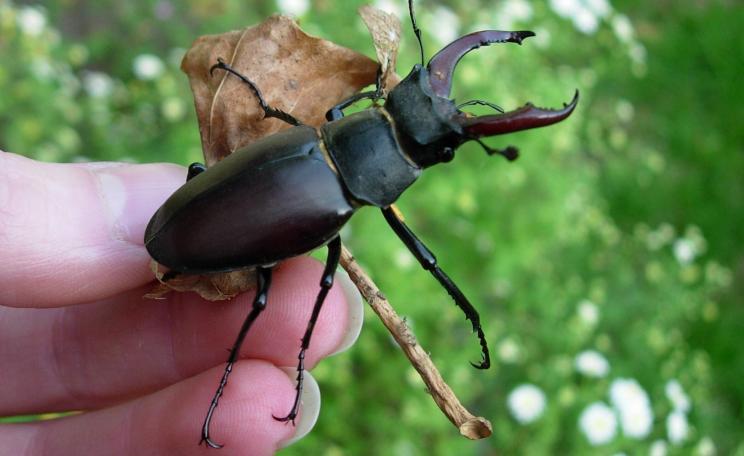
It's National Insect Week in the UK and the conservation charity, People's Trust for Endangered Species (PTES), is looking for Citizen Scientists to take part in its annual survey to record sightings of the stag beetle. Here's how to take part.