The Church of Scotland voted on Wednesday to continue investing in oil and gas companies - just a month after a number of leading Catholic organisations announced they were divesting from fossil fuels, writes CATHERINE HARTE
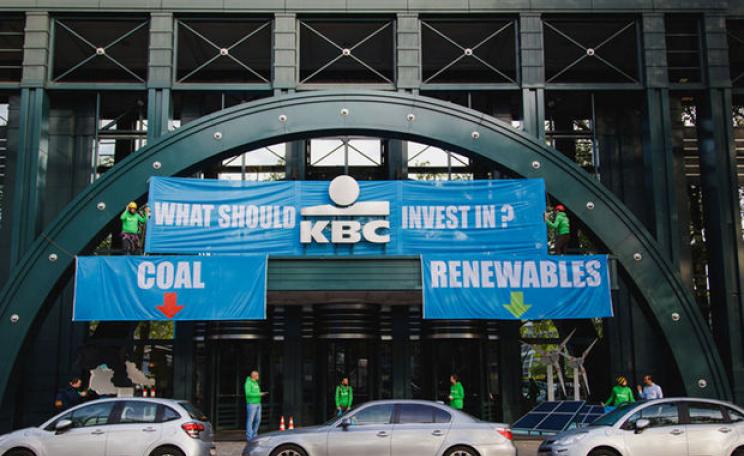
The entrance to the headquarters of KBC bank in Brussels was taken by environmental activists Thursday concerned about the financial and climatic risks of coal investments in the Czech Republic. Hours later, the bank surprised the activists by announcing an end to all new coal investments. NICK MEYNEN reports in the inaugural post for our ENVJUSTICE series
Public support for renewables in the UK has hit record high levels while fracking remains unpopular. The news comes in the same week that the country had its longest coal-free period of power generation in modern history, reports JOSEPH DUTTON
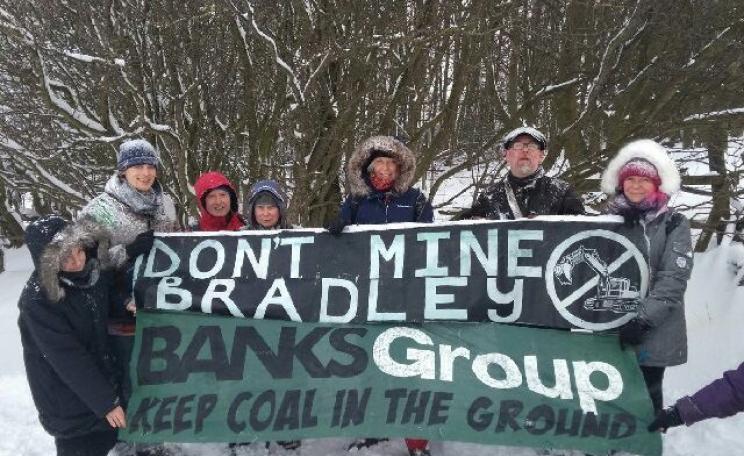
PATRICK CARR is a lifelong coal mine protester from the Pont Valley. As campaigners are evicted from the site by police he explains in his own words what inspired him to join the movement.
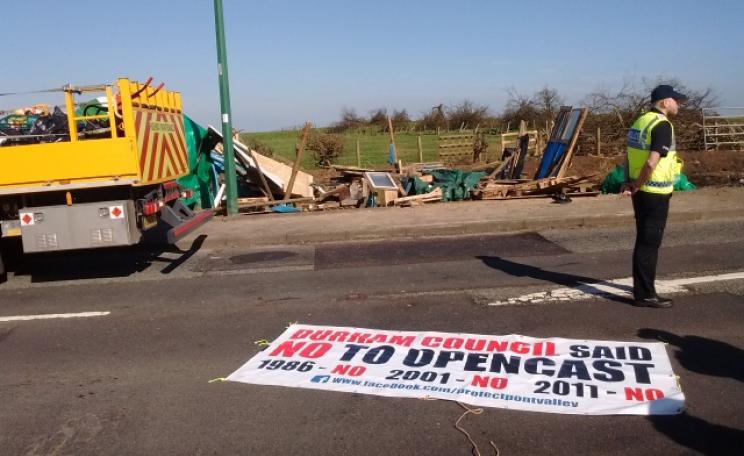
Police have arrested two activists taking part in a protest against an open cast coal mine in County Durham. Campaigners claim the eviction could collapse tunnels and injure protesters inside. CATHERINE EARLY reports
Proponents argue that geoengineering may be the only way of preventing climatic harms in the absence of substantial emissions reductions. But the consequences could be global, fatal, unintended and uncontrollable. Dr SAM ADELMAN investigates
Friends of the Earth Amsterdam - supported by its international organisation - is threatening to take Shell to court. But unlike any other legal challenge, they are not asking for compensation. The charity claims this will limit the company's investments in fossil fuels. BRENDAN MONTAGUE reports
ExxonMobil, Shell, BP and 44 of the world’s biggest producers of fossil fuel products stand accused knowingly contributing to dangerous climate change in the first legal case of its kind. BRENDAN MONTAGUE reports
Theresa May and her Conservative government has promised to phase out the burning of coal in the UK by 2025. This should be a cause of celebration for climate change campaigners. But the plans have three dangerous loopholes, which means activists must remain vigilant, argues ALMUTH ERNSTING
A combination of community resistance, phase out commitments by governments, cities and businesses, and rapid cost reductions in renewable energy has resulted in a huge slump in construction of new coal plants. CATHERINE EARLY reports
Recent research undertaken by Ethical Consumer magazine shows that seven major online retailers are ignoring European Union law and not showing energy labels for all required products. JOSIE WEXLER and CLARE CARLILE investigate
A new database tracks the local-level deals that allow fossil fuel companies to greenwash their image and cheaply purchase a social license to operate within communities in which they have a vested interest. MAT HOPE reports
Renewable energy at home - such as solar panels on the roof - can help save energy costs but also reduce a little our impact on the environment in terms of climate change. With such a win-win solution, why are we not all making the switch, asks EMILY FOLK
A leaked government document has confirmed many of the claims of anti-fracking protesters. The government's expectations are shown to have been lower than industry forecasts. Questions are now being asked about how realistic the initial forecasts were. JOSEPH DUTTON investigates.
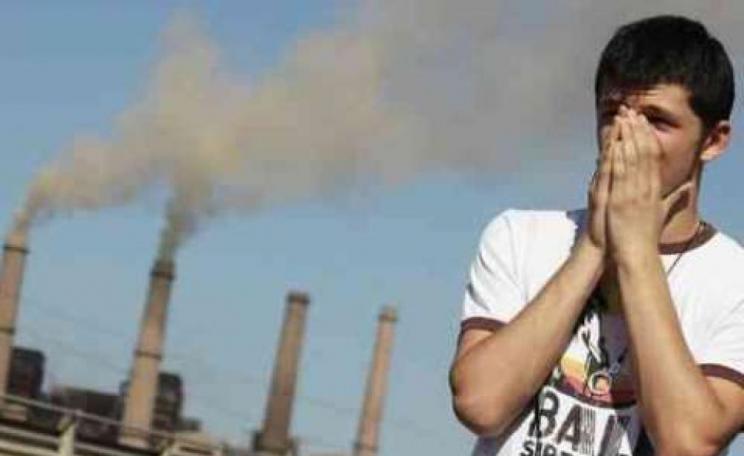
Toxins in the air have reached “hazardous” levels in Pristina, Kosovo, last week. A ban on cars is welcome. But the real problem is the lignite coal plants nearby. So why is the Kosovo government, the US and the World Bank all supporting yet another new plant in the region? JACK DAVIES and GIOVANNI VALE investigate