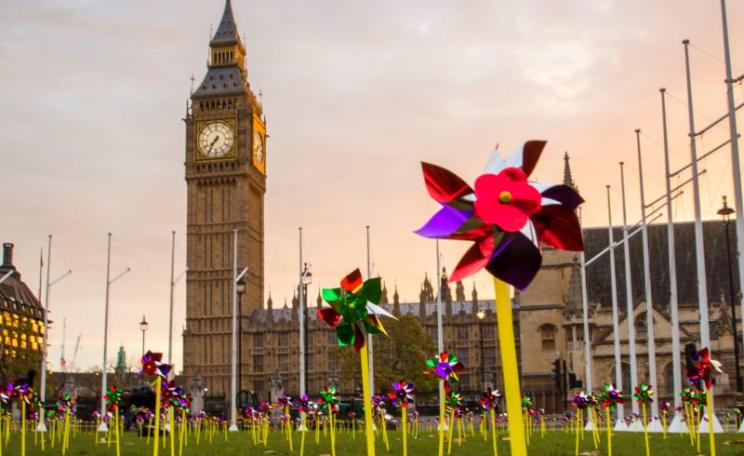
The COP22 climate conference in Marrakech was given an impossible mandate: to make the Paris Agreement happen, write Alexander Pfeiffer, Elizabeth Dirth & Alex Clark. But it failed. The task now falls to civil society - and to succeed we must move beyond the alienating discourse of science and diplomacy, and show marginalised communities that climate solutions can also deliver for them.
Born into the wealthy family that founded the Roche pharmaceutical and chemical giant, Luc Hoffman turned his back on the comforts of wealth at an early age, writes James Breiding, and dedicated his life, and his money, to conservation. We all owe a huge debt of gratitude to this man of few words, encyclopedic knowledge, decisive action and unswerving commitment.
Conventional economic analyses of trade tend only to discern the flows of money, writes NICK MEYNEN. But by also considering biophysical metrics - such as material and energy flows, and embodied water and land - ecological economists can identify the asymmetric flows of resources obscured by the apparent reciprocity of market prices.
Both Trump and Brexit can be explained by the failure of mainstream political elites to address the pain inflicted on ordinary citizens in the neoliberal era, write Helena Norberg-Hodge & Rupert Read. In the US and the UK, working class voters rightly rejected the corporate globalisation that has created so much poverty and insecurity. But the real solutions lie not in hatred, but relocalisation.
Brazil's indigenous peoples rose up against the government's plans to suppress the rights they had fought so hard to win over decades, writes Christian Poirier. Their victory shows the way to defend our achievements and rights: collective struggle, organized response, strong mobilization and ceaseless pressure.
The UK Government has been ordered by a High Court judge to draw up an improved plan by July next year which must bring air pollution within legal limits.
A unified scientific approach has been called for to help protect one of the most threatened ecosystems on earth. LAURA BRIGGS learns more about the unique ecosystem known as seagrass beds
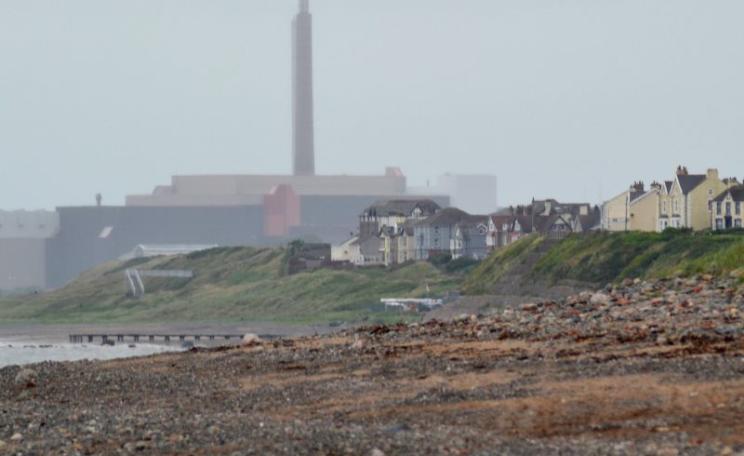
Three new reactors are planned for the Moorside site next to Europe's biggest nuclear complex at Sellafield, writes Peter Roche, with a combined capacity of 3.8GW. But a new report for Radiation Free Lakeland shows that the chosen AP1000 reactor design, for all its claimed 'advanced passive' safety features, is not fit for purpose - and should be rejected as unsafe by UK regulators.
This World Fisheries Day, a new report shows how the 'rights-based approach' to fisheries governance is in fact a mechanism for depriving indigenous and subsistence fisherfolk of their traditional waters, write Astrid Alexandersen, Sif Juhl & Jonathan Munk Nielsen, and transferring them to corporations and economic elites. It must be replaced with a 'human rights approach'.
With the EU Parliament voting next week on CETA, the EU-Canada trade deal, 89 MEPs are demanding that its system of 'corporate courts' must first be verified by the European Court of Justice as compatible with existing EU law. But pro-CETA parliamentary leaders are trying to block all debate in the run-up to the vote.
Progressive green thinkers have been seduced by the EU, but now it's time for the Greens to seize the moment, reclaim their radical roots and take the lead on Brexit writes PAUL KINGSNORTH
Onshore wind power is effective, hugely popular, and the UK's cheapest form of new power generation, writes Max Wakefield, already competing against gas turbines in prime locations. So why did Cameron's Government ban it? And what will it take to get Chancellor Philip Hammond to reverse that decision next week?
Limiting climate change is just the start of what we need to do to forestall a runaway cascade of species extinctions, write Bill Laurance & Paul Ehrlich. We must also reverse the destruction and fragmentation of key wildlife habitats, constrain our over-consumption of natural resources, stabilise human numbers - and elect leaders determined to prioritise these issues.
A government-led shrimp farming project meant to tackle extreme poverty in northern Sabah, Malaysian, won local support in 2010 by promising job opportunities for impoverished indigenous communities. Six years on, mangrove forests local people depend on for food, materials and income are closed off and being cleared - but the jobs have yet to materialise.