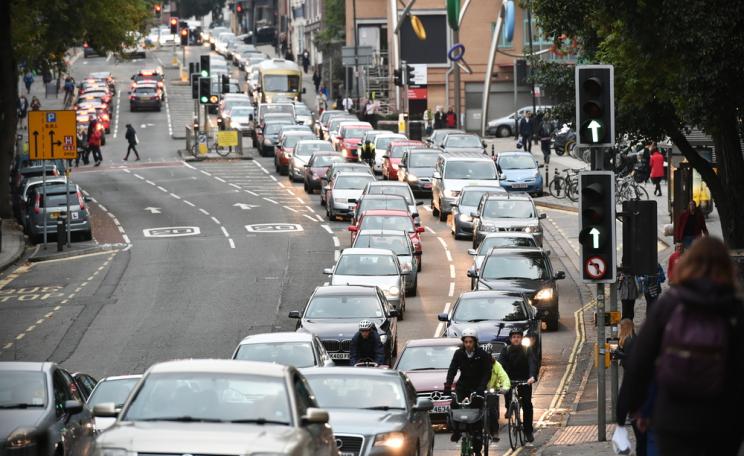
The UK government today announced that Heathrow, already the UK's busiest airport, is its 'preferred option' for a new runway in southeast England, writes Simon Evans. It's just too bad about the climate: the airport expansion implies that aviation emissions alone could take up half to two thirds of the UK's 'carbon budget' for the country to comply with its 1.5C Paris Agreement target.
The city of Brussels, capital of Europe, has joined with other Belgian regions to defeat the CETA 'free trade' deal between the EU and Canada, in an unprecedented victory for civil society and campaigners against the EU's 'by the corporations, for the corporations' trade agenda.
Should it be Heathrow or Gatwick? The answer, writes Keith Taylor, is neither. For climate and pollution reasons alone the UK should be scaling back on aviation, and in any case projections of future demand have been monstrously exaggerated. Step 1: a 'frequent flyer' tax on the 15% of people who take 70% of flights.
To embrace the Earth as truly alive is a step too far even for many committed environmentalists, writes Charles Eisenstein: worried that others may perceive us as unscientific, childish, woolly-headed and ridiculous. But it's a step we must take: in refusing to recognise the living Gaia that is both our creator and our home, we accept and perpetuate the philosophy of her destroyers.
Wales has achieved enviable success in reducing bovine TB in its cattle herds without killing badgers, writes Lesley Docksey. The farming lobby is still demanding an England-style cull, but the Welsh government's 'refreshed' policy on bTB remains firmly science-based and no badgers will be killed without 'objective evidence' of infection.
We refer to them as kitchen basics - milk and eggs - but how often do we stop to think about the true cost of their production? Not often enough writes TIM MADDAMS
The UK government's insistence of pursuing fracking is based on a flawed and utterly misinformed vision of our future, write Alex Russell and Peter Strachan. Rather than delivering the prosperity they promise, large scale fracking would cause massive pollution of air and water, undermine vital export industries, and leave us with an irretrievably damaged economy and natural environment.
Abusive farming of animals in factory farms is one of the great cruelties of the modern age, writes Philip Lymbery. While some may justify it as necessary to 'feed the world', it is no such thing. The answer lies in supporting small scale traditional farmers, and respecting the livestock that are intrinsic to sustainable agriculture across the planet.
Indigenous Peoples are often the victims of nature conservation, according to a new report by Vicky Tauli-Corpuz presented to the UN this week, as they are expelled from lands they have inhabited for millennia. One reason, she told Joe Eisen, is that indigenous territories are precisely the places where biodiversity is best preserved - thanks to the protective, nurturing presence of their traditional owners.
Environmental Lawyers group ClientEarth is in court today to bring a case against the Government for failing to tackle illegal levels of air pollution in the UK
The EU Council today blocked the progress of CETA, the Canada-EU trade deal, writes Nick Dearden. It's a dramatic reversal for the transatlantic 'free trade' agenda, with the unpopular TTIP US-EU agreement already close to death. But negotiators aren't giving up on their aim to push CETA through, no matter what. Our fight goes on!
The Drax power station in North Yorkshire is among Britain's greatest greenhouse gas emitters, writes Almuth Ernsting. Not only is it burning some 6 million tonnes of coal every year, it is also burning its way through forests in the USA and other countries as it converts to biomass-fired units, rewarded by £1.3 million a day in subsidies. Join the #AxeDrax protest this weekend!
The 'Kigali Amendment' agreed this weekend to control HFC gases thousands of times more powerful than CO2 is the first major step in delivering the goals of the Paris agreement, writes Nigel Paul - and a second huge success for the Montreal Protocol, originally agreed to save the ozone layer from destruction by CFCs.
Today, the Chief of the Paiter Surui indigenous people in the state of Rondônia, Brazil has issued the following plea for help to stop illegal logging and mining on their lands. The letter is unedited.
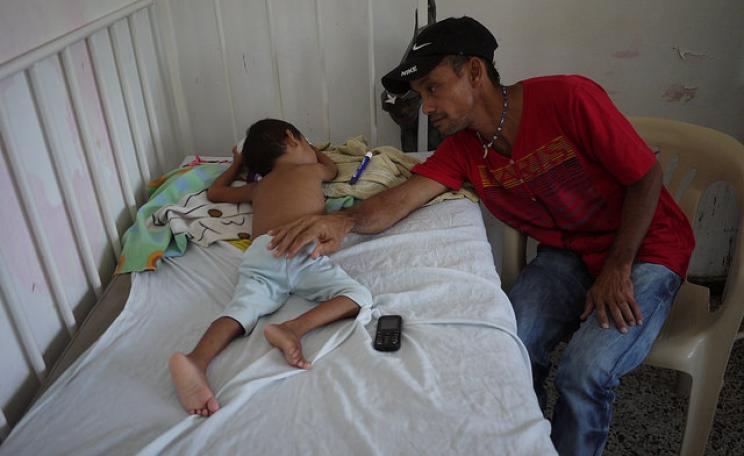
La Guajira, a dusty but spartanly beautiful region in Colombia's desert north is in the grips of a crisis. Climate change, desertification and water shortages have combined to create a perfect storm for the local rural community: a drought so severe some places did not feel a drop of rain for three years writes LAURA DIXON