Despite massive clearance of carbon-rich forests for palm oil, cattle ranching, soybeans and other cash crops, writes Tim Radford, a new study finds that the net volume of carbon stored in trees is increasing thanks to their growing numbers on grasslands, on abandoned farmland, and in China.
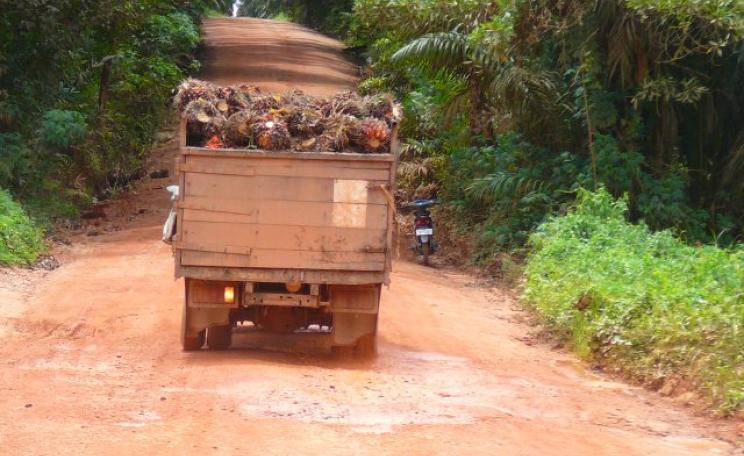
The palm oil industry's repeated failure to keep its promises illustrates why global initiatives to achieve 'sustainable palm oil' must place communities centre-stage, writes FPP. Standard-setters like the RSPO must demand action, enforcement and accountability - not just lofty commitments that inspire hope, but rarely deliver.
Governments and corporations are driving a global wave of ecologically disastrous airport-centered mega-projects each destroying as much of 100 sq.km of farmland and forests - sucking water, resources and economic activity from surrounding areas, excluding host communities and locking in high-carbon infrastructure for decades to come.
Forest fires raging near the abandoned Chernobyl nuclear disaster site in north Ukraine are releasing a surge of airborne plutonium particles as radioactive twigs, branches and leaf litter burn.
A new WWF report puts eastern Australia among the world's deforestation hotspots, write Martine Maron & Bill Laurance - estimating that 3-6 million hectares of native forest will be cleared there over the next 15 years. Queensland's new Labor government could reverse the destructive policies - but will it turn a new leaf?
The presence of the tigers is the world's greatest mangrove forest vital to its survival, writes Joydip Kundu. It's the fear of the tiger that deters people from entering the forest to cut its trees and hunt its wildlife - and so these majestic predators protect its fisheries, and guard millions of people in south Bengal from the rising seas.
Rainforests around the world and the wildlife they sustain have a rosier future after the European Parliament voted to limit the growth of biofuels such as palm oil in the transport sector.
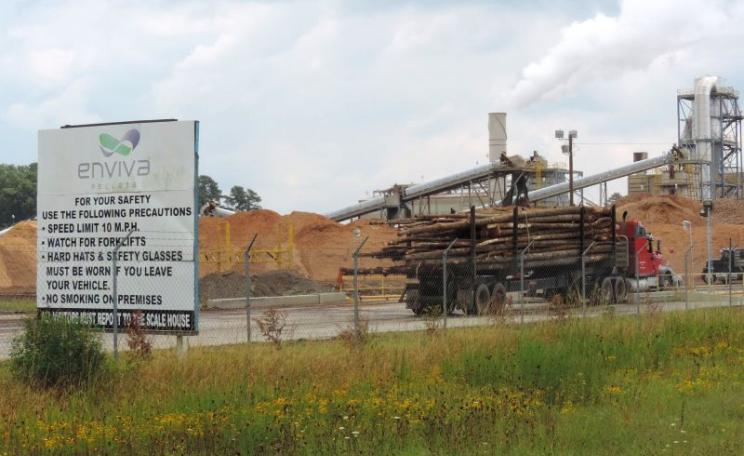
Hundreds of millions of pounds meant to be spent on green energy will soon be lavished on Britain's biggest coal fired power station to reward it for burning 7 million tonnes of wood pellets a year - meant to be 'renewable' but actually driving biodiversity loss and even worse for climate change than coal. DECC must stop this madness!
Banks preparing to launch a $400m bond issue for a global palm oil giant with a history of legal violations and broken standards have been warned of their 'high risk client' and the 'extreme and outstanding' social and environmental conflicts in the palm oil agribusiness sector.
Forests are the traditional refuge of rebels, dissidents and all who seek freedom from the strictures of civilization, writes Ken Worpole. But for all the idea lives on in our hearts and minds, that role has now been usurped by our cities. Now, just as our forests have been enclosed and subdued, so our cities face a similar fate - one we must resist to preserve our liberty.
Ecuador's president, Rafael Correa, has personally attacked eco-defender Carlos Zorrilla in TV broadcasts for resisting a vast new copper mine in a precious area of pristine cloud forest, and opposing the advance of oil exploration into the Amazon. Fearful for his life, Zorilla is now seeking international support for his, and his community's, battle for land, water and the natural world.
Large areas of forest remain around the world, writes David Edwards, but many of them are - in biological terms - dying on their feet as their species diversity erodes due to fragmentation. To conserve the full richness of our forests, we must keep them entire and unbroken, and rebuild the continuity of forest islands.
Botum Sakor national park is one of Cambodia's biodiversity hotspots, where indigenous tribes have long lived in harmony with the forest and its wildlife, writes Rod Harbinson. But now they are being violently evicted as the park is being sold off piecemeal to developers for logging, plantations, casinos and hotels. Now local communities are defending themselves and their land.
To date the Amazon has been a huge carbon sink, soaking up billions of tonnes of our emissions from fossil fuels, write Oliver Phillips & Roel Brienen. But now that's changing, as trees grow faster and die younger: the sink appears to be saturating.
The indigenous peoples of the Amazon are employing the tactics of the Occupy movement against oil companies, gold miners and illegal loggers, writes Marc Brightman. Their methods are home-grown: lacking the protection of the state, they have always had to fight their own battles. But recent campaign successes owe much to outside support. We must maintain, and strengthen, our solidarity.
A new coal and biomass-fired power station could soon be built at Drax in Yorkshire, already the UK's biggest coal burner, writes Almuth Ernsting. It comes with a weak promise of possible 'carbon capture and storage' - an expensive, inefficient technology shunned elsewhere. As the Government's nuclear dream fades, could this be its equally flawed replacement?
What's needed to pull the world's economy out of recession? According to the G20, it's a massive wave of 'infrastructure' development worth as much $70 trillion, writes Bill Laurance. But all the roads, mines, dams, pipelines and 'development corridors' will inflict massive damage on wildlife populations and natural havens, not to mention local communities that stand in the way.
Determined to flood 10,000 hectares of precious rainforest for a power station producing a meager 108MW of power, the Cambodian government has expelled a big 'fishbone in their throat' - eco-defender Alex Gonzalez-Davidson, who has galvanized local and nationwide protests against deforestation, land grabs and official corruption.
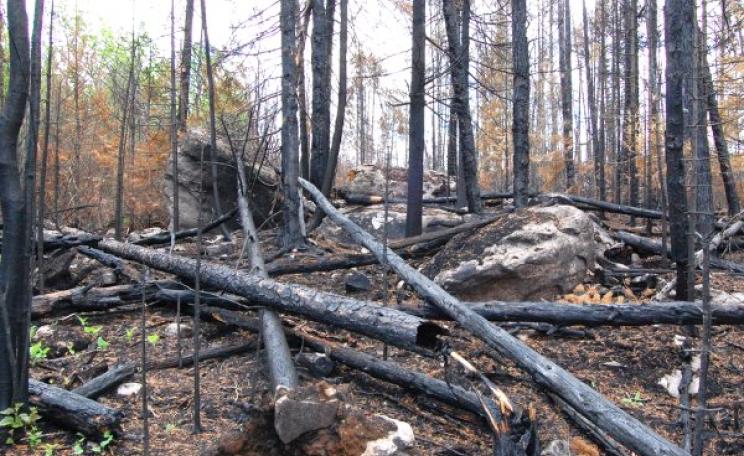
Fire is an essential part of the life-cycle of the forests of the American West, writes George Wuerthner, and the complex, biodiverse habitat that burning creates sustains hundreds of species that cannot survive without it. So please - no more talk of forests 'recovering' after fire - OK?
Mainstream climatologists predict a 15% fall in rainfall over the Amazon if it is stripped of its rainforest. But the 'biotic pump' theory, rooted in conventional physics and recently confirmed by experiment, shows that the interior of a forest-free Amazon will be as dry as the Negev desert. We must save the Amazon before it enters a permanent and irreversible dessication.
Thanks to massive deforestation along Brazil's Atlantic coast and the Amazon, São Paulo's reservoirs are at just 6% of their capacity and water rationing is in place. But this is just the beginning of a long term drying process that could be recreated around the world as forests are laid waste and hydrology disrupted.
A small community in Uganda is challenging a UN-backed international oil palm venture that has expropriated small farmers and obliterated an entire forest on a Lake Victoria island to establish a vast plantation. Three years after the grab, Friends of the Earth groups are backing the islanders legal action, which is launched today.
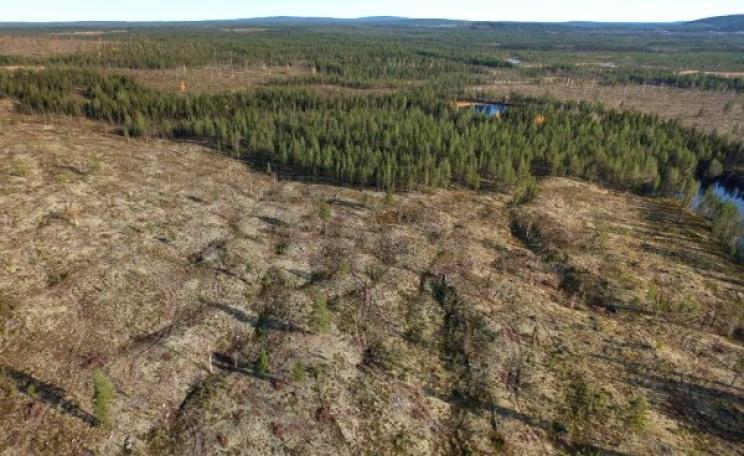
Sweden's biodiverse ancient forests will be largely wiped out within two decades, writes Alec Forss - and along with it will go thousands of species that depend on mature forest ecosystems. But with powerful logging companies riding roughshod over the law, regulators, politicians and certifiers, who is to stop the destruction before it's too late?
While the world gears up for Jungle Book fever, something sinister is afoot in the forests of India, writes Tom Linton. No, not Shere Khan, but zealous officials illegally evicting indigenous communities from their ancestral forests in the name of 'conservation' - and to make way for tiger tourism. And it's happening across India putting millions of people under threat.