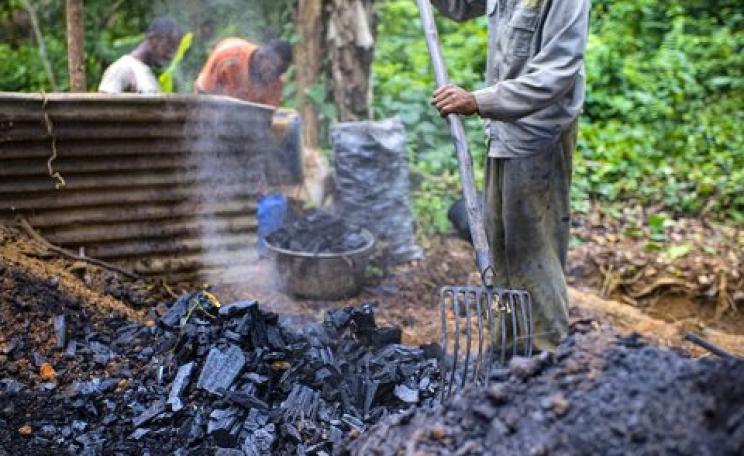
Claims that the ivory trade is financing terrorism in Africa are all based on a single unreliable source, writes Diogo Veríssimo, yet the real link between terror groups and the illegal charcoal trade barely gets a mention. Is the 'reality gap' caused by the 'Like, share, donate' cycle that drives social media and fund-raising?
The carbon market has certainly seen its fair share of skullduggery, writes Chris Lang, with massive frauds perpetrated on an unsuspecting public. This new thriller captures the essence of the wheeler-dealer carbon business to produce a compulsive work of fiction that is, sadly, all too believable.
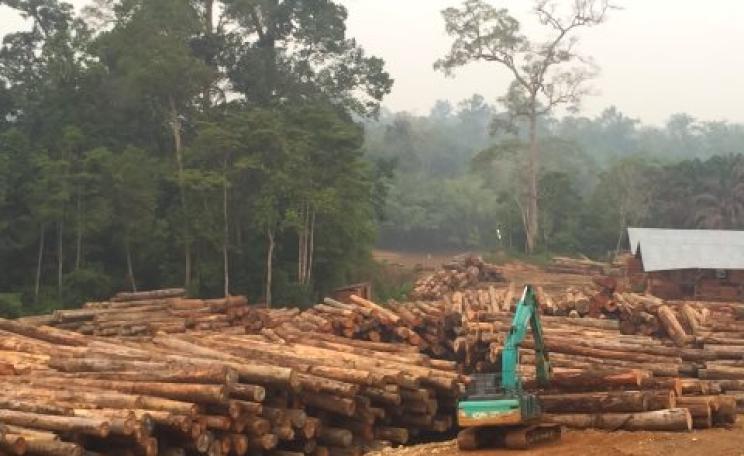
Indonesia appears to brought rainforest logging under control - but it's all a huge illusion, according to a new EIA report. Traditional logging has been replaced by the mass clearance of rainforest for oil palm plantations, creating massive supplies of hugely profitable but often illegal timber. And lurking beneath the surface is a pervasive network of criminality and corruption.
Alana Husby has sawdust in her blood. A fifth generation log and lumber person from Canada, she was ‘flipping wood' as a teenager, and now she's in Panama running the region's biggest underwater logging company, employing local Kuna Indians to fish tree trunks out of flooded forests. Kate Monson met Alana in Oxford while negotiating a 'green' timber deal ...
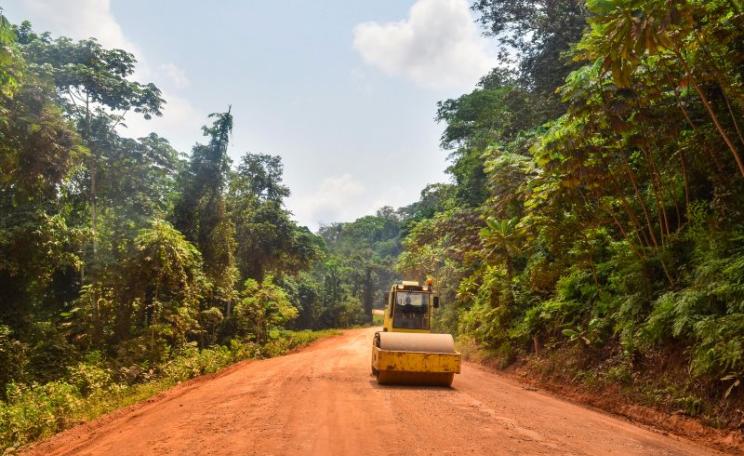
Africa is facing an unprecedented surge in road and railway building with 33 huge 'development corridors' planned that threaten 2,400 of the continent's protected wildlife areas, writes Bill Laurance. We must block the most destructive plans and limit avoidable impacts on natural areas - before it's too late.
This day 20 years ago one of Britain's most committed and effective environmental campaigners died trying to save a coastal forest in southern Madagascar from mining, writes Yvonne Orengo. The world has been a poorer place without Andrew Lees - and his fears for the Petriky forest and local indigenous communities have been proved all too close to the mark.
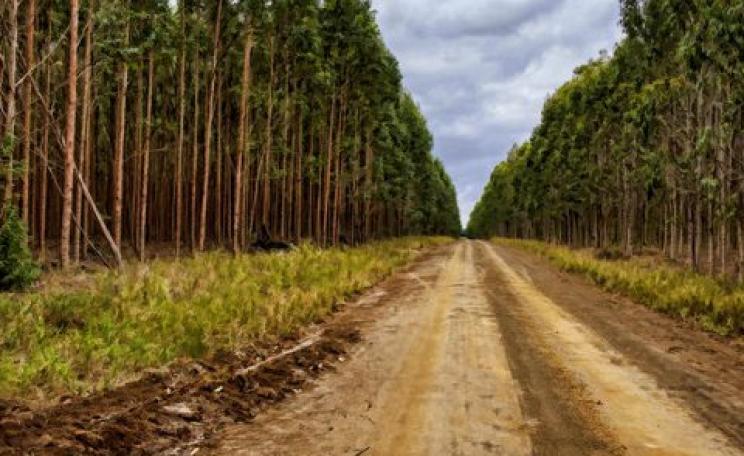
The UN Food and Agriculture Organization's definition of 'forest' includes commercial plantations of fast growing trees - often replacing biodiverse native forests relied on by local communities. FAO must stop using this mis-definition to claim that forests are expanding, when the reverse is the case.
Sarawak's lucrative logging industry has given rise to dynasties of enormous wealth and political power, writes Chris Lang, as revealed in this courageous investigation by Lukas Straumann. And the kingpin is multi-billionaire Abdul Taib Mahmud, Chief Minister of Sarawak for 33 years, whose whose property empire spans the globe.
Work on Nicaragua's rival to the Panama Canal rival has begun amid growing fears over its human and environmental impacts, writes Maya Collombon - and a host of unanswered questions about China's role in the project and what benefits, if any, it will bring to ordinary people.
As Brazil's climate gets drier, caused by deforestation in the Amazon and elsewhere, writes Jan Rocha, a Brazilian climate expert proposes five-point 'battle plan' to save the world's greatest tropical forest, before it's too late.
The COP20 host, Peru's President Humala, certainly talked the talk on indigenous rights last September when he signed a $300 million deal with Norway. But his violations of indigenous rights, 'hands off' approach to murders of indigenous leaders and recent unguarded comments betray his true sentiments.
Peru's government is actively undermining indigenous peoples' efforts to protect their forests - by refusing to title 20 million hectares of their lands and turning a blind eye to illegal logging. At the same time it's handing out vast concessions for oil, gas, mining and timber exploitation, expanding palm oil production and planning 50 major forest-flooding dams.
Financed by the World Bank, the Kenya Forest Service has intensified its illegal campaign of evictions, arson, beatings and arrests of the Sengwer forest people of the Embobut forest, Dean Puckett reports from the Cherangani Hills. And behind the violence lies the lure of hard cash - from the prospect of selling the forest's carbon to international financiers.
As land rights of indigenous peoples are increasingly being violated, writes Tim Radford, new research shows that the planned destruction of the Amazon rainforest is a major threat not only to cultural identity but also to the global climate.
Australia's Labor scored a big win in Victoria's election this weekend - and with the party's 'green' policies that's potentially good news for the state's exploited forests. Now's the time to keep campaigning for the early creation of a Great Forest National Park.
After Gezi Park, another battle for one of Istanbul's increasingly rare green spaces is raging, writes Nick Ashdown - and this time it's on the city's Asian side. Demonstrators are holding a 24-hour vigil on the edge of an 'illegal' construction site at Validebag Grove - despite having been repeatedly detained and attacked by police.
As Peru prepares to host UN climate talks, Global Witness exposes the murder of Peruvian eco-defenders - 57 killed since 2002, including indigenous leaders protecting their forests from illegal logging ignored by police and Government.
Legislation put forward by Brazil's re-elected President Dilma Rousseff would open up to 10% of protected areas to mining, writes Luke Parry. The effect would be to gut nature conservation in Brazil, already in a perilous state due to underfunding and growing pressure for the development of mines, dams, farms and plantations.
Lafarge Tarmac has withdrawn its bid to quarry Hopwas Woods following a huge local and national campaign. It's a victory to celebrate - but as the Woodland Trust points out, it also shows that none of our ancient woodland is truly safe from destructive development.
Peruvian law requires the government to recognise indigenous peoples's ownership of their lands. Yet 594 communities with claims to 20 million hectares of land remain with no secure title - leaving their forests open to illegal logging, plantations and settlement. Now one village is taking its demands to the courts.
Brazil's newly elected Dilma Rousseff is committed to completing the disastrous Belo Monte dam, writes Helle Abelvik-Lawson. Worse, she looks certain to press ahead with the industrialisation of the Amazon, with 61 hydroprojects in the pipeline. And new scientific findings about the massive climate impacts of tropical forest dams are not about to stop her.
The human family must come together now to stop Ebola in West Africa or risk a global pandemic that could potentially kill billions, writes Glen Barry. And that will mean solving, with equity and justice, the disease's root causes: rainforest loss, poverty, war and overpopulation.
A tribal community within India's Similipal tiger reserve is facing eviction after forest department officials tricked and coerced villagers into signing a document in which they promised to leave. Complaints to the state's Human Rights Commission have been ignored.
The repeated burning of England's upland moors - carried out so more grouse can be reared for lucrative shooting parties - is seriously damaging a unique and valuable ecosystem, writes Paul Brown - destroying ages-old peat, reducing its capacity to retain water, and releasing megatonnes of carbon to the atmosphere.