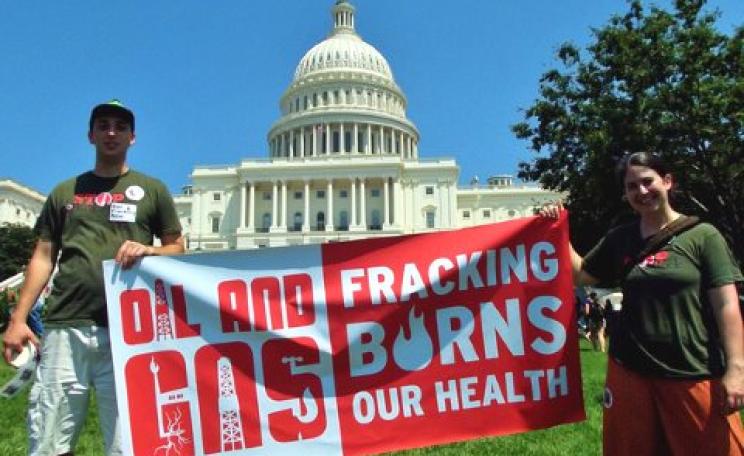
While the fossil fuel industry and Republican states and senators step up legal and political challenges to Obama's Clean Power Plan, protests have also been flooding in to the EPA's ten regional offices from climate activists - demanding that it cut out dirty biofuels and 'carbon trading' loopholes, and protect vulnerable communities from fossil fuel pollution.
The Information Tribunal has ordered Tate, the charity which runs two of London's biggest art galleries, to release details of financial support from the oil company BP, writes Richard Heasman - and they have until 27th January to comply.
With a million families struggling to stay warm this winter, energy bills will be a hot election issue, writes Doug Parr. But Government actions have repeatedly favoured the 'big six' energy incumbents at the expense of consumers, competition, low-cost renewables and energy efficiency, locking us into high bills for years to come.
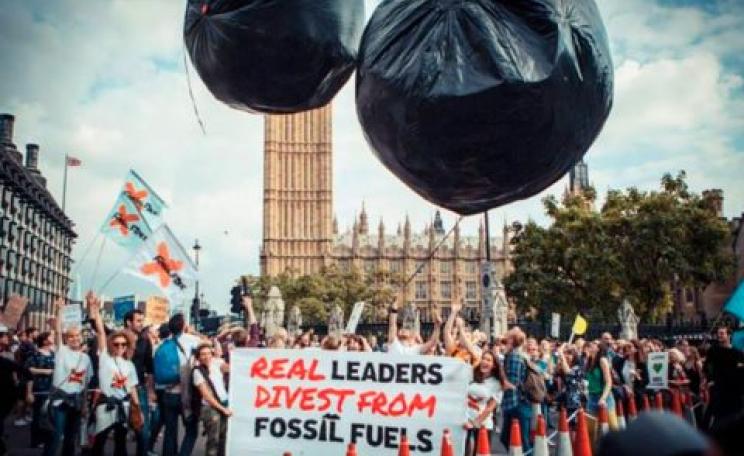
With 80% of the world's fossil fuel reserves 'unburnable' if the world is to meet its climate targets, writes Melanie Mattauch, the divestment movement is moving from strength to strength. As investor confidence in fossil energy ebbs away, 2015 is where the endgame for a dying industry begins.
The UK's financing of fossil fuels abroad increased tenfold in two years to exceed £1 billion in 2013 / 2014, writes Christine Ottery. Incredibly, the fossil fuel funding increase came after a government promise to use the money to support 'innovative and green technologies'.
For the world to meet its climate goals, a third of the world's oil, half its gas and 80% of its coal must stay underground, writes Alex Kirby. And it's not us saying it - but scientists writing in the journal Nature.
Higher oil production and falling demand are creating big problems for the fossil fuel industry, writes Kieran Cooke. Risk-averse investors, spooked by drastic oil price falls, are turning away from the sector in search of more secure returns.
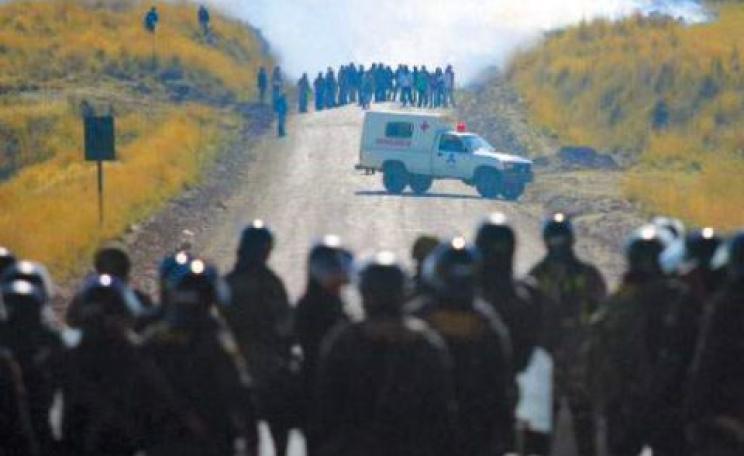
A new wave of ruthless conquistadors has arrived in Peru, write Aldo Orellana Lopez and Philippa de Boissière - global corporations after minerals, oil, gas, timber, land ... And instead of brandishing the Bible and the sword, they proclaim high sounding policies on environment and human rights, while co-opting police and politicians in their pillage of resources.
Recent falls in oil prices give 'greens' cause to rethink arguments about 'peak oil' and get back to why they are really opposed to fossil fuels, writes Dr Steve Melia. Ultimately, it's not the economic evidence that drives government decisions - it's the politics!
A new financial crisis is threatening to dwarf the 'subprime' mortgage debacle, writes Paul Mobbs. Cheap money from central banks has fuelled some $1.3 trillion of risky investments in high-cost 'unconventional' oil and gas. Now, with oil sinking below $60, all that paper is turning to junk - and that's putting the entire economic system at risk.
Fracking for oil and gas uses a wide range of chemicals that disrupt reproductive function in both sexes, writes Tamsin Paternoster. Now an academic study has found a powerful correlation between stillbirth, miscarriage, low sperm count, and exposure to fracking chemicals.
COP20 has just laid the foundations for a non-agreement in Paris in 2015, writes Assaad Razzouk - thanks to the pernicious influence of fossil fuels, poisoning debate and subverting serious climate action. Now there's only one earthly power big enough to fight back.
The UK is bidding for a massive €46 billion loan from the European Investment Bank to finance the construction of three new nuclear power stations at Hinkley Point, Wylfa and Moorside - while Poland is seeking €8bn for huge new coal mines and power plants and €12bn for new nuclear.
The world is in the grip of a 'fracking frenzy that threatens us for centuries to come with polluted aquifers, runaway climate change, destruction of biodiversity and worthless 'sub-prime' investments. Just as the world must make the transition to a sustainable future, our 'leaders' are determined to make this last losing throw of the fossil fuel dice.
Coal leases on public lands operated by the US Bureau of Land Management are responsible for 40% of US coal production and 14% of total US CO2 emissions, writes Mike Gaworecki - yet their environmental impacts have not been reviewed in 35 years.
Peru's government is actively undermining indigenous peoples' efforts to protect their forests - by refusing to title 20 million hectares of their lands and turning a blind eye to illegal logging. At the same time it's handing out vast concessions for oil, gas, mining and timber exploitation, expanding palm oil production and planning 50 major forest-flooding dams.
Peru - host of the COP20 UN climate conference now under way in Lima - is facing rebellion by a 3,500 strong indigenous people deep in the Amazon committed to fighting oil exploration in their forest territory, writes David Hill, following the government's failure to consult Matsés communities or respect their rights.
Are recent oil prices slumps caused by OPEC ganging up against tar sand and other high-cost producers? Or a sinister conspiracy to destabilise the Russian economy? Far from it, argue Jemma Green, Mark Andrich and Peter Newman - it's the simple result of an excess of supply over demand. And the low prices will be with us for some time to come.
The UK Government plans to lock consumers into a 2.5bn a year, 15-year spend to support peak-time fossil power generation - while undermining energy demand savings capable of achieving the same purpose more cleanly and cheaply. But today the 'unlawful' system has been hit by an ECJ lawsuit.
Australia is betting the farm on huge increases in coal exports, writes Stephen Bygrave - just as key markets in China, India, Korea and Japan are drying up, with rising tariffs and huge renewable energy and efficiency programs. The policy is totally out of touch with reality - and will lead to revenue shortfalls in the AU$100 billions.
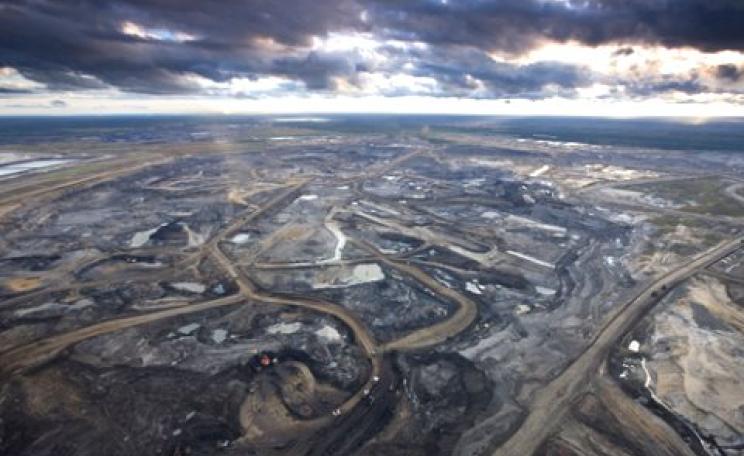
The exploitation of Canada's tar sands is more than just an environmental catastrophe, writes Gregory McGann. It's also an turning into an economic disaster, with massive investments at risk as falling oil prices leave the tar sands stranded.
A London court has forced Shell to disclose documents about its pipelines and oils spills in Nigeria, writes Sarah Shoraka - and they reveal that the company has lied about the scale of oil spills in previous legal actions, and concealed the terminally poor condition of its pipelines.
Jim Ratcliffe of Ineos, Environment Secretary Liz Truss, the Environment Agency and its ex-boss Lord Smith all suffer from a blind spot, writes David Lowry - the dangers of fracking, its radioactive emissions and the toxic chemicals that threaten to pollute our aquifers. As for official advice that 'regulation needs to be strongly and robustly applied' - pass the Tippex!
Would UKIP be riding so high if voters knew of the party's links with powerful right-wing US corporate interests promoting fossil fuels, denying climate change, opposing gun control, and supporting big tobacco, teaching creationism in schools, healthcare privatisation and the lifting of nuclear power regulation? An Ecologist investigation exposes the real UKIP.