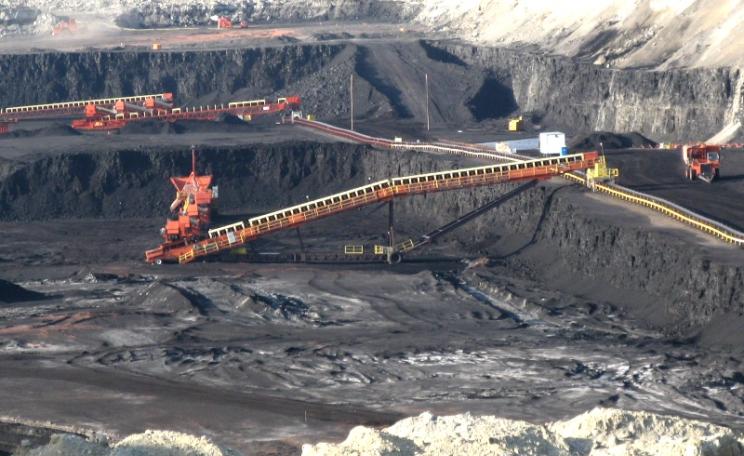
Last week a massive 350 hectare open cast coal mine at Druridge Bay took an important step towards winning panning permission. This got Chris Goodall wondering: what if the land was turned into a solar farm instead? His surprise discovery: solar power on England's south coast already costs no more than coal - and it's only getting cheaper.
The economic impacts of the Brexit vote will very soon make themselves felt to British consumers, writes Chris Goodall - kicking off with higher fuel bills and pump prices. The good news is that nuclear power is now looking increasingly unaffordable. But renewables and green energy research are also likely to suffer, especially if under a right-wing Brexit government.
Thanks to fracking company Cuadrilla, grandmother Tina Rothery will be in court tomorrow over a £55,000 'debt' imposed on her for joining a peaceful occupation of a fracking site in Lancashire. But as she explains, she can't pay, she won't pay, and even if she could pay, she wouldn't. Someone has to stand up to corporate vandalism and abuse of justice - and in this case, it's her, no matter what the consequences.
Almost all UK laws that regulate fracking's impact on the environment emanate from EU directives and regulations, writes Zachary Davies Boren. Once out of the EU, the UK would be free to amend them, scrap them or simply ignore them. And given the UK's record of support for fracking and lobbying in Brussels for deregulation, that may be exactly what the Brexiteers have planned.
The key study that justifies the Government's claim that fracking is a climate change 'solution' is based on serious scientific errors, writes Nick Cowern. Not only has the Government failed to correct them, but it is now delaying the publication of a new official report that would reveal the truth - that fracking is considerably worse for the world's climate than coal.
The UK government is all for fracking, writes Dr Robin Russell-Jones, but on climate grounds alone it should be banned. Evidence from the US shows that shale gas is twice as dirty as coal from a climate viewpoint due to 'fugitive emissions' of methane. That makes fracking incompatible with the UK's climate change commitments and the Paris Agreement - as the CCC may soon rule.
The Renewables 2016 Global Status Report just published by REN21 - The Renewables Energy Policy Network for the 21st Century - shows that renewables are now firmly established as competitive, mainstream sources of energy in many countries around the world, closing the gap between the energy haves- and have-nots
The influence of fossil fuel corporations was strongly questioned by developing countries in the post-Paris meeting of the climate change negotiations in Bonn last week. Climate Trackers Pavlos Georgiadis, Renee Karunungan and Anna Pérez Català highlight the key issues that were debated
The Rampal coal power plant in Bangladesh, near the world's greatest mangrove forest, is a deeply misconceived project that must be abandoned, writes Johan Frijns in this Open Letter to the Exim Bank of India - which is planning to finance its construction. It would severely damage the precious local environment and wildlife, while adding to global climate change and sea level rise.
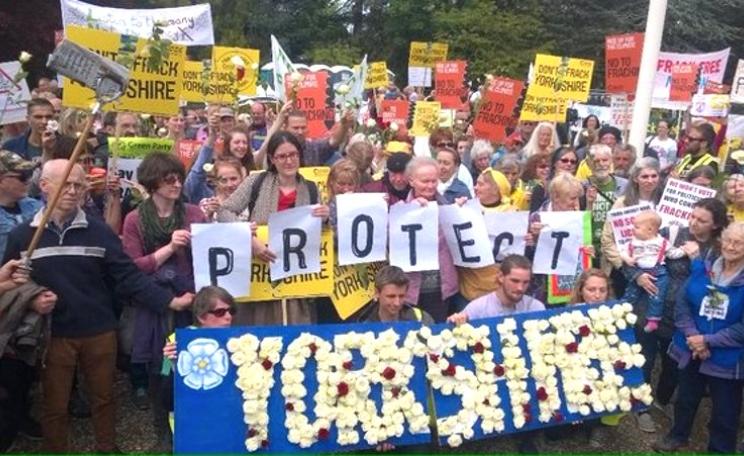
Conservative councillors have passed an application to frack in the Yorkshire Dales by Third Energy, signalling the return of shale gas exploitation in the UK after a five year break, writes Victoria Seabrook. Campaigners vow: 'We will fight on!'
Government plans to pay coal and diesel generators to stay open the winter after next to 'keep the lights on' betray dangerously old-fashioned thinking, writes Chris Goodall. Not only would it subsidise our dirtiest electricity - it's also incredibly costly. Why not just pay people to reduce their demand when power supplies are stretched?
Momentum is gathering behind the UK's transition to a fossil free society, writes Guy Shrubsole. We know we need to leave at least 80% of proven fossil fuel reserves in the ground to avert catastrophic climate change. Here's a quick run-down of progress to date - and the key upcoming fights, including an invasion of the UK's biggest coal mine this weekend.
We all know that coal and steam vanquished over water power in Britain's - and the world's - industrial revolution, writes Irma Allen. But as Andreas Malm sets out in his fascinating new book, the deciding factors in that victory were the unconstrained mastery over people and nature that coal provided mill owners. And so the model was set for the fossil age that may only now be coming to an end.
So much methane is bubbling into a river surrounded by hundreds of fracking wells that it's a fire hazard! Local campaigners blame the coal seam gas industry for the gas releases which are spreading along Queensland's river Condamine and gaining in intensity.
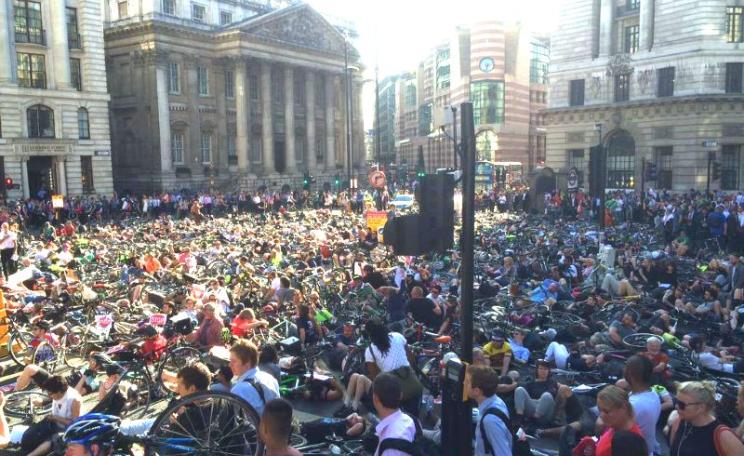
Stop Killing Cyclists are staging a protest in London on 27th April to demand an end to the UK's intolerable air pollution, writes Donnachadh McCarthy. With an estimated 40,000 people dying every year from filthy air, much of it caused by diesel cars, all are welcome to join in, denounce the government's 'polluters' friend' policies, and insist on swift action to stop the needless deaths.
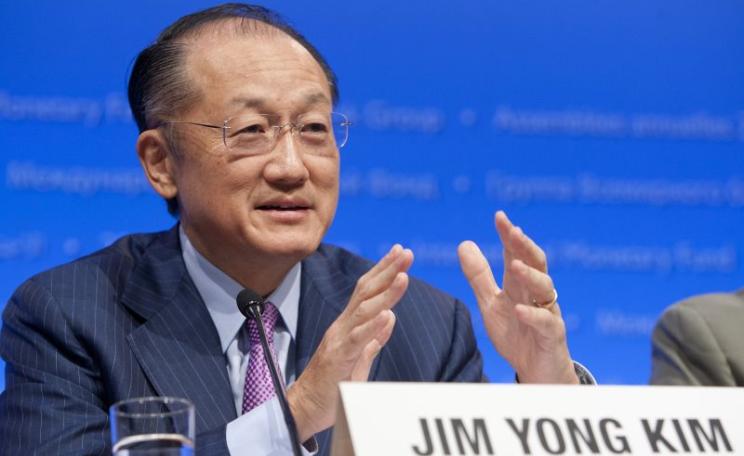
World Bank President Jim Kim talks a good talk on cutting support to fossil fuels. But what the bank does, writes Victoria Seabrook, is a whole other story. Not only is the WB Group still pouring money into the sector, but its funding doubled between 2011 and 2015.
Next month thousands will gather in Wales to shut down the UK's open cast coal mine at Ffosyfran, whose 3,500 acres abut both Merthyr Tydfil, one of Britain's most deprived communities, and the glorious Brecon Beacons national park. It will be one of dozens of coordinated actions across the UK, and around the world, to bring the age of coal to the rapid end it so richly deserves.
ExxonMobil has long known that climate change is real and dangerous, write Louise Rouse & Naomi Ages, while denying it in public and supporting climate change deniers. Now they accuse their critics of 'chilling' climate science and the search for solutions. The truth is the precise opposite.
An unprecedented coalition of 20 Attorneys General from US states and the Virgin Islands have combined to hold fossil fuel companies accountable for the deception they have inflicted on customers and the wider public over climate change, writes Lauren McCauley, in a move hailed as a 'turning point' in the battle to save the climate.
Campaigners are celebrating after defeating plans to build America’s largest open pit coal mine, writes Nick Engelfriend. In an epic 'David and Goliath' battle, Montana activists challenged the project, and all the politicians and businessmen that supported it, with fierce opposition, protests and demonstrations. The outcome spells hope for all in the fight against dirty energy.
JP Morgan's announcement that it's pulling out of coal is purest doublespeak, writes Assaad Razzouk. But it's not the only financier to engage in climate hypocrisy, as banks prepare to lend $5 trillion to build 2,440 new coal power stations. To deliver the Paris Agreement they - and the loans that would finance them - must be cancelled.
It will take decades to completely leave fossil fuels, writes Richard Heinberg. But we can do it, starting with the easy stuff: going big time for wind and solar, raising energy efficiency, replacing oil-fuelled vehicles, and moving to organic farming. But deeper changes will follow as we transition to a more enduring sustainability - consuming better, and much less.
Is the UK sinking into authoritarian rule? That's how it looks, writes Jonathon Porritt, as the government joins with right wing media and fossil fuel companies to attack local democracy and environmental campaigners. Is this 'merger of state and corporate power' a sign of more, and worse, to come?
Climate change is perhaps our generation's greatest challenge, and few people are better placed to know it than academics in our top universities, writes James Dyke. But they are still accepting huge sums of fossil fuel money, in the process helping donors in their quest to extract and burn ever more coal, oil and gas. This must stop.