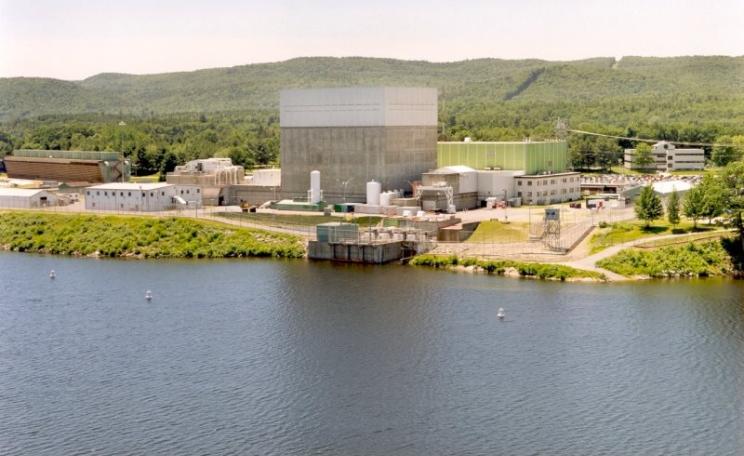
The NRC routinely fails to enforce its own safety codes at nuclear power plants, writes Linda Pentz Gunter - putting all of us at risk from accidents. It's the US's most extreme example of regulatory capture, rivalling Japan's 'nuclear village' of crony agencies and feeble regulation that led to the Fukushima disaster. How long can it be before the US experiences another nuclear catastrophe?
A new UN report warns of a threefold increase in extraction of the Earth's primary materials between 1970 and 2010, writes Alex Kirby. The boom in the production of minerals, ores, fossil fuels, timber and biomass and will be to intensify climate change, increase air pollution and reduce biodiversity.
Almost all UK laws that regulate fracking's impact on the environment emanate from EU directives and regulations, writes Zachary Davies Boren. Once out of the EU, the UK would be free to amend them, scrap them or simply ignore them. And given the UK's record of support for fracking and lobbying in Brussels for deregulation, that may be exactly what the Brexiteers have planned.
Britain's bees are under threat from Brexit and moves to allow farmers to use banned bee-harming 'neonictinoid' pesticides, warns Dave Timms, Bees Campaigner with Friends of the Earth. With 20 species extinct since 1900 and a further 35 under threat, how much more can our bees take?
As the EU prepares to vote on whether to re-authorise glyphosate this week, a new study finds that commercial formulations of the herbicide alter the development of rats' uteruses, potentially causing cancer and affecting fertility.
The official 'fitness test' on the EU's nature directives carried out for the EU Commission under its 'better regulation' initiative finds that the laws are 'fit for purpose' in every respect, writes Oliver Tickell. But there's a mystery: the report was completed in January, yet it remains unpublished. Did it reach the 'wrong' conclusion for a Commission intent on a bonfire of red tape?
A federal judge has ruled that the US Environmental Protection Agency is under no obligation to force pesticide makers to disclose supposedly 'inert' ingredients in their products - even where those ingredients are seriously hazardous to health or environment.
Apparent 'victories' in the fight against toxic chemicals - like the EU's failure to re-approve glyphosate yesterday - are illusory, writes Jonathan Latham. The real problem is not one of specific 'bad actors', but the entire system that allows new, likely to be toxic compounds to pollute the environment in near-total ignorance of their impacts. It's time to take our campaigning to a whole new level.
With EU ministers due to decide tomorrow on the future of the glyphosate in the EU, Colin Todhunter finds evidence of collusion between regulators and the corporations whose sales of the 'probably carcinogenic' herbicide add up to many billions of dollars a year - evidence that underlies a legal action alleging fraud by the European Food Safety Authority against the EU's 508 million citizens.
News headlines today suggest that a UN report on glyphosate residues has given the controversial herbicide a clean bill of health, writes Georgina Downs. But that's seriously misleading: the panel concludes that exposure to the chemical in food is unlikely to cause cancer. But that does not apply to those exposed to it occupationally or who live near sprayed fields.
With five reactors closed in the last three years, the US nuclear industry is in shutdown mode, writes Linda Pentz Gunter - and that means big spending on decommissioning. But now the nuclear regulator is set to exempt owners from safety and emergency costs at their closed plants - allowing them to walk away from the costs and liabilities, and palm them onto taxpayers.
The remarkable Leuser ecosystem in Aceh, Sumatra, has faced massive destruction over recent years with rice farms, palm oil, roads and mines, writes Bill Laurance. But that's all set to end with a moratorium on forest clearance that's supported at the highest levels of government, both state and national. This is definitely news to celebrate! But we must also maintain our vigilance.
The EPA's release of an internal memorandum last month showing the increasing use of the cancer-linked weedkiller glyphosate looked like a welcome opening up of information to the public, writes Carey Gillam. But then it was suddenly withdrawn, along with other related documents - though not before she grabbed her copy and reviewed the scale and scope of glyphosate usage.
The EU Commission has caved in to US pressure in TTIP trade talks by deciding to consider organisms modified by new 'gene editing' techniques as non-GM - in violation of the EU's own laws. The move could make the 'new GMOs' exempt from labeling and from health and environmental testing.
The Reuters news organisation has just sullied its reputation with a disgraceful attack on the WHO's specialist body on cancer, the IARC, writes Claire Robinson. Resorting to smear, innuendo and anonymous critics, it relies heavily on discredited industry sources including tobacco defenders in its attempt to undermine IARC's view that glyphosate probably causes cancer.
Remember when the UK was the 'dirty man of Europe'? What has changed since then, writes Caroline Lucas, is our membership of the EU - which has made us raise our environmental performance on everything from fisheries to air pollution, nature conservation, clean bathing waters and renewable energy. Leave, and it could all go into reverse.
Stop Killing Cyclists are staging a protest in London on 27th April to demand an end to the UK's intolerable air pollution, writes Donnachadh McCarthy. With an estimated 40,000 people dying every year from filthy air, much of it caused by diesel cars, all are welcome to join in, denounce the government's 'polluters' friend' policies, and insist on swift action to stop the needless deaths.
This week, the International Maritime Organisation could act to curb fast-rising emissions from shipping under the Paris Agreement, write Barry Gardiner & Richard Burden. But there are growing fears that the UK government may seek to delay and obstruct vital progress.
The 'cancer industry', including charities with close links to chemicals corporations, is always keen to blame cancer victims for their morally deficient lifestyles, writes Colin Todhunter. But the real fault lies with the commercial interests touting bad food, nutritionally unbalanced and laced with toxic agrochemicals - like the ubiquitous glyphosate - and their residues.
There's absolutely no evidence for BBC Panorama's claim of 90% success for Bt brinjal in Bangladesh, writes Claire Robinson. But that has not stopped the BBC Trust from dismissing all complaints against its monstrously dishonest report. Nor has it diminished the jubilation of GMO cheerleaders.
The EU Parliament has responded to the health concerns of millions by calling on the Commission to severely restrict permitted uses of the toxic herbicide glyphosate, including an effective ban on pre-harvest dessication of crops.
The global pesticide and bioscience giant Monsanto is a byword for evil for millions of campaigners and concerned citizens, writes JP Sottile. But that has never stopped it getting its way with the people that matter - politicians and regulators. And now the company is on the verge of biggest victory ever - winning clearance to spray biologically active RNA sequences on US crops.
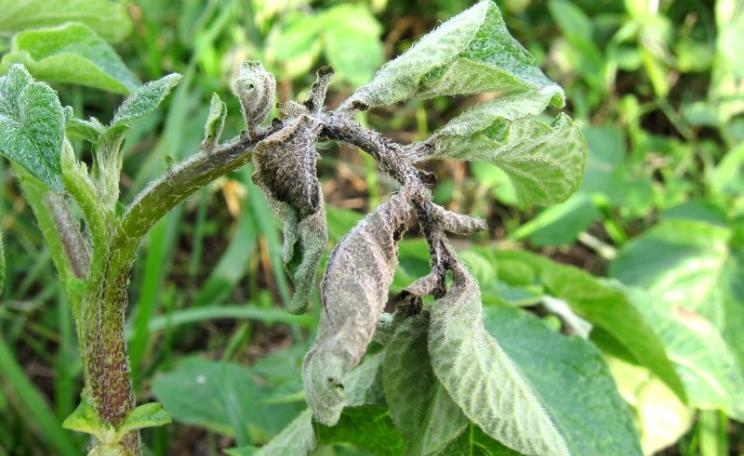
British NGOs have objected to two applications for open-air field trials to grow GM crops. One is for a blight-resistant potato that is much less resistant than existing non-GM varieties. The other is an oilseed to be used as fish food whose fatty acid profile has been subject to only 'rudimentary analysis'.
A coalition of fishing, consumer, and environmental groups are suing the FDA for its 'unlawful' approval of Aquabounty's GM salmon, as it relied on treating the fish as an 'animal drug' under a 1938 law, and ignored serious risks to wild salmon and fishing communities.