Way out in the turbulent North Sea, the Dogger Bank may seem like an unlikely place to site a large part of Britain's energy infrastructure. But given the stable sea floor, consistent winds, and distance from sensitive neighbours, it could be the perfect place. Even the fish could come to like it!
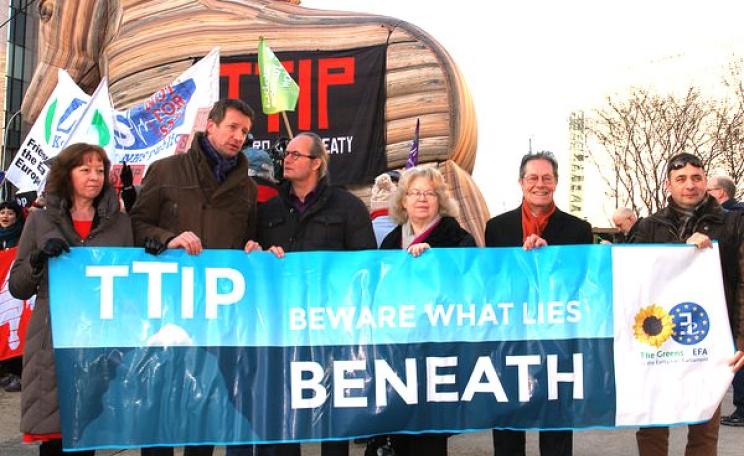
British MPs have rebuked the government for its secretive and apathetic response to public concerns over the TTIP EU-US trade deal, demanding that nations' 'right to regulate' for health, environment and the wider public interest must stand at the heart of any future agreement.
An elite group of aid donors and agribusiness corporations met in London this week to plan the takeover of Africa's seeds, writes Ian Fitzpatrick, replacing traditional seed breeding and saving by small farmers with a corporate model of privatized, 'improved', patented, genetically uniform and hybrid seeds in a profit-driven market.
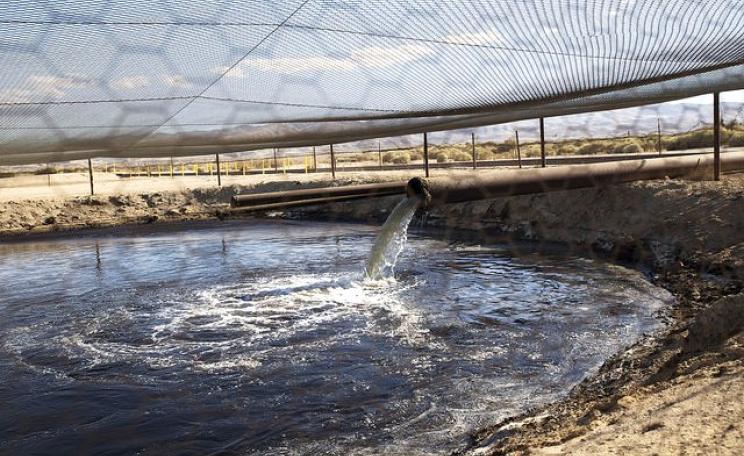
High ranking academics have issued a stark warning to policy makers on the future of Britain's shale gas - your best bet is that we have none that can be recovered consistent with policy objectives.
The UK's Trident nuclear missile system has the power of 1,500 Hiroshima bombs, writes Angie Zelter - and to use it would be a monstrous and probably suicidal crime against humanity. Should we spend £130 billion renewing it? Or on schools, hospitals, libraries, social care and cycleways? The inspiring ActionAWE campaign is waking people up to the choice we face.
Britain's corporate energy oligarchy has failed us, writes Calum McGregor. It's given us widespread fuel poverty, unfair tariffs, constant price hikes, billions siphoned off to shareholders, and chronic under-investment in renewables. Now is the time for a new model: public and co-operative ownership of energy infrastructure under participative democratic control.
The the creation of almost a million sq.km of the South Pacific as a fully protected marine area builds on a long Conservative tradition of protecting the natural environment, write Nick Hurd & Zac Goldsmith - and as factory trawlers close in on Pitcairn's pristine waters, the initiative could not have been more timely.
Edelman, the global PR group, has a history of aggressive 'consent engineering' for the fossil fuel industry in North America, writes Paul Mobbs. So what are they doing running 'impartial' UK bodies including a Parliamentary group on unconventional oil and gas, and the 'independent' Task Force on Shale Gas? Are they really US-style 'astroturf' bodies designed to fool us all?
A new coal and biomass-fired power station could soon be built at Drax in Yorkshire, already the UK's biggest coal burner, writes Almuth Ernsting. It comes with a weak promise of possible 'carbon capture and storage' - an expensive, inefficient technology shunned elsewhere. As the Government's nuclear dream fades, could this be its equally flawed replacement?
The Kwegu people of Ethiopia's Lower Omo Valley are facing starvation because of the loss of their land to a huge sugar plantation, the destruction of their forest and the damming of the Omo river - supported by a UK, EU and World Bank funded 'aid' program.
Chemical giant Bayer has failed in its attempt to sue Friends of the Earth Germany over its claims that its pesticide Thiacloprid harms bees. Now pressure is growing on the EU to add the neonicotinoid to the three already banned.
Members of the London Assembly yesterday voted for the London Pension Fund Authority, worth £4.8 billion, to ditch all its fossil fuel investments over a 5-year period. The vote is non-binding, but the huge 15-3 margin puts strong pressure on London Mayor Boris Johnson to follow through.
The Hinkley Point C nuclear power plant never made sense, writes Jonathon Porritt, but as legal challenges gather, finance fails to materialize, the cost of renewable energy keeps on falling, and the 'dead duck' EPR design is prepared for burial, even nuclear fanatics are turning against the doomed project.
The Labour Party has launched a new manifesto for wildlife protection, writes Angus Nurse - and a good thing too! But turning the tide for nature will take more than stricter laws and penalties. Ultimately it's about enforcement. And that means prioritising wildlife crime, committing expert officers, and providing resources.
A Friends of the Earth Cymru legal challenge to the Welsh Government's 'irrational' plan to drive a new branch of the M4 motorway across the highly protected Gwent Levels wetlands begins in the High Court today.
The #GreenSurge - which has seen the Green Party's membership quadruple in a year - has happened for good reasons, says Natalie Bennett: a deep disgust and frustration at 'mainstream' politics and its subservience to vested interests; and the growing yearning for a better, greener, fairer future.
The illegal killing of songbirds on the UK's military base on Cyprus has reached record levels, a study by RSPB has shown, with an estimated 900,000 birds trapped, killed and eaten in autumn 2014.
The UK's troubled Hinkley C nuclear power station faces a legal challenge from Germany's biggest energy co-op, which claims that the subsidy package will distort energy markets across Europe and disadvantage renewable generators and vendors.
The real significance of last night's TV debate was the vigorous assertion of a new progressive politics in Britain, expressed by the 'trimulierate' of female party leaders from the SNP, Greens and Plaid Cymru - the three sharing a positive vision of a green, fair, inclusive future in which all participate in the nation's prosperity.
The UK will soon complete a record year for solar installations, almost doubling the nation's solar capacity. But drastic and overtly discriminatory changes to support for renewables may see solar installations collapse to 1% of current levels.
A report published by MPs today displays a shocking ignorance of scientific logic and the nature of risk, writes Rupert Read. Confusing inconclusive evidence of harm from GMOs, with conclusive evidence of safety, they reach a false and dangerous conclusion - that the EU should give free rein to pro-GMO governments.
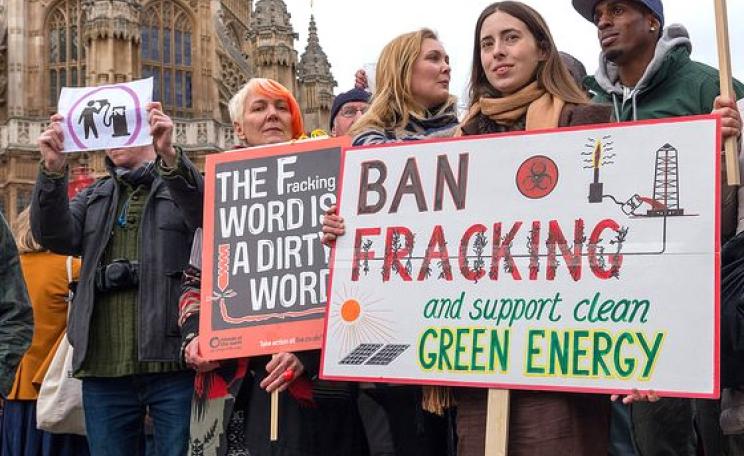
The rushed passage of the Infrastructure Bill with all its pro-fracking provisions and toothless 'safeguards' is an abuse of democracy. And as it's manifestly against the national and public interest, it's also in breach of both MPs' and Lords' legally binding Codes of Conduct. Now Jojo Mehta intends to hold them to account - in Court.
Green leader Natalie Bennett may have been lost for words on LBC yesterday, writes Adam Ramsay - but at least she doesn't charge £25,000 for a speech or £10,000 to have dinner with you. Unlike Jack Straw, Malcolm Rifkind and other politicians so deeply mired in corporate influence that they can't even see what they have done wrong.
As the UK's nuclear dream fades, writes Chris Goodall, investors are turning to the possibilities of 'Concentrating Solar Power' in the Sahara connected to Europe by HVDC power lines. The cost would be much lower than nuclear or offshore wind, and provide reliable baseload capacity. With the UK government's say so, Tunisian sunshine could soon be powering our grid.