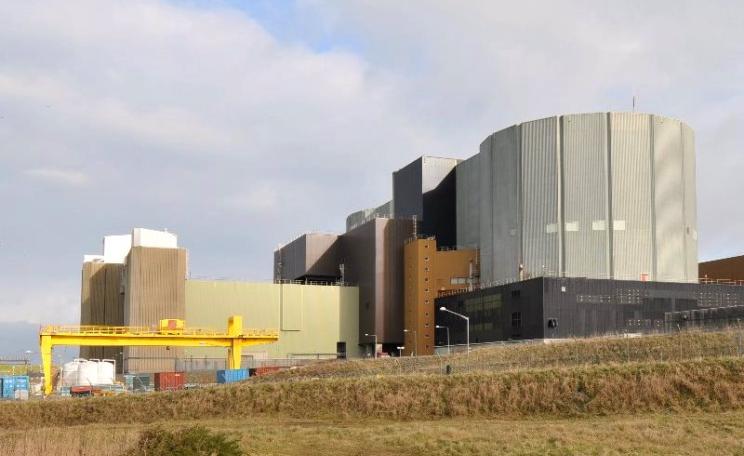
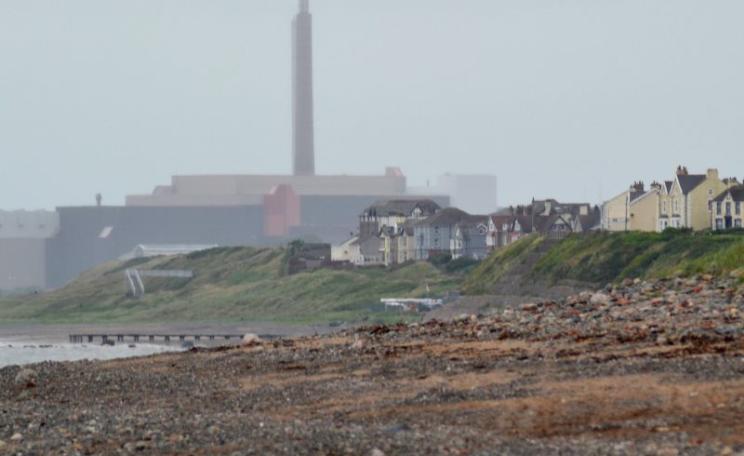
While the government is cutting vital public expenditure across the board there's one industry for which no costs are too great, writes Martin Forwood. The price of an 'evaporator' at the Sellafield nuclear complex is escalating towards £1 billion, while billions more of taxpayer finance are being lined up to finance cooling systems, power lines and transport links for the adjacent Moorside new-build nuclear power plant.
Two key wildlife laws that underpin nature conservation across the EU will be retained intact, the EU Commission announced today after an 18 month review that generated record public engagement due to fears that they would be weakened. Now campaigners are determined to ensure the UK retains the laws post-Brexit.
To secure the clean energy transformation for the long term we must get the good news out there, writes Natalie Bennett - driving forward a popular movement for warm, comfortable homes, affordable fuel bills, community renewables and thriving local economies.
Al available science indicates that badgers have little if anything to do with bovine TB in cattle, writes Lesley Docksey. This is reflected in Wales's consultation on its 'refreshed TB Eradication Programme'. We must hope that Northern Ireland's bTB Eradication Strategy will be equally science based - and ready to campaign hard if it relies on cruel, ineffective and expensive badger culls.
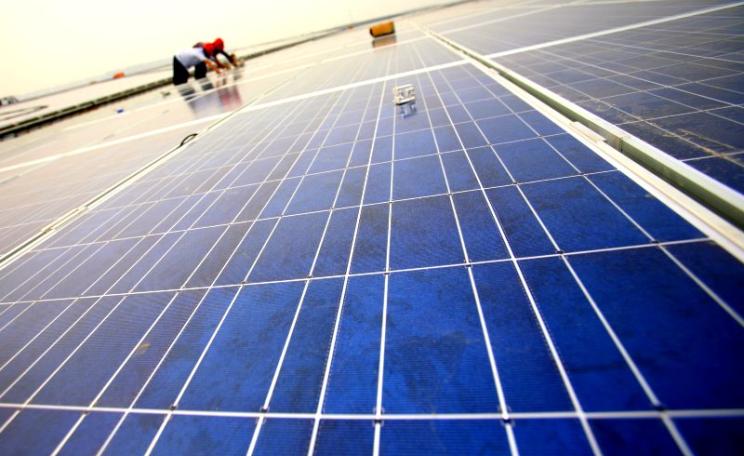
Next April the UK government proposes to increase taxes on self-consumed solar electricity installations on schools, offices, warehouses and factories by a whopping 6-8 times, write the STA and undersigned. This inexplicable move, which threatens a once thriving solar industry already on its knees, must be abandoned.
Magnox has applied to dissolve spent nuclear fuel canisters and release the liquid into the sea near Bradwell nuclear power station in Essex, writes Chris Busby. This will wash radioactivity onto mudflats in a populated area already suffering from excess cancers, however the publicly available documents ignore this key fact. We must make sure this dangerous application is refused.
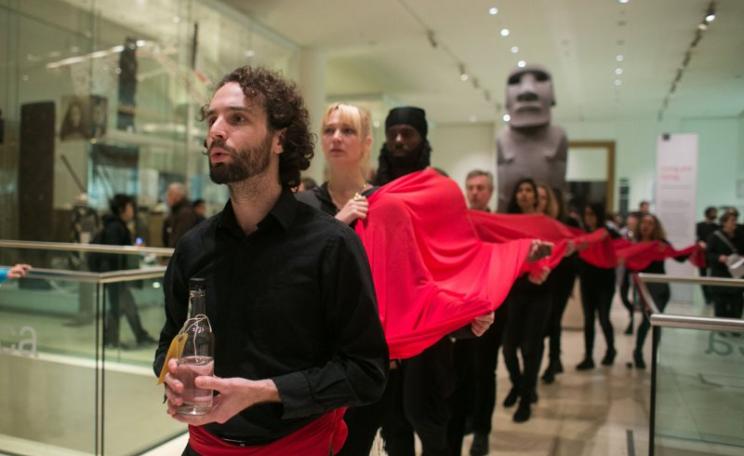
With Trump denying climate change and threatening to reject the Paris Agreement, it's more important than ever for society to hold a firm ethical line, writes Chris Garrard. The last thing we need is our most revered museums and galleries muddying the water by courting the sponsorship of leading climate criminals.
Article 6 of the Euratom Treaty provides for nuclear industry practices to be rejustified in the light of new scientific evidence of harm to health, writes Chris Busby. We now have that evidence, in particular that radiation exposure even at very low levels causes severe and heritable genetic damage to people and entire families. Now, we must use the law to protect our health from radiation!
The Scottish government has announced that its wild beaver populations will be given the full protection of both UK and EU law. The decision has been welcomed by campaigners who point out all the benefits of beavers to biodiversity, water management and flood control. Now, they say, England and Wales should follow suit.
The jobs and quick money that fracking can generate may seem initially attractive, indigenous Canadian activist Caleb Behn told Jen Stout on his recent visit to Scotland. But after decades of oil and gas production, the ineradicable legacy is of fractured landscapes and long-term pollution. 'My land is bisected, divided, by pipelines, roads, well sites, pads, all that. It's really hard on my heart.'
Both Trump and Brexit can be explained by the failure of mainstream political elites to address the pain inflicted on ordinary citizens in the neoliberal era, write Helena Norberg-Hodge & Rupert Read. In the US and the UK, working class voters rightly rejected the corporate globalisation that has created so much poverty and insecurity. But the real solutions lie not in hatred, but relocalisation.
Three new reactors are planned for the Moorside site next to Europe's biggest nuclear complex at Sellafield, writes Peter Roche, with a combined capacity of 3.8GW. But a new report for Radiation Free Lakeland shows that the chosen AP1000 reactor design, for all its claimed 'advanced passive' safety features, is not fit for purpose - and should be rejected as unsafe by UK regulators.
Onshore wind power is effective, hugely popular, and the UK's cheapest form of new power generation, writes Max Wakefield, already competing against gas turbines in prime locations. So why did Cameron's Government ban it? And what will it take to get Chancellor Philip Hammond to reverse that decision next week?
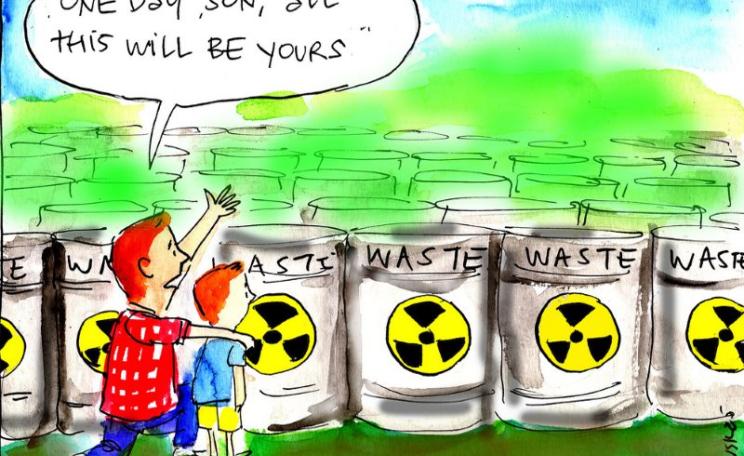
The long term problems of what to do with nuclear waste remain entirely unsolved, writes Andrew Blowers. Yet governments and the nuclear industry continue to peddle their untenable 'bury and forget' policy of deep geological disposal, which only unloads the toxic legacy of modern day nuclear power and weapons onto uncountable future generations.
With European climate policy in post-Brexit lockdown, and US delegates gripped by uncertainty (even for their own jobs) following Trump's election, a new global climate leader is emerging, writes Natalie Bennett. China is stepping up as the country with the finance, technology and industrial might to take forward the Paris Agreement - and for its companies to reap the benefits.
A project to reintroduce red squirrels to isolated areas of regenerating forest in the Scottish Highlands gets under way this month. This will increase both the numbers and the range of red squirrels in the UK, and help to regenerate their native Caledonian forest habitat.
This summer families of atom bomb test veterans who have died of cancer took the UK government to the High Court for its failure to compensate them, writes Chris Busby. Also on trial was the 'official' radiation risk model, which understates the true health hazards of internal exposures by a factor of 1,000. But 17 weeks after the case, litigants and veterans are still awaiting judgment.
To feed the world we must abandon not just GMOs but all diversity-destroying selective crop breeding, organic farmer John Letts told Oliver Tickell. Only by using biodiverse local seed mixtures that evolve in the field can food production adapt to climate change without ever-increasing chemical inputs, and meet human needs for wholesome nourishment.
Forty years ago workers at Lucas Aerospace created a detailed plan to transition out of the arms industry and into green, sustainable products and technologies, writes David King. it never happened, yet the Lucas Plan provides a blueprint for similar initiatives today to build a deep-rooted, broad-based movement for social, economic and ecological progress.
Last week the UN General Assembly's Disarmament and Security Committee voted for negotiations to begin next year on a new international treaty to prohibit nuclear weapons, writes Rebecca Johnson, bypassing the stalled Non Proliferation Treaty. One immediate consequence is to make the UK's plans to replace its Trident nuclear missile system 'completely untenable'.
Contrary to arguments advanced in a recent Ecologist article, the biomass industry supplying the Drax power station in North Yorkshire is a model of sustainability, writes Nina Skorupska, and delivers genuine, substantial emissions reductions compared to coal.
With the UK's Digital Economy Bill set to be finalised today, new 5G microwave spectra are about to be released across the planet without adequate safety testing, writes Lynne Wycherley. Global neglect of the Precautionary Principle is opening the way to corporate profit but placing humans and ecosystems at risk, and delaying a paradigm shift towards safer connectivity.
In one reality, the government recognises climate change, signs the Paris agreement, and commits to its 1.5C target, writes Matthew Adams. In another, it promises a new London runway that's predicated on sending aviation emissions soaring for decades to come. Now repeat after me: 'Everything will be fine!'
The NHS is buying drugs from pharmaceutical companies in India whose dirty production methods are fuelling the rise of superbugs, write Andrew Wasley & Madlen Davies. There are no checks or regulations in place to stop this happening - even though the rapid growth in antibiotic resistant bacteria in India is spreading across the world, including to the UK and NHS hospitals.