With most of our food exports going to the EU, and most of our food imports coming from the EU, Molly Scott Cato wondered what plans the government had for the sector after Brexit. The answer? None! Two reports published today map out a positive future of sustainable farming, local food, thriving rural economies and abundant biodiversity. But is the government on the same page?
Since February 18, 2005 roughly 200,000 illegal hunting events undertaken by registered hunts may have taken place in the UK, writes Jordi Casamitjana. By engaging in fictitious 'trail hunting', they can chase foxes as before, and when they are killed, well, it was all a shocking 'accident'. It's high time to strengthen the law to ensure the spirit in which it was passed is fulfilled.
If you love wildlife and enjoy country walks, you've got the makings of a badger patroller, writes Lesley Docksey. You can walk at night if you want to, but daytime observation on country lanes and footpaths is no less important, watching out for the signs of cullers at work. And with the trust and warm friendship that builds among badger patrollers, you'll never be without congenial company.
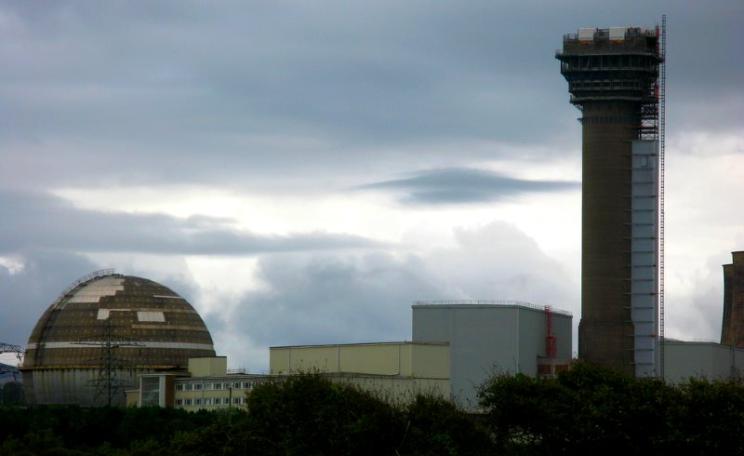
All but one of the candidates in next week's Copeland by-election are backing a massive new nuclear power station in the constituency that would cost us tens of billions of pounds. Only the Green Party's Jack Lenox is resisting the spin, hypocrisy and outright lies that his rivals have swallowed whole. Here he explains why this risky, unaffordable white elephant must be scrapped.
The main company due to build UK's 'flagship' nuclear power project at Moorside in Cumbria is on the ropes, writes Doug Parr, thanks to its multi-billion dollar nuclear losses on in the US. The obvious solution, (almost) all our politicians insist, is to ignore cheaper, faster, cleaner renewables, and make the taxpayer pick up the cost of yet another nuclear white elephant.
Weeks after a major legal victory in London's High Court over oil-polluted communities in Nigeria, writes Joe Sandler Clarke, Shell has suffered a dramatic reversal of fortunes as Italian prosecutors charge the company, and Italy's Eni, on corruption charges over a $1.3 billion oil deal.
The green belt is part of the critical green infrastructure that delivers multiple benefits for cities, writes Alister Scott. It provides space for recreation, biodiversity and farms supplying local food. It protects us from flooding and drought, improves air quality and mitigates the urban heat island effect. In short, it's far too valuable to allow developers to build all over it!
After leaving the EU the government could allow dangerous pesticides banned elsewhere in Europe to be used in the UK, writes Keith Tyrell. Today, Pesticides Action Network is launching a new campaign calling on citizens to fight back against the pesticide industry - and ensure that EU directives and regulations serve as a baseline for British pesticide laws.
If it wasn't climate change, was the real purpose of the Number 10 meeting of Theresa May's advisors and President Trump's environmental transition supremo Myron Ebell to plan the post-Brexit deregulation of UK farming, including pesticides? That's how it looks, writes Georgina Downs - and we had better begin now to fight for our health, wildlife and environment.
MEPs have signalled that any Brexit deal that allows Britain to scrap the environmental laws it has signed up to as an EU member faces veto, writes Charlotte Burns. They are not prepared to countenance a bad neighbour 'dirty Britain' just off the EU's shores, nor to see the EU's environmental progress undermined by unfair competition.
A Greenpeace investigation has exposed the massive efforts of global food and drink giant Coca Cola to defeat popular proposals to require deposits on single-use plastic bottles, writes Maeve McClenaghan. In fact, deposit schemes are working fine in many countries in which the company operates - it's a simple case of corporate profit before environment, oceans and wildlife.
Leaving the European Union and reaching a trade deal with President Trump's US would create a perfect storm for UK farmers, writes Liberal Democrat Environment Spokesperson Kate Parminter, with new EU tariffs, reduced subsidies and drastically lower standards. The changes would also pose a serious threat to our natural environment, food quality and public health.
Newly published letters show that the UK Government may ignore the Committee on Climate Change, its official advisor on climate, and allow emissions from aviation to soar at an expanded Heathrow airport, writes Damian Kahya. Instead it would rely on buying widely condemned 'carbon offsets'.
Just imagine: gas for your cooking and heating made by composting home-grown British grass, writes Almuth Ernsting. What's not to like? Well, it would need almost all the UK's grassland to match our gas demand, leaving cows and sheep to starve or forcing them into sheds to eat foreign-grown feeds. And methane leakage could easily wipe out any climate benefit.
The UK's abject failure to implement national and EU laws on energy efficiency in buildings is a disgrace, writes Andrew Warren, and one that is costing us dear in higher fuel bills now and for long into the future, while adding to air pollution and climate change.
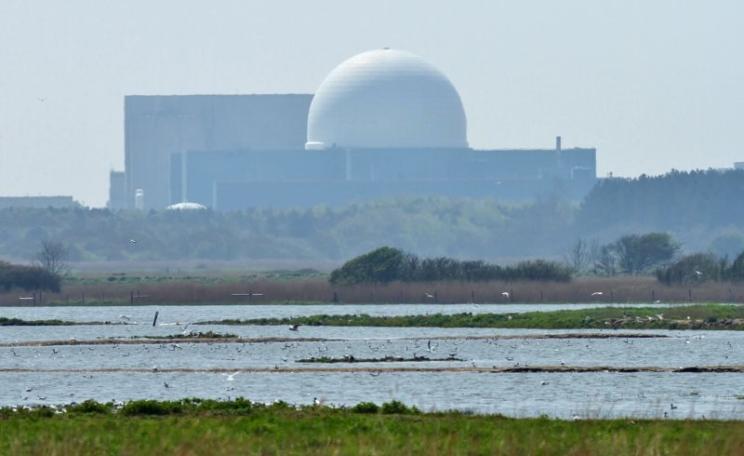
In its second consultation for the EDF's planned Sizewell C nuclear power station there's a strange omission, writes Peter Lux: that the plant would use 1,600 m3 of mains water a day, adding to stresses on important local wetlands like RSPB's Minsmere reserve. The omission is not just strange - it's also illegal and could make the entire exercise invalid.
2017 began with bang for Friends of the Earth, writes Tony Juniper, with a hostile media blitz orchestrated by the fracking industry and abetted by the Advertising Standards Authority (ASA). But the storm, over alleged errors in an FoE leaflet about the hazards of fracking, reveals nothing so clearly as the disgraceful conflict of interest at the top of the ASA itself.
A bill to quadruple the UK's aid funding to a profit-driven 'private equity' company owned by the government comes before MPs today for its third reading, writes Global Justice Now. Trouble is the investments do little or nothing for the poor, and instead entrench corporate power in health, education and infrastructure. Parliament should seize this last chance to reject the new law.
What with rising rainfall in the west, and hotter, drier summers in the east, British farmers place plenty of challenges from global warming, writes Anna Bowen. But there are also positive opportunities for agricultural innovators to adapt their farming systems to changing conditions, make their operations more resilient and sustainable, and make themselves part of the solution.
Days into the 2017 pollution limits on the Brixton Road in Lambeth, South London, has already breached EU pollution limits for NO2 for the entire year. Meanwhile UK sales of diesel cars - one of the main causes of NO2 pollution - reached record levels in 2016, reflecting the government's failure to tackle the problem in spite of numerous court orders.
Will the UK keep Theresa May's promise to 'leave the environment in a better state than it found it' in the Brexit negotitions? Or is the government bent on the 'bonfire of red tape', including environmental protections, demanded by right-wing former and serving ministers? Viviane Gravey sets out four 'green lines' by which to judge the Brexiteers' true colours.
A legacy of lies and covered-up accidents has left nuclear energy with a serious credibility gap, writes Paul Brown. But poor safety is only the beginning of the industry's problems. With 'new improved' reactor designs all running late and way over budget, any nuclear revival can only be sustained at massive, unaffordable taxpayer cost.
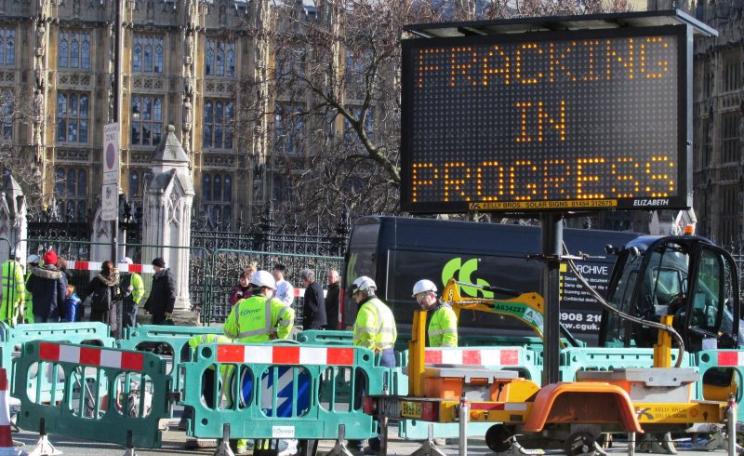
Fracking has no social licence in the UK, will contribute little to the economy, will have a huge adverse impact on other sectors, will be a disaster to climate and the environment, and won't even improve energy security, write Peter Strachan and Alex Russell. Do we really want to see 16,000 or more shale gas wells drilled in the British countryside? Let's FraXit now!
The Lifetime Study of Japanese A-bomb survivors is a monumental fraud which deliberately excludes controls for being 'too healthy', writes Chris Busby. Put them back in, and you find that low levels of radiation cause over 100 times more cancer than they are 'meant' to, creating a silent global massacre of the innocent. Under the Euratom treaty, the entire nuclear industry must now be 'rejustified'.