Following premature cutbacks to onshore wind farms the UK's energy security will increasingly depend on large scale offshore wind power, write Ian Broadbent & Peter Strachan. But while energy secretary Amber Rudd talked the sector up in her speech yesterday, she revealed feeble ambition, and said nothing to overcome investors' fears of being left out in the cold.
Northern Ireland shows just how much we need the EU's laws protecting nature, writes Andy Atkins - and for the Government to enforce them. The province's wonderful natural heritage is at risk from aggressive and often unlawful developments. And the EU nature laws are essential for us to fight off a host of threats - among them sand dredging, gold mining, road-building and over-fishing.
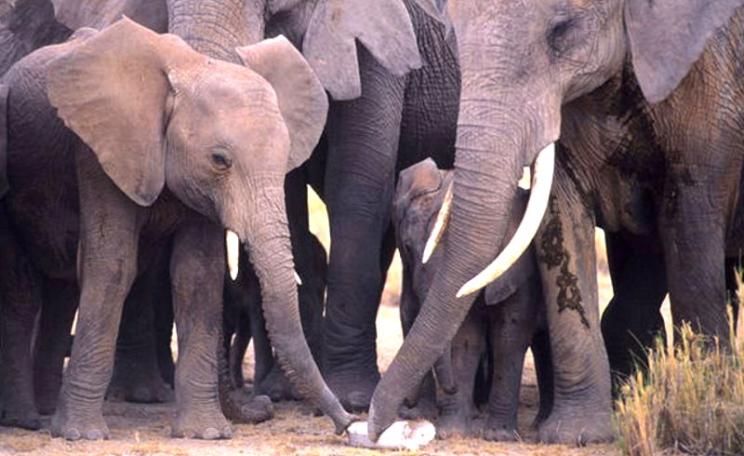
Forensic analysis of DNA in ivory seized by police and customs officials reveals where it comes from, writes Samuel Wasser, giving valuable information to law enforcers. But this powerful tool is only as effective as the national authorities, and Tanzania, a major ivory hotspot, has been very slow to respond to warnings.
In a landmark ruling, judges have ordered the Netherlands to do more to tackle the 'imminent danger' of climate change. Meanwhile an expert commission reports of an impending global health breakdown from unmitigated global warming.
The Royal Society wants us to take its word that GM crops are safe and healthy, writes Steven Druker. But it refuses to retract its errors, apologise to those whose reputations it has impugned, or enter into constructive debate on the issue. To restore its scientific integrity, it must abide by its own motto.
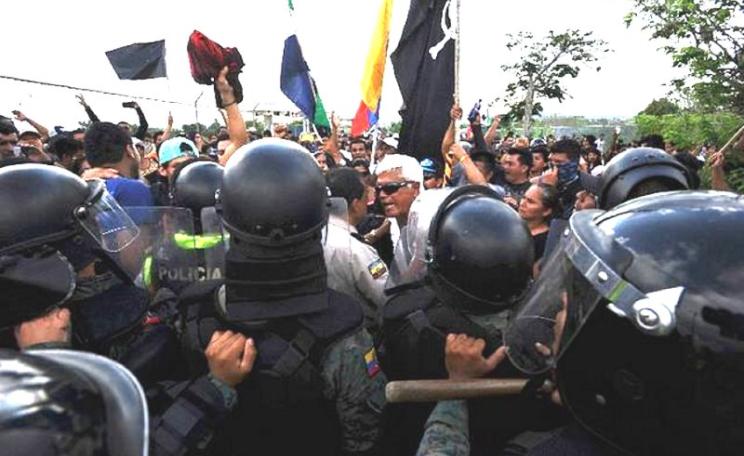
Residents of Ecuador's Galápagos islands are mounting angry protests against government plans to open the World Heritage Site to foreign investment in luxury tourism and hotels, writes Jane Shaw. They fear for the fragile ecology of the islands, for water shortages caused by golf courses and swimming pools, and for their livelihoods which depend on current 'low intensity' tourism.
A legal judgment in Australia has fatally damaged the 'official' ICRP model of health damage by nuclear radiation, writes Chris Busby - reflecting the fact that cancer originates through the mutation of individual cells, not whole organs or organisms. The ruling is good news for Britain's bomb test veterans whose day in court is coming up; and for all who suffer radiation induced cancers.
The Government's reckless pursuit of fracking and nuclear power, combined with its irrational hatred of renewables, onshore wind in particular, is taking the UK down a dangerous energy cul-de-sac, write Peter Strachan & Alex Russell. A redical rethink is due, or we'll be stuck with soaring fuel bills for years to come.
Long a feature of British urban life, domestic squatting has now been criminalised, writes Almudena Serpis. But suddenly two social centres have come to life in a squatted bank in Brighton, and a long abandoned pub in London, reviving the rebellious spirit of the squatting movement, and promulgating a radical anti-austerity message that evokes the struggles in Greece, Spain and beyond.
Soon after Devon's wild beavers on the River Otter escaped capture by zealous officials, they have given birth to two or even three kits - a clear indicator that they are happy in their habitat, and there to stay!
Carbon trading has a remarkable record of failure: rewarding polluters while causing no discernible reduction in global emissions. If the COP21 UN climate negotiations in Paris are to achieve anything of value, first they must ditch the false solution of carbon markets. And thanks to Pope Francis, the idea is firmly on the agenda.
As Michael Gove gives his first speech as Justice Secretary, promising to update our 'creaking and outdated' courts, Paul Mobbs writes that 'reforms' to date have only deepened the injustice that afflicts poor defendants: penalising the innocent, burdening those who plead 'not guilty' with heavy charges regardless of ability to pay, cutting legal aid, and halving the number of duty solicitors.
The UK has the best wind power resource in Europe, yet it costs far more than in less windy countries like Germany, writes Andrew ZP Smith. That's because of government policies that undermine investor confidence, and fail to recognise that wind power, despite 'subsidies', lower the price consumers pay for electricity.
As Lancashire councillors prepare to decide the planning application to frack in the county, writes Kyla Mandel, the UK's transparency watchdog has ordered the government to publish in full a report on the impacts of fracking, previously published only in a heavily redacted version.
The previous government came in on a bold promise to be the 'greenest ever', writes Jonathon Porritt. But what we got was a shameful record of ideologically driven policies that promoted fossil fuels, undermined action on climate, obsessed over nuclear power, did nothing to arrest the decline in the nation's wildlife and biodiversity - and suggest even worse to come.