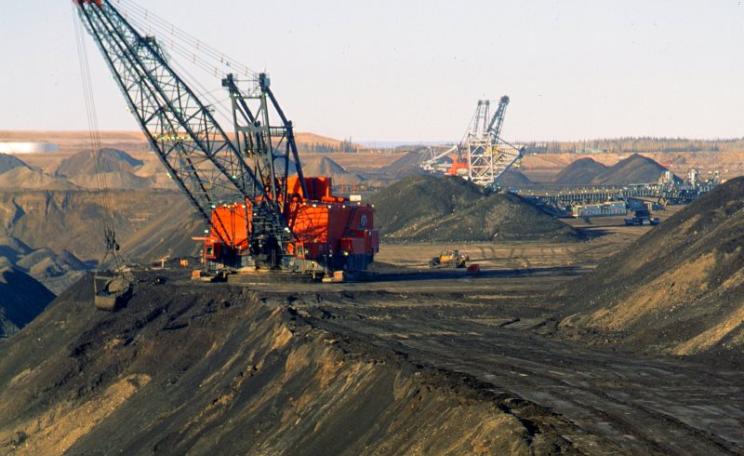
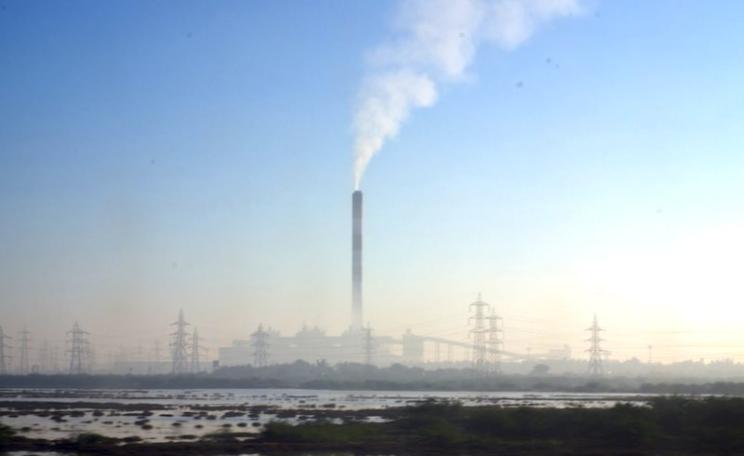
The Apollo Programme proposed this week to make renewable energy cheaper than coal through technological advances is welcome, writes James Dyke. But the real problems are political, not technological. Unless we back the Apollo vision by challenging the power of fossil fuel companies, it can never succeed.
Lured by promises of aid and investment, African governments are rewriting laws to create lucrative opportunities for corporate agribusiness, writes Chris Walker - while consigning their own farmers to servitude and landlessness. But now farmers are rising up, as in Ghana where a new 'Monsanto law' threatens to end their right to grow, save and share their ancestral seeds.
As part of a global week of action campaigners from Divest London have gathered to ‘Raise the Heat' on the Commonwealth Bank of Australia, writes Hal Rhoades - protesting its plan to invest in a ‘carbon bomb' coal project that endangers global climate and threatens to finish off the Great Barrier Reef.
The UK government has showered £500 million of its aid budget on 'partnerships' with global corporations that are meant to help the poor, writes Kevin Smith. Surprise - an independent assessment has found that the only ones to benefit were the companies themselves. This ideologically-driven farce must stop now!
This week Finland cancelled its option for a second European Pressurised Reactor as the existing EPR project sinks into a abyss of cost over-runs, delays and litigation, writes Jim Green. It now looks like the EPR is a failed technology and its owner, French nuclear giant Areva, is fast running out of both money and orders as its 'hot prospects' evaporate.
Some things are beyond measure and beyond price, writes Charles Eisenstein. No amount of money is enough to compensate for the loss of the sacred or the essential - and to pretend that it is, is to capitulate to the very mentality that is driving the destruction of the biosphere.
A Senate vote yesterday to deny President Obama 'fast track' authority in negotiating TPP and TTIP looks like the beginning of the end for these trade deals and their secret corporate courts, writes Nick Dearden. Now it's up to Europeans to make sure the EU Parliament votes against TTIP in a crucial vote next month.
Ignoring cries of protest from impoverished communities and fierce international criticism, Detroit will begin to serve water shut-off notices on some 25,000 households tomorrow as it prepares to privatise its water department.
The 'death of peak oil' has been much exaggerated, writes Paul Mobbs. Take out high-cost 'unconventional' oil and production peaked ten years ago, and even North America's fracking and tar sands boom has failed to open up new resources both big enough to make good the shortfall, and cheap enough to reward investors. We really do need to be thinking 'beyond petroleum'.
Tired of politicians' platitudes, defensive pledges and blinkered vision? As the General Election approaches, we desperately need to expand our discussion of 'the economy' beyond its usual narrow confines, writes David Powell. And if they won't get the ball rolling, he will ...
Prime Minister Modi's government has frozen the bank accounts of Greenpeace India, writes Praful Bidwai - provoking widespread protest from the environment and civil rights community. It's all part of a wider campaign against 'anti-national' movements that challenge India's development policies based on the aggressive exploitation of coal, minerals, big hydro and nuclear power.
We are alive in a pivotal year, writes the Earth League. 2015 offers the opportunity to build a sustainable and prosperous future for people and planet. But if we fail to act on climate change, safeguard crucial ecosystems and biodiversity, and secure a just and equitable world order for all, grave and irreversible perils await Earth and all who dwell on her.
All the 'main' political parties are backing nuclear power in bold defiance of all the evidence that it's expensive, dangerous and not even low-carbon, writes David Lowry. Even George Osborne just admitted that Hinkley C is 'unaffordable' - but supports it anyway. For a rational nuclear policy, the way is Green.
The GMO industry has legitimised itself via a vast network of lobbyists and the assiduous capture of the politicians, regulators and scientists that should be holding it to account, writes Colin Todhunter. But as the failure of the GM revolution and its disastrous impacts become ever more evident, the industry's legitimacy is fast eroding away.
Banks preparing to launch a $400m bond issue for a global palm oil giant with a history of legal violations and broken standards have been warned of their 'high risk client' and the 'extreme and outstanding' social and environmental conflicts in the palm oil agribusiness sector.