Tolkien's Universe is one that reflects our own, writes Richard Gunderman - and has come to resemble it all the more as industrialism, militarism and an unjust economic order have come to dominate the world and enslave its peoples. It's time to follow the Way of the Hobbit.
There is a simple solution to the problems of rampant consumerism, debt and a lifetime of servitude, writes Samuel Alexander - radical down-sizing to a truly tiny house. For a start, it's only big enough for the things you really need. And it's so cheap to build, that it's paid for from a month or two's salary. Just one question - what will you do with your freedom?
The UK's financing of fossil fuels abroad increased tenfold in two years to exceed £1 billion in 2013 / 2014, writes Christine Ottery. Incredibly, the fossil fuel funding increase came after a government promise to use the money to support 'innovative and green technologies'.
For the world to meet its climate goals, a third of the world's oil, half its gas and 80% of its coal must stay underground, writes Alex Kirby. And it's not us saying it - but scientists writing in the journal Nature.
Low oil prices are putting a stop to some of the world's most environmentally damaging 'extreme energy' projects, writes Paul Mobbs, and may close down the entire fracking and tar sands industries. So why are so many 'Greens' issuing dire warnings, instead of celebrating the good news?
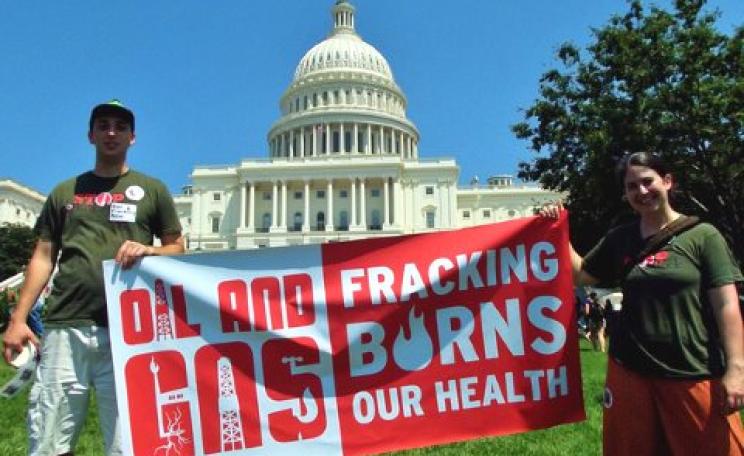
Increased production from US fracking operations is a major reason for the drop in oil prices, writes Kieran Cooke. But there are warnings that the industry now faces an existential crisis from which it may never recover, as the financial sector faces the prospect of worthless shares and $100s of billions of defaulted debt.
A KPMG study shows that the cost of solar power in India, revealed by public auctions, is barely half a cent above that of cheap local coal , writes Chris Goodall, with generators bids falling well below 5p (UK) / 7¢ (US) per kWh. The idea put about at COP21 that India and other poor but sunny countries need coal to develop their economies is fast running out of steam.
Higher oil production and falling demand are creating big problems for the fossil fuel industry, writes Kieran Cooke. Risk-averse investors, spooked by drastic oil price falls, are turning away from the sector in search of more secure returns.
Under the TTIP US-EU trade agreement, the world's largest chemical corporations would be able to attack US states' attempts to regulate for chemical safety, writes Patrick Gleeson. In both the US and the EU, corporate rights - asserted in secret courts - would trump democracy and attempts to raise health, safety and welfare standards.
We live in an age of propaganda by the 'mainstream' media, writes John Pilger. Inconvenient stories, truths and even entire countries are airbrushed away, while dominant narratives are parroted incessantly to bludgeon our minds in acceptance of war, injustice, austerity, all to serve the interests of our ruling elites.
The nuclear industry and its supporters have contrived a variety of narratives to justify and explain away nuclear catastrophes, writes John Downer. None of them actually hold water, yet they serve their purpose - to command political and media heights, and reassure public sentiment on 'safety'. But if it's so safe, why the low limits on nuclear liabilities?
A new financial crisis is threatening to dwarf the 'subprime' mortgage debacle, writes Paul Mobbs. Cheap money from central banks has fuelled some $1.3 trillion of risky investments in high-cost 'unconventional' oil and gas. Now, with oil sinking below $60, all that paper is turning to junk - and that's putting the entire economic system at risk.
COP20 has just laid the foundations for a non-agreement in Paris in 2015, writes Assaad Razzouk - thanks to the pernicious influence of fossil fuels, poisoning debate and subverting serious climate action. Now there's only one earthly power big enough to fight back.
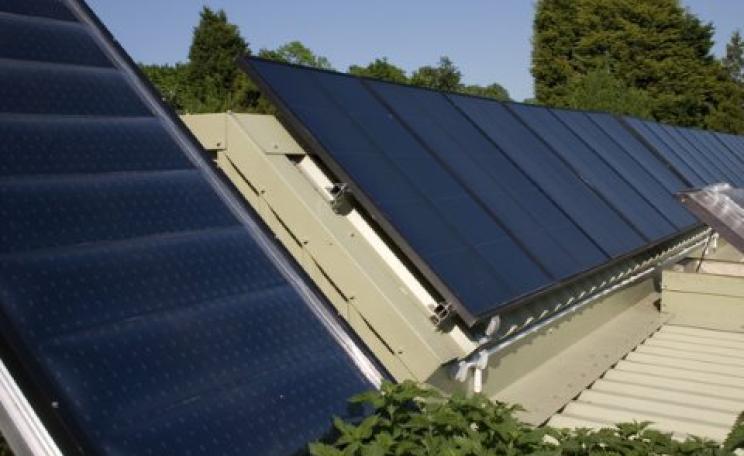
Solar power has a sunny future - even without any major breakthroughs, writes Ralph Gottschalg. There are huge gains to be made simply by getting smarter and using existing technologies more effectively. A new report shows that - given political support - solar PV could be competitive in the UK by 2020.
The EU faces a choice: a green, democratic future of clean prosperity and social justice? Or a dirty future of corporate domination with resurgent nuclear power, expanding fossil fuels, GMO agriculture and weak human and environmental protection? Junckers' Commission represents the latter. We must assert our own vision - or there will be little worth staying in for.