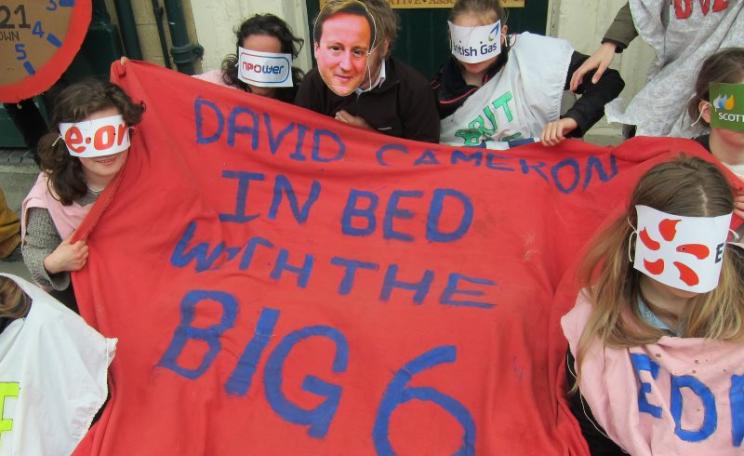
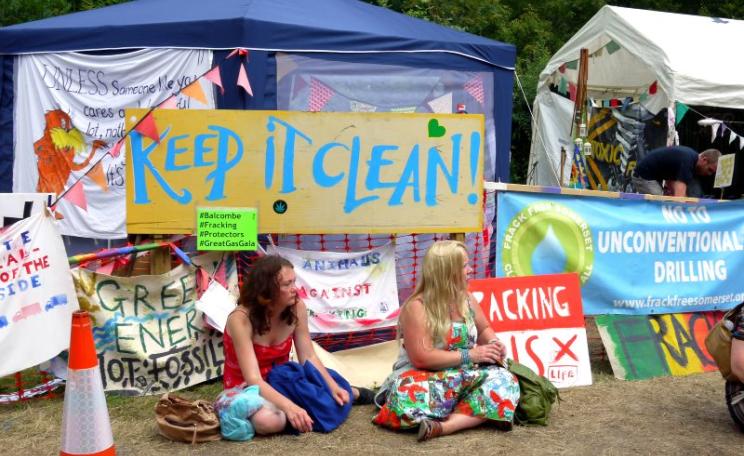
The fossil fuel industry and its political backers have been left reeling by an unprecedented series of direct action strikes against targets across the country to protest at continuing investment in and official support for fossil fuels, inaction over fuel poverty and the systematic neglect of renewable energy despite the global climate emergency.
Emails released by the Science Museum show that Shell pressed its case to Museum staff to deny NGOs the opportunity to open up a debate on the company's operations in connection with an exhibition it had sponsored on waste and climate change, writes Terry Macalister.
Emboldened by the Tory election victory and the appointment of Amber Rudd as energy Secretary, writes Ben Lucas, planning applications to frack have been coming in thick and fast - even in densely populated London boroughs.
Hundreds of campaigners are gathering at Didcot Power station in Oxfordshire to demand a green energy future - and an end to the Government's relentless push for fossil fuels and nuclear power, writes Diêgo Lôbo. Preparations are under way for a series of actions due to take place tomorrow, Monday 1st June.
A host of Pacific nations are turning to renewable technologies to satisfy 100% of their energy, writes Maxine Newlands. Samoa is aiming to achieve 100% renewable energy by 2017, while Tokelau has already reached 94% including 100% of its electricity.
Shell claims a third party audit into its plans to drill for Arctic oil and gas has found 'no issues of significance', writes Joe Sandler Clarke. But the audit remains under wraps, and may never be released in full. Now Obama pledges his support for the project - just as it turns out that Shell selected the 'independent' auditor.
Shale gas advocates say we must open up the UK to fracking to reduce our dependence on Russian gas, writes Tony Bosworth. But why not just burn less of the stuff? Energy efficiency and renewables can achieve the same aim without the adverse impacts on land, water and climate.
Shell's senior management are treading an impossible path, writes Steffen Böhm. On the one hand they accept that climate change is real and serious, and that many of their fossil fuel assets may prove unburnable. On the other, they insist that business as usual will continue for decades to come. It's high time they smelt the coffee!
A new report from the IMF has quantified the prodigious subsidies doled out to the fossil fuel industries, writes Pete Dolack - an astonishing $5.6 trillion per year, over 7% of world product, including direct payments, tax breaks and unpaid environmental costs. The obscene scale of public largesse proves the need for a social movement to challenge global energy capitalism.
The widely touted 'carbon capture and storage' technology is much more expensive than wind and solar, says a Greenpeace report. It also represents a perverse subsidy to the fossil fuel sector that will only boost coal and oil, and delay the transition to a renewable energy system.
It's odd how often the contribution of nuclear energy is overstated, writes Neil Crumpton, by mixing up 'energy' and 'electricity', while a similar trick to understates the importance of renewables like wind and solar. Even odder is how the mistake always seems to go the same way, to make nuclear look bigger than it really is, and renewables smaller. Welcome to the nuclear 'X factor'!
The renewable power boom is excellent news for people and planet, writes Pete Dolack. But let's not get carried away: much energy that claims to be 'renewable; like biomass and big hydro, is no such thing. And greening our energy is just one of many steps to a sustainable world. The greatest challenges - like tackling the monster of infinite 'growth' - all lie ahead.
Germany's 'Energiewende' has made the country a global renewable energy powerhouse. So why have its carbon emissions gone up? Not because of nuclear closures, writes Melanie Mattauch, but because powerful fossil fuel companies have blocked effective climate action. Now the fight is on as public calls to keep the coal in the ground get too loud to ignore.
Nuclear advocates must be admired for their optimism if nothing else, writes Mark Diesendorf. Disregarding over half a century of evidence that nuclear power is dangerous, expensive, enables the spread of nuclear weapons, and produces wastes we still don't know what to do with, still they cling to the 1950's dream of 'electricity to cheap to meter'.
The link between nuclear power and cancer is real, writes Chris Busby, and revealed in the UK's cancer statistics - if only you look for it. Previous approaches have focused on rare cancers over large, poorly selected populations. But look at common cancers among those most exposed to nuclear radiation, and the statistical evidence is overwhelming.