Shell's US president says the oil giant's unpopular drilling operations in Alaska's Chukchi Sea will stop for the 'foreseeable future' as exploratory drilling finds little oil and gas to justify its $7 billion investment.
Radiation can be carried long distances by marine currents, concentrated in sediments, and carried in sea spray 16km or more inland, writes Tim Deere-Jones. So Fukushima poses a hazard to coastal populations and any who eat produce from their farms. So what are the Japanese Government and IAEA doing? Ignoring the problem, and failing to gather data.
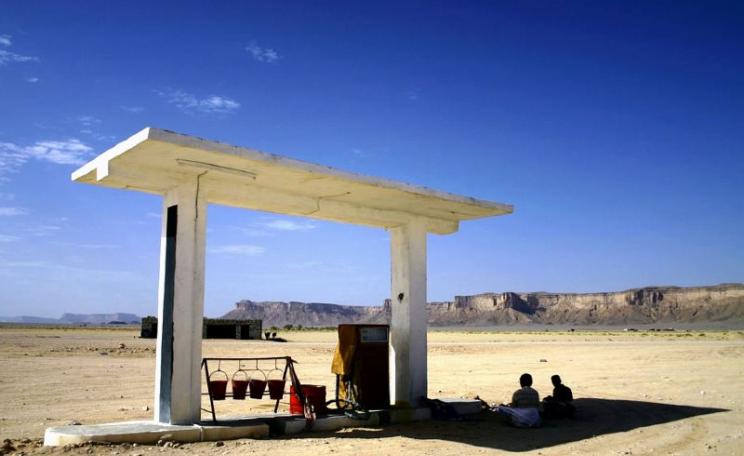
There's a plan afoot in Yemen, writes Martha Mundy, but no one is telling you about it. It's a plan so big that a country of 20 million people has to be starved and bombed into total submission, yet the world is indifferent. Yes, its oil. Lots of oil, and gas too, and lakes of fossil water, all lurking beneath the desert sands of the Arabian peninsula. How do we know? Because they told us.
UK local authorities have £14 billion invested in fossil fuels, campaigners revealed today. Now they should re-invest it in solar energy, new housing and other areas that generate local and global benefits - as well as providing better security for pension holders.
The UK government and its Chancellor George Osborne are grossly misleading the public over the relative costs of renewable energy and nuclear power, writes Oliver Tickell. Osborne's claim that nuclear is the 'cheapest low carbon technology' is the very reverse of the truth. He and his nuclear plans must be stopped.
Pledges by investors to divest from fossil fuels have soared to $2.6 trillion - 50 times more than a year ago. 'Now is the time to divest', says Leonardo di Caprio, one of the latest to join the movement, which even includes Newcastle, Australia, home to the world's biggest coal port.
The UK's decision to 'green light' £2 billion in guarantees for the Hinkley C nuclear power station indicates the government's increasing desperation, writes David Toke. Bar the shouting, has anything actually happened? The guarantees have not been issued, and the announcement of Chinese participation in a new reactor at at Bradwell remains ... an announcement.
While other countries apply themselves to environmental challenges from climate change to nature protection, Russia - with its massive wealth of nature and natural resources - is stubbornly refusing to take part, writes Lucy E J Woods. And as the economy declines, the pressure is on: to ignore environmental regulations, and clamp down on environmental defenders.
The government claims that we need nuclear 'baseload' power to keep the lights on, writes Damian Kahya. But a new study shows reliable, low carbon energy can be provided by combining diverse green technologies including efficiency, large scale renewables, 'smart grid', energy storage and rarely used fossil fuel backup.
Today's announcement of a £2 billion government guarantee for Hinkley C confirms that Chancellor George Osborne and his Treasury cannot be trusted to run the UK's energy policy - which is precisely what they are doing. On top of decimating the renewables industry, now they're risking billions on a failed nuclear design owned by failing companies. It's time to stop the madness.
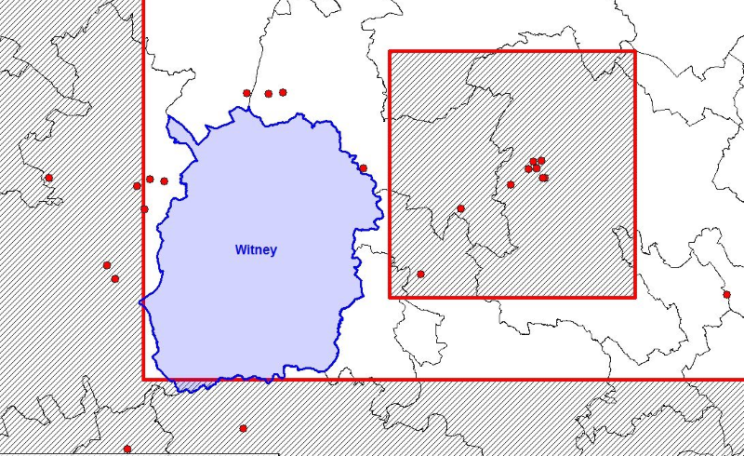
The 14th Onshore Round of oil and gas licencing entirely avoided the Prime Minister's Witney constituency for reasons that clearly have nothing to do with geology, writes David Smythe. Is the little-known Frack-Free Witney the UK's most successful - and covert - anti-fracking organisation? Or are darker forces at work?
The US's Nuclear Regulatory Commission just cancelled its study into cancer near nuclear plants citing the 'excessive cost' of $8 million, writes Chris Busby. Of course that's rubbish - similar studies in the UK have been carried out for as little as £600 per site, and in any case $8 million is small change for the NRC. The real reason is to suppress the unavoidable conclusion: nuclear power kills.
UK support for low-carbon energy technologies is running at £250 million a year, writes Chris Goodall. Yet the government wants to throw four times more, every year for 35 years, at the Hinkley C nuclear power station, that could take almost as long to build as Salisbury Cathedral.
Scientists warn that burning up the planet's remaining fossil fuel would cause all Antarctic ice to melt and lead to 58m of sea level rise over 10,000 years, writes Tim Radford. But devastating impacts would strike much sooner, with oceans rising by 3m a century for the next millennium.
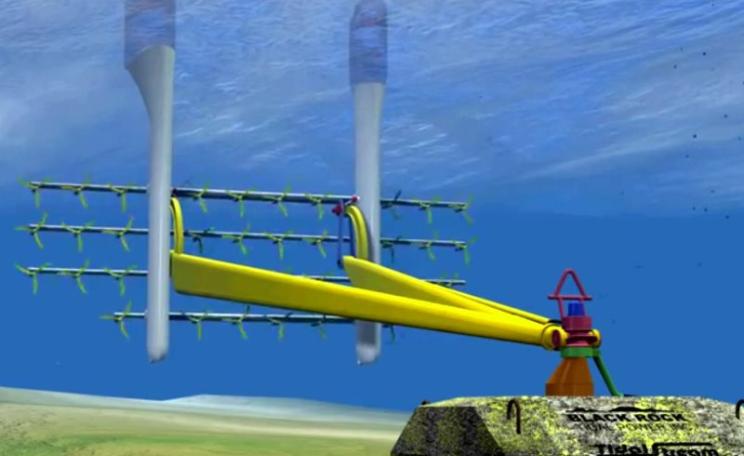
Tides in the UK's coastal waters could be generating 10GW of clean power, representing half of Europe's tidal resource, writes Ross Jennings. So far it's going unexploited, but a new generation of lightweight, low cast tidal turbines that float off the surface could soon get that electricity into our homes and businesses.