It was all going so well for Chevron - a New York court had ruled that a $9.5 billion judgment against it set by Ecuador's supreme court for massive pollution deep in the Amazon was corrupt and fraudulent. But then its star witness broke ranks and admitted, in another court, that he had lied, and the only bribes were coming from Chevron. Will Ecuador's pollution victims finally get justice?
The high oil prices that turned North Dakota into a boom state have turned, writes Joshua Frank. Now high-cost oil and gas are in the doldrums everywhere, production is falling - and even if prices do pick up one day, risk aversion and the relentless advance of renewables will leave lakes of oil and caverns of gas underground where they belong. Folks, the oil party really is over!
Last week BP's Peter Mather - who claims to have 'green and yellow oil' flowing in his veins - took to the airwaves on Radio 4's The Bottom Line'. Evan Davies asked some tough questions, writes Chris Garrard - but failed to mention the shocking case of Colombian trades unionist Gilberto Torres, kidnapped and tortured for 42 days by paramilitaries employed by BP's joint venture partner.
Just as the UK's entire renewable energy industry is up in arms against fierce cuts to support for the sector, energy Minister Andrea Leadsom suggested to MPs that the measures were supported by solar firms in her constituency. They beg to differ.
As indigenous activists opposing hydropower dams on their territories gather this weekend in the rainforests of Sarawak, Malaysia, they have good news to celebrate, writes Rod Harbinson: a giant dam on the Baram river has been put on hold. But the forests are still being logged, local people have been stripped of land rights, and a programme of 12 giant dams is still official policy.
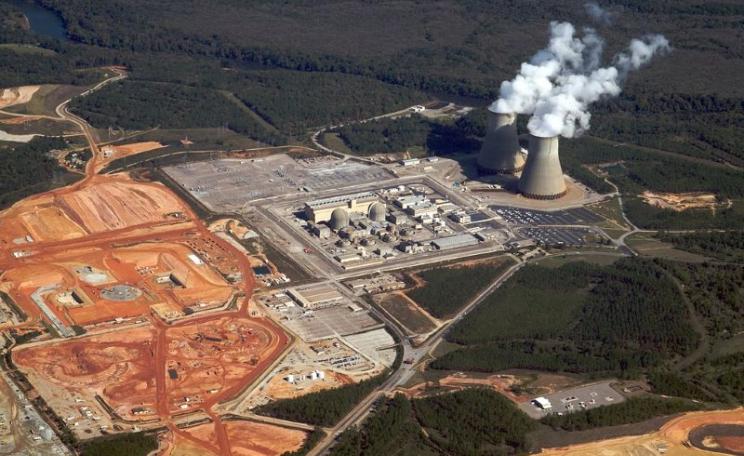
The UK's plan to get China to build and finance new nuclear power stations is based on a wish and a prayer, writes Oliver Tickell. There is no reactor design, including new Chinese ones, that we can depend on to fill our impending power generation gap. This time, the last one out won't even have to turn out the lights.
It's all change in Canada with the dramatic ousting of anti-environment Conservative Prime Minister Stephen Harper, writes Carol Linnitt. Under the new Liberal PM Justin Trudeau things are looking a lot better for climate, science, environment, transparency and First Nations. But Canada is still set to go into the Paris climate talks with the same weak level of commitment.
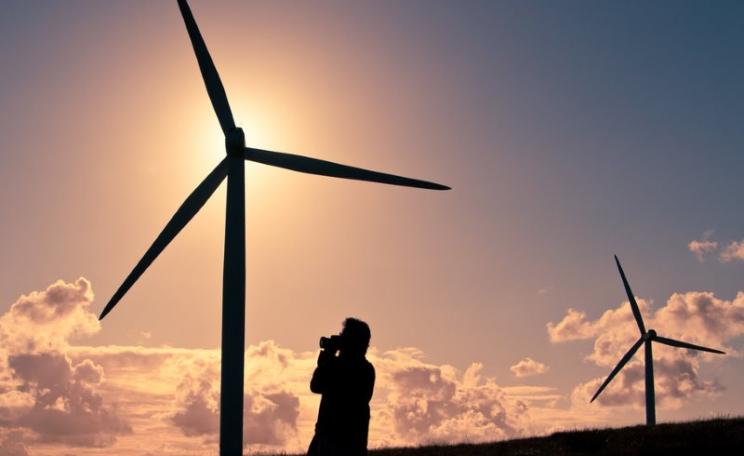
The effect of wind and solar generation in the UK is to push down wholesale power prices, writes Oliver Tickell, taking over £1.5 billion off our bills in 2014 - that's 58% of the subsidies paid to renewable generators. Keep it up and the benefit will rise to over 100% of cost.
The love affair of the 'pro-nuclear greens' with a failed technology has paved the way to the UK's destruction of its renewable energy industry, writes Jonathon Porritt, and to the imminent deal with Chinese parastatal corporations to build a new fleet of already obsolete nuclear power plants at massive cost to us all.
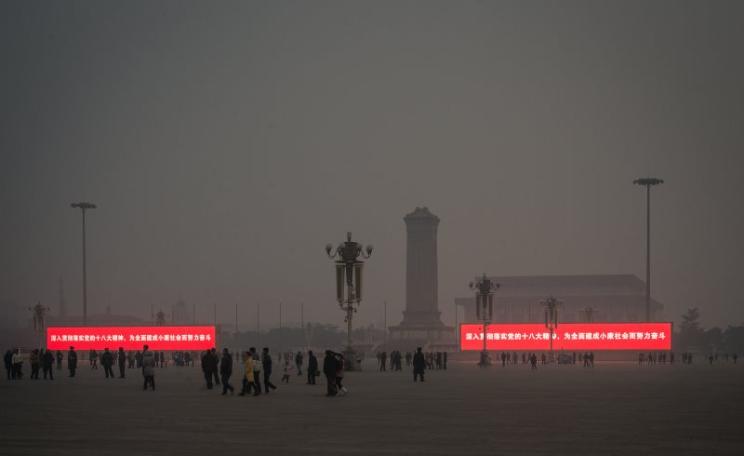
China's smog is an increasing cause of public discontent, writes Oliver Wild - and no wonder! New research shows that the country's air pollution is killing over a million people every year. Thanks to China's geography the problem is hard to solve, but the rapid rise of renewables and the slow demise of coal do offer the promise of cleaner, healthier future.
Large-scale oil extraction in the Arctic is irreconcilable with the 2C global warming limit, write Aleksander Melli, Pål W. Lorentzen, Mari Seilskjær, Hans Morten Haugen & Truls Gulowsen. And that puts Norway's dash to develop Arctic oil into direct conflict with its Constitution, which requires the state to try and secure climate stability for its citizens, present and future. A lawsuit is imminent.
Fuel poverty is a complex problem with many causes, writes Mari Martiskainen, but it is also a deadly one for some 25,000 thousand people every year. And there is one surprisingly simple solution: a huge upgrade in the energy efficiency of our housing stock.
The UK government is punishing renewable energy for its success in generating 25% of the country's electricity, writes Stuart Parkinson. But there's no austerity when it comes to the bloated military-nuclear industrial sector, no matter how egregious its failures or extreme its cost overruns. Our future prosperity is being sacrificed - and its costing taxpayers billions.
Hydrogen cars - and the fuel cells that drive them - are about to get a whole lot cheaper thanks to a redesign of the platinum catalyst that makes them work, writes Oliver Tickell. By inserting atom-sized holes into the precious metal's surface, its activity can be trebled.
On the face of it, the UK's policy to pursue nuclear power at all costs, while destroying the renewable energy sector, is totally illogical, write Philip Johnstone & Andy Stirling. But then it may make perfect sense - if only you accept that it's really all about maintaining the country's role as a nuclear weapons state for generations to come. And the 'deep state' has a way of getting its way.