Protestors who closed down the coal mine on climate change denier Matt Ridley's estate faced a claim of £100,000 in losses, writes Brendan Montague. But a judge cut that down by over 90% while declaring the eight defendants of 'impeccable character'.
The coal profits that fill Matt Ridley's bank account come wet with the blood of those killed and displaced by the climate disaster his mines contribute to, writes T. If hgis consicence is no longer functioning, then others must step into that role to confront him with the evil that he is doing.
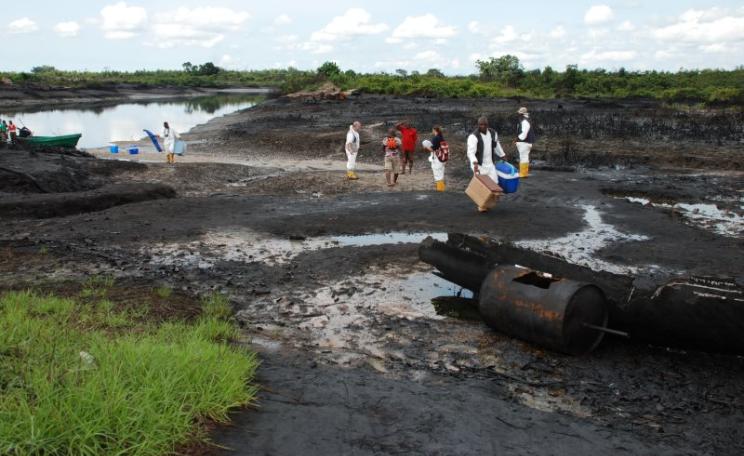
In a landmark judgment today, four Niger Delta farmers have won the right to sue Dutch oil multinational Shell in the Netherlands courts after oil spills destroyed their farms and fish ponds. The case sets a precedent for other victims of corporate environmental and human rights harms around the world.
The Paris Agreement is facing its first big test in Queensland, Australia, writes Justine Bell. After a long process beset by legal challenges, the massive Carmichael coal mine is inching closer to approval - which would open up the entire 250,000 sq.km Galilee basin and its 28 billion tonnes of coal to exploitation. Both state and federal governments have the power to ban it. But will they?
With COP21 out of the way there is absolutely no time to lose, Greenpeace director Kumi Naidoo told Pavlos Georgiadis: 'Because by tomorrow, there might be no tomorrow.' We need substantial, structural, systemic change - and this change can only be led by the youth, who are not infected by the political pollution of the past. And whose future is it anyway?
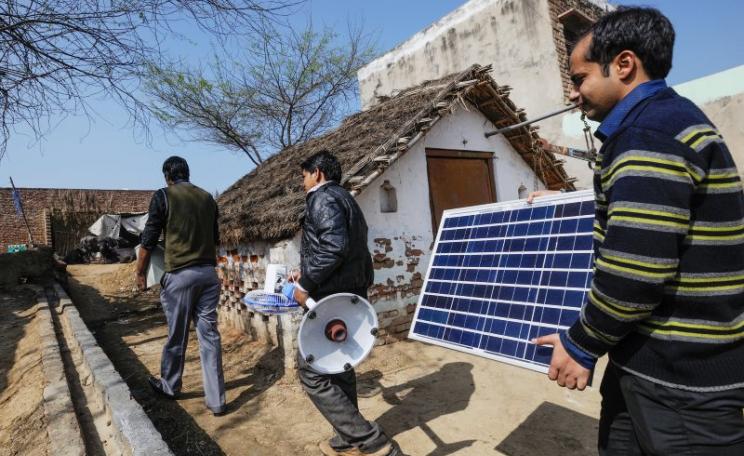
The government's decision to cut support for domestic solar by 64% reflects antiquated thinking, writes Doug Parr. Just as the rest of Europe is shifting to ever-cheaper renewable, low carbon, decentralised, participatory, employment generating energy systems, the UK is stuck in a the dirty past of nuclear and fossil fuels.
New regulations that will allow fracking under national parks, water sources and nature sites won the approval of MPs today in a Commons vote, write Kyla Mandel & Oliver Tickell, even though four Tory MP's rebelled against the party whip. But the new rules won't apply in Wales and Scotland.
The nuclear industry has had a disappointing COP21, writes Jim Green. Lobbyists were there en masse desperately trying to get pro-nuclear wording into the Paris Agreement, and they failed. The word does not occur even once in the entire document. But we must prepare for the next battle: keeping nuclear power out of the $100 billion a year Green Climate Fund.
Energy Secretary Amber Rudd's plan to deliver the UK's emissions reductions promised in COP21 rely on nuclear power as the main 'low carbon' energy source, writes Paul Flynn. But the high cost of nuclear, and the ruinous track record of current technologies, show that this path leads only to massive failure at public expense.
The impact of the Paris Agreement on leading rating agency Moody's assessment of the world's fossil fuel companies is ... nothing at all. The one change is in Europe, where thermal generators have a worsening outlook, and renewables are 'credit positive'.
The Paris climate agreement contains plenty enough to get fossil fuel companies and exporters worried about their future, writes Kumi Naidoo. But it is lacking is in the mechanisms to deliver its aspirations. That's why the global climate movement has to escalate its fight against the carbon bullies, and for climate justice.
What's not to like about the promise of billions of dollars for clean energy R&D? It's that we need to get the global energy transition moving right now, writes Ambuj D Sagar, not ten years hence. The billions should go into the immediate global deployment of the renewable technologies we have already got.
Campaigners at COP21 in Paris are calling for a new 'upstream' carbon tax to be levied on fossil fuel producers, writes Henner Weithoener, and so send a clear market signal and finance poor countries' compensation for 'loss and damage' caused by climate change.
Coal prices are in terminal decline, writes Kyla Mandel, oil giant Statoil is calling for the strongest possible agreement, and the world's energy bosses are planning for a decarbonised future. COP21 is marking the definitive tipping point in the demise of fossil fuels.
As COP21 reaches its endgame, there are plans to build 2,440 coal-fired power plants around the world, write Mowdud Rahman & Greig Aitken. Their completion would send global temperatures, and sea levels, soaring. Yet Bangladesh, the world's most 'climate vulnerable' large country, has plans for a 1.3GW coal power plant on the fringes of its World Heritage coastal wetlands.