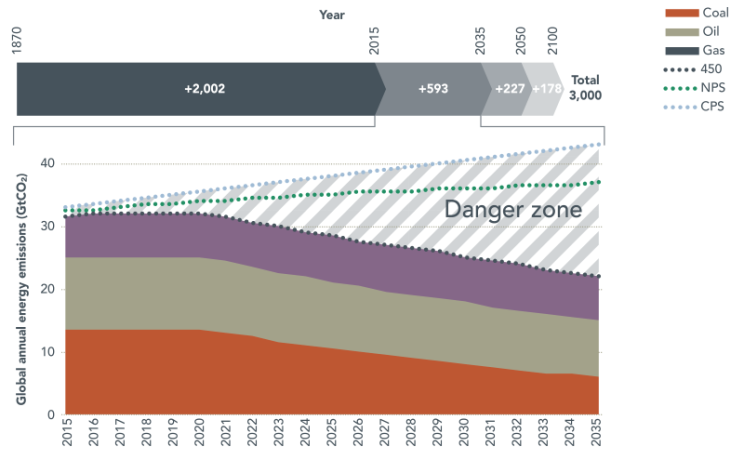
A new report warns that coal, oil and gas assets will be stranded if the world is to limit temperature rise to 2C. Losses are projected to reach $2.2 trillion over the next decade, with coal taking the biggest hit, while oil demand peaks in 2020. Yet fossil energy companies are ignoring the very innovations that will put them out of business.
The governor of the Bank of England recently argued that the risk to the stability of the financial system from climate change is a responsibility of central banks, writes Matthias Kroll. They can begin by using QE - 'quantitative easing' - to finance the Green Climate Fund, and so stimulate the economy, rescue the climate, and save the global financial system.
Turkey's shooting down of a Russian jet near its border with Syria has just revealed the real nature of the war, writes Oliver Tickell, and sharply illustrates the dangers of getting involved in a conflict that is driven more by a battle of two gas pipelines than a clash of ideologies. The message for the UK - keep well out! Or if we are serious about crushing IS, best join in with Assad and Putin.
Sooner than it takes to build a nuclear power station, lithium-air batteries could be helping wind and solar to make coal, oil and nuclear obsolete, say Cambridge scientists. Five times lighter and five times cheaper than current lithium batteries, Li-air would open the way to our 100% renewable future.
Luxembourg will join Austria's legal challenge to the UK's support package for the Hinkley C nuclear power station. Meanwhile EDF has laid off 65 engineers working on the project in Paris, and the EU Commission has initiated proceedings against Hungary over its Paks II nuclear project with Rosatom.
NASA scientist James Hansen is heading to COP21 in Paris to berate climate campaigners for failing to support 'safe and environmentally-friendly nuclear power', writes Jim Green. But they would gladly support nuclear power if only it really was safe and environment friendly. In fact, it's a very dangerous and hugely expensive distraction from the real climate solutions.
Amber Rudd's speech today exposes her total failure to assemble a coherent energy strategy, writes Oliver Tickell. It reveals the increasingly certain failure to meet EU renewable energy targets, proposes a new tax on wind and solar generation, and leaves the country facing the real prospect of lights going out in the next decade. The one hard policy? To maximise oil and gas recovery.
New reports show the huge potential of renewables in Southern Europe to rekindle prosperity, writes Helle Abelvik-Lawson, using clean, low cost energy from wind, solar and geothermal sources backed up with pumped storage hydro, displacing dirty lignite and oil fired generation.
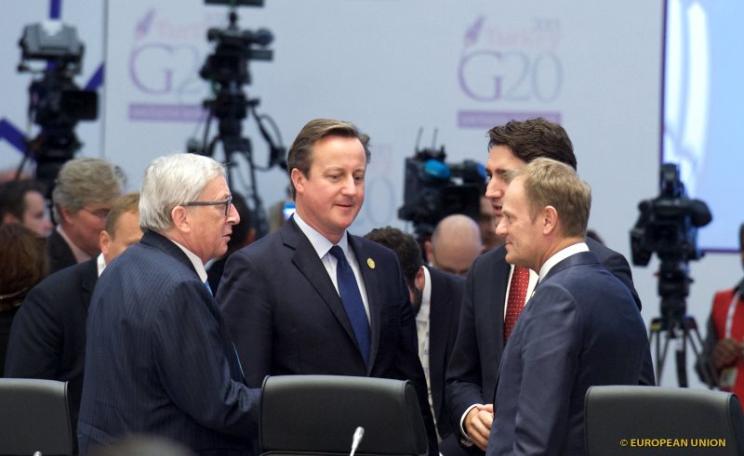
In the run-up to the COP21 climate summit in Paris the G20's Antalya Communiqué is weaker on climate, fossil fuel subsidies and support for renewable energy than the G20's 2009 Pittsburgh Statement made shortly before the failed COP15 in Copenhagen six years ago.
After a massive oil find in Syria's Golan Heights, occupied by Israel since 1967, Israel is asking President Obama to recognise its annexation of the territory, writes Jonathan Cook. To consolidate its hold, plans are afoot to quadruple Israeli settler numbers to 100,000.
An 500-strong Indigenous community in Alberta, the heart of Canada's environmentally catastrophic tar sands industry, is fighting back against the pollution, writes Melina Laboucan-Massimo - by cutting themselves adrift from dependence on fossil fuels, and starting up their own solar power station: a vital first step towards building a just and sustainable society.
Is it a coincidence that the terrorist outrage in Paris was committed weeks before COP21, the biggest climate conference since 2009? Perhaps, writes Oliver Tickell. But failure to reach a strong climate agreement now looks more probable. And that's an outcome that would suit ISIS - which makes $500m a year from oil sales - together with other oil producers.
The government's policies on climate, energy and industry are not merely stupid, writes Alan Simpson. The repeated cuts to renewables and energy efficiency, combined with limitless largesse to fossil fuels, has reached the point of insanity in the face of the UK's legal obligations and the growing climate crisis. Only we, the people, can end the madness.
As Aung San Suu Kyi's National League for Democracy takes a strong lead in Burma's elections, Nafeez Ahmed warns that the military will remain the real power in the land. And as UK, EU, US, Chinese and Gulf state energy corporations compete to exploit Burma's hydrocarbons, don't expect them to denounce the ongoing genocide of the Rohingya, and anyone else in the way of their oil and gas infrastructure.
In 2009 G20 nations pledged to eliminate fossil fuel subsidies. But they are still supporting them with $452 billion a year. Worst offenders include the UK, the only G7 country that's ramping up its fossil fuel spending; and Turkey, host of tomorrow's G20 summit, which plans to double its CO2 emissions with a huge new fleet of coal power plants.