A KPMG study shows that the cost of solar power in India, revealed by public auctions, is barely half a cent above that of cheap local coal , writes Chris Goodall, with generators bids falling well below 5p (UK) / 7¢ (US) per kWh. The idea put about at COP21 that India and other poor but sunny countries need coal to develop their economies is fast running out of steam.
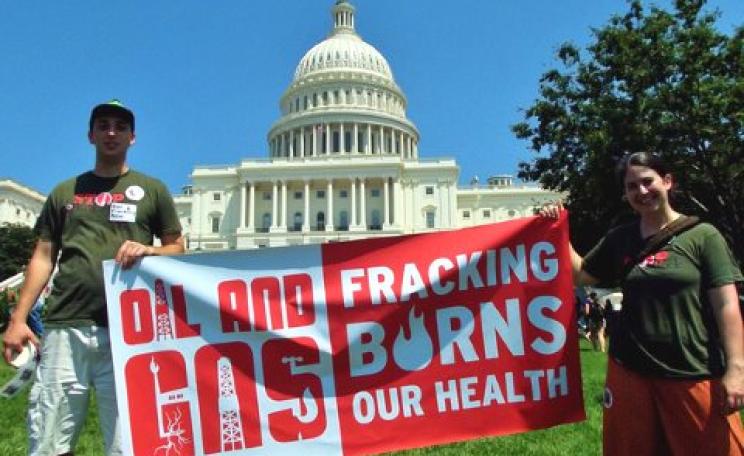
The government appears as determined as ever to push ahead with fracking as a central plank of its energy policy, writes Richard Heasman - ignoring growing evidence of health and environmental harm. But with the economics of fracking undermined by heavy energy price falls, the UK industry may never get off the ground.
Charlatans, or planetary saviours? Post-Paris views on the nuclear industry suggest few experts believe it will bring closer a world rid of fossil fuels, writes Paul Brown. Despite the best efforts of nuclear lobbyists, no revival is due any time soon.
Higher oil production and falling demand are creating big problems for the fossil fuel industry, writes Kieran Cooke. Risk-averse investors, spooked by drastic oil price falls, are turning away from the sector in search of more secure returns.
The UK government celebrated Christmas by donning Santa suits and throwing a £1 billion subsidy down the fuming smoke stacks of the UK's biggest power companies, writes Alan Simpson - a massive payment at the expense of UK energy users, for doing what they should be doing anyway. Have a Brave New Year!
Governments are still spending billions on nuclear research, writes Paul Brown - but 2015 looks like being an unhappy year for the industry as it continues to shrink while renewables grow, amid massive delays and cost over-runs.
Long-disused oil and gas wells in the US have been found to be a 'significant' source of the super greenhouse gas methane, writes Richard Heasman. The climate impact of oil and gas is underestimated, as this long term impact is not included in existing calculations.
A new wave of ruthless conquistadors has arrived in Peru, write Aldo Orellana Lopez and Philippa de Boissière - global corporations after minerals, oil, gas, timber, land ... And instead of brandishing the Bible and the sword, they proclaim high sounding policies on environment and human rights, while co-opting police and politicians in their pillage of resources.
Recent falls in oil prices give 'greens' cause to rethink arguments about 'peak oil' and get back to why they are really opposed to fossil fuels, writes Dr Steve Melia. Ultimately, it's not the economic evidence that drives government decisions - it's the politics!
The nuclear industry and its supporters have contrived a variety of narratives to justify and explain away nuclear catastrophes, writes John Downer. None of them actually hold water, yet they serve their purpose - to command political and media heights, and reassure public sentiment on 'safety'. But if it's so safe, why the low limits on nuclear liabilities?
Despite record heat and drought Australia's emissions and coal exports are soaring, says a new report, and both are increasing as a matter of government policy. But a homegrown climate action movement is putting a spanner in the works - and just stopped its first coal train.
As flagship nuclear projects run into long delays and huge cost overruns, solar and wind power are falling in price, writes David Elliott. Renewables already supply twice as much power as nuclear. It's just too bad the nuclear-fixated UK government hasn't noticed.
Nuclear energy is essential to preserve the world's biodiversity, according to 69 conservation scientists. But there's a mysterious omission in their analysis, writes Jim Green: nuclear weapons proliferation. And after a major exchange of nuclear bombs, and the 'nuclear winter' that would follow, exactly how much biodiversity would survive?
A new financial crisis is threatening to dwarf the 'subprime' mortgage debacle, writes Paul Mobbs. Cheap money from central banks has fuelled some $1.3 trillion of risky investments in high-cost 'unconventional' oil and gas. Now, with oil sinking below $60, all that paper is turning to junk - and that's putting the entire economic system at risk.
Privatised energy has failed us, writes Sam Lund-Harket. While energy company chiefs earn millions of pounds a year, one in ten English households live in fuel poverty. But there is another way. All over the world countries and communities are taking energy, water and other essential public services back under democratic control.