With the help of some clever engineering, writes Paul Brown, the power of the Sun can now produce electricity on demand - day and night, bright or cloudy. The key technology has just won a prestigious DESERTEC Award.
Left-wing, progressive politicians hold sway across Latin America, writes Benjamin Dangl. But defying their own 'green' rhetoric, they are committed to mining and other environmentally damaging development. Now they face growing resistance from small farmers and indigenous peoples.
One of the world's biggest fund managers has joined forces with London's FTSE group, writes Rebecca Cooke, to steer investors away from putting their money into risky oil and coal investments.
For just 8% of the fish landed, extraordinary, beautiful, ancient, diverse deep sea habitats are routinely destroyed by fishing gear. And as J. Murray Roberts writes, it's all for a one-off hit as the fish are so slow to grow and reproduce. If the same damage happened on land, there would be uproar.
Extensive, long running evidence for the cancer-causing effects of glyphosate, and other toxic impacts, have been ignored by regulators. Indeed as the evidence has built up, permitted levels in food have been hugely increased, writes Dr Mae Wan Ho.
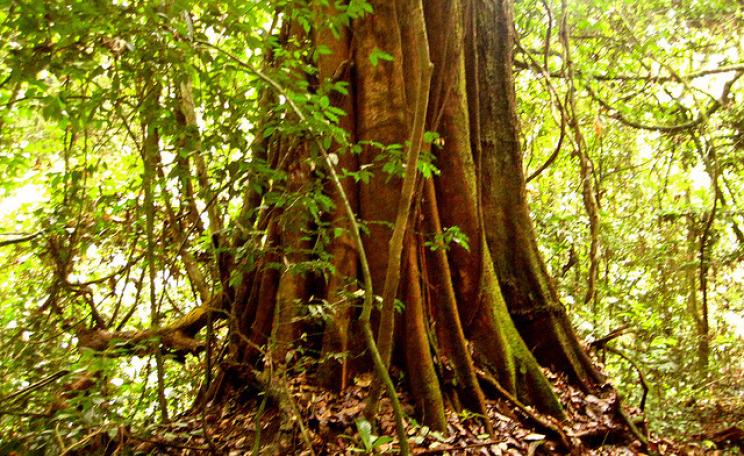
Scientists have found that the world's second greatest rainforest, the Congo, is losing its green, writes Tim Radford. As temperatures rise and rainfall reduces, the forest canopy is taking on a browner hue, and this could be an early signal of worse damage to come.
Well-being is not just a luxury for good economic times, writes Christine Berry. Reducing poverty and promoting equality are more important economic goals than the pursuit of endless growth.
Eating wild plants and mushrooms is a pleasure we should all indulge in, believes open air gastronomist Humphrey Birley - and this new edition of 'Wild Food : a complete guide for foragers' is just what's needed to get us exploring woods, hedgerows, meadows and salt marshes in search of edible delicacies.
On paper, Romania has a thriving wolf population. But Luke Dale-Harris finds that the official view is based on erroneous figures from hunting associations who are, bizarrely, responsible for wolf conservation. The truth is that the wolves are at serious and growing risk.
Theatrical protest group the Reclaim Shakespeare Company has invaded the British Museum and held a surprise performance challenging BP's sponsorship of the popular Vikings exhibition.
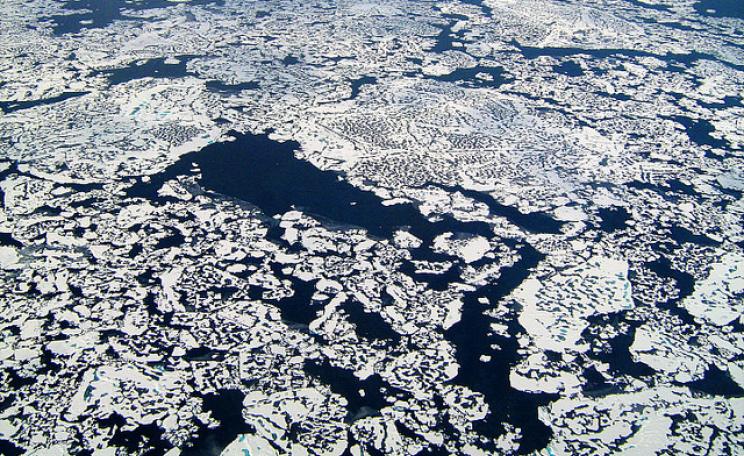
The decline of Arctic sea ice demands a response, writes Matthew Worsdale. As Arctic temperatures rise, so does the danger of huge eruptions of methane - a powerful greenhouse gas - that will tip the climate into 'hot'. The only solution is geo-engineering.
Deep in Ecuador's Amazon rainforest, a gigantic open pit copper and gold mine is planned in the heart of the Shuar peoples' territory. David Dene tells the story of a growing international campaign to uphold and defend the 'Rights of Nature', in Ecuador and beyond.
After 99 days of Donald Trump's presidency, his only achievement is to pursue his anti-climate, anti-environment agenda with a cruel passion that is already alienating a clear majority of Americans, writes Jeremy Brecher. The Peoples Climate March tomorrow will signal the strength of the fightback. And while there will be no overnight victory, a national, indeed a global movement is forming to resist Trump and bring the age of fossil fuels to its long overdue end.
Six environment heroes, one from each continent, are honoured for their work today - fighting threats from giant coal mines to forest destruction, fracking, high dams, illegal development and toxic waste dumps. Sophie Morlin-Yron reports.
2014 Goldman Prize winner Suren Gazaryan took on the Kremlin in trying to block illegal development at the Sochi Olympics and on the Black Sea coast, writes Sophie Morlin-Yron. Forced to flee to Germany, he can finally get down to researching his beloved bats.